Key Highlights
- SEC Commissioner Hester M. Peirce supports privacy tools in crypto and says they are important for user safety in the digital financial system.
- She warns that too much focus on government surveillance can reduce privacy for everyday users, even though fighting crime is still important.
- She argues that privacy and regulation can work together, using crypto tools like wallet addresses and blockchain records to protect users’ identities.
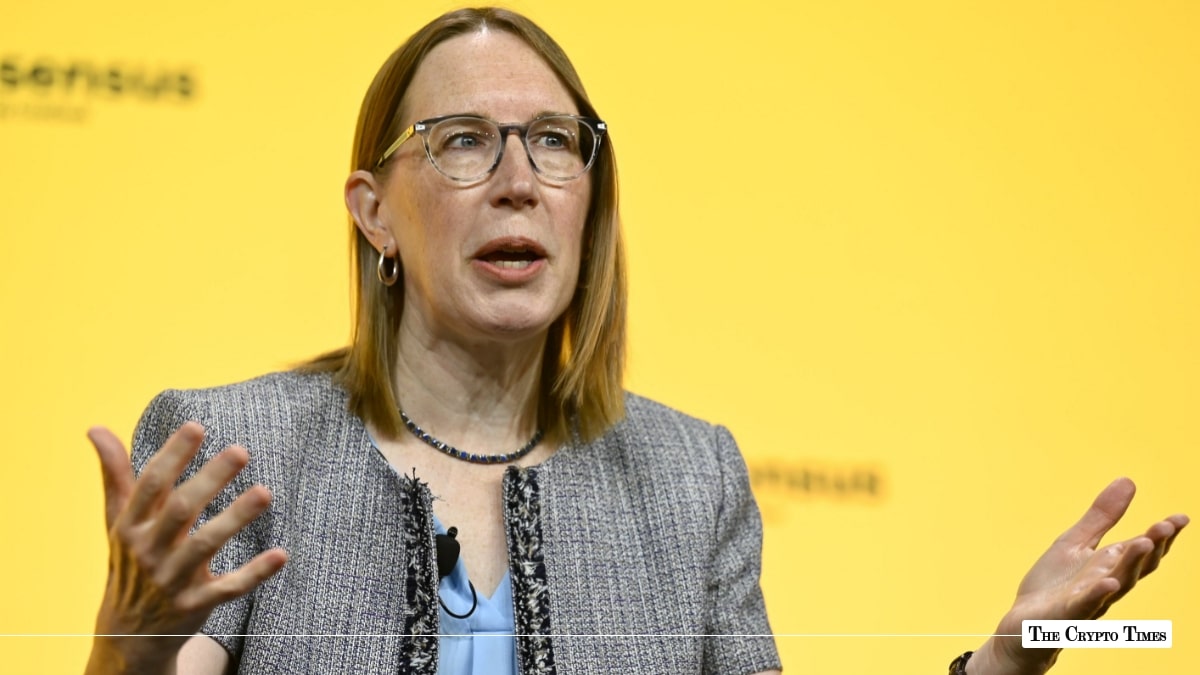
SEC Commissioner Hester M. Peirce has voiced support for stronger privacy protections in crypto systems, arguing that financial privacy should remain an important part of digital asset regulation.
Speaking at a PETshop series event hosted by the Institute of International Economic Law at Georgetown Law on May 27, Peirce discussed how privacy-focused technologies can coexist with regulatory requirements such as Know Your Customer (KYC) and anti-money laundering (AML) rules.
However, she clarified at the beginning of her remarks that the comments reflected her personal views as a commissioner and not the official position of the U.S. Securities and Exchange Commission.
Privacy as basic need in digital finance
Opening her remarks with a light reference to the event theme, Peirce stated, “You’ve got the brawn; You’ve got the brains; Go make good privacy tech.”
Peirce said privacy is not just a “nice to have” thing, but something that is very important for safety in today’s digital world. She explained that people use financial systems every day, and they should not always feel like their personal information is exposed or at risk.
According to her, regulators are meant to serve the public, so they should also care about how private people’s financial data is. She said that in many policy discussions these days, the focus is only on government monitoring the industry and not enough focus on protecting everyday users. She said this can affect how financial tools and services are designed, sometimes in a way that reduces privacy.
Security goals must not harm ordinary users
At the same time, she acknowledged that governments must be able to find and punish criminals, especially those involved in fraud, theft, or threats to national security. However, she said this should not lead to exposing the financial lives of normal people who are not doing anything wrong.
She added that privacy tools can actually help security because they reduce the amount of sensitive data stored in one place. She warned that when too much personal information is collected in one system, it becomes a target for hackers or criminals.
Peirce wants privacy and regulation to work together
In crypto systems, people use wallet addresses that aren’t directly linked to their real names. Anyone can see transactions on the blockchain, but the person behind the address isn’t easily identifiable. This kind of structure, she suggested, offers a model where transparency and privacy can co-exist.
She also talked about current financial rules that require intermediaries like transfer agents to collect personal details like names and home addresses of investors. Peirce said that instead of collecting so much private information, systems could use blockchain records to show ownership.
This would still prove who owns what, but would reduce the need to share sensitive personal details with many parties. According to her, this could help protect people from identity theft or misuse of their information.
Calling for an alliance between the industry and regulators
She ended by calling for more teamwork between developers and regulators, especially through the Crypto Task Force, an initiative that was launched in January 2025 with Acting Chairman Mark T. Uyeda, to share ideas on how to meet Know Your Customer (KYC) and anti-money laundering (AML) rules while still protecting privacy.
She said the goal should be to focus on catching real criminals, not watching everything that everyday users do in their financial lives.
Also Read: Hester Peirce Clears Confusion Around SEC Tokenization Rule