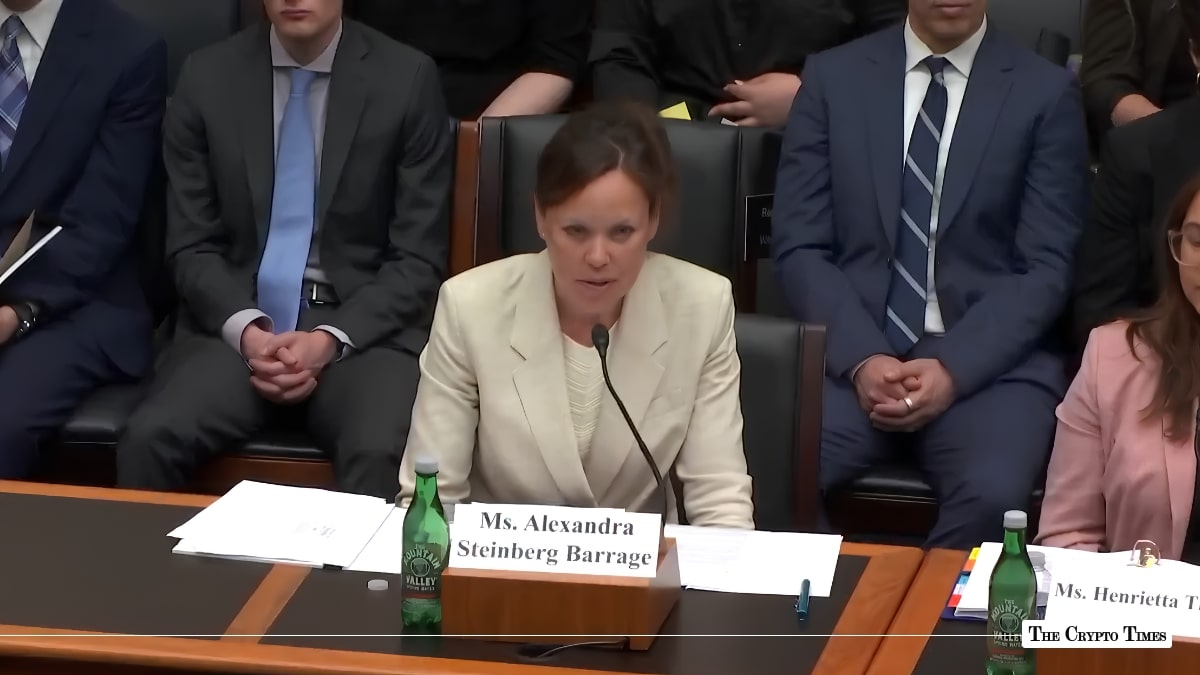
Former FDIC executive Alexandra Steinberg Barrage said U.S. banks are increasingly turning to fintech partnerships to build crypto and blockchain services, signaling that digital assets are becoming part of mainstream banking strategy.
Speaking at a hearing of the House Subcommittee on Digital Assets, Financial Technology, and Artificial Intelligence on Wednesday, Barrage said banks are working with outside providers on crypto custody, tokenized deposits, and customer access to trading platforms.
Banks use fintech partnerships to enter crypto
Responding to questions from Rep. Bryan Steil, Barrage said many of the bank-fintech partnerships now taking shape are focused on digital assets and artificial intelligence. “We are seeing banks looking to third parties to help them do digital asset custody, so on-chain activities,” Barrage said.
She added that some institutions are collaborating with fintech firms to develop tokenized deposit systems, while others are partnering with crypto exchanges to let customers buy, sell, and hold digital assets through their banking relationships.
Tokenized deposits gain momentum
Barrage said banks are also joining forces to explore tokenized deposits, a model in which commercial bank money is represented on blockchain networks. These efforts are aimed at improving settlement speed and enabling round-the-clock transfers while keeping funds within the regulated banking system.
Several large financial institutions have been testing tokenized deposit frameworks as interest grows in blockchain-based payment infrastructure.
Crypto services expanding through regulated channels
According to Barrage, some banks have already entered public partnerships with exchanges to provide access to cryptocurrencies. These arrangements allow banks to offer digital asset services without building all of the required infrastructure internally. Instead, specialized fintech providers handle functions such as custody, settlement, and compliance technology.
The approach mirrors broader trends in banking-as-a-service, where financial institutions outsource technical capabilities while remaining responsible for oversight and risk management.
Community banks taking a more cautious approach
Barrage said smaller and community banks have been more selective in pursuing these partnerships. She noted that, over the past five years, fewer community banks have entered fintech arrangements, partly due to the regulatory and market disruptions that followed the banking stresses of 2023 and 2024.
Still, she said some smaller institutions continue to manage these relationships effectively when they have strong internal expertise and controls.
Congressional focus on innovation and oversight
The hearing, titled “Partnering for Innovation: How Bank-Fintech Collaborations Enhance Financial Infrastructure,” examined how financial institutions are using third-party partnerships to modernize payments, custody, and customer services.
Barrage’s testimony suggests that while many banks have not made broad public announcements, digital asset initiatives are moving forward through regulated partnerships and infrastructure providers.
Her comments add to growing evidence that traditional financial institutions are integrating crypto-related services more deeply into their long-term plans.
Also Read: BitGo CEO Fires Back at Senator Warren Over “Crypto Bank” Label