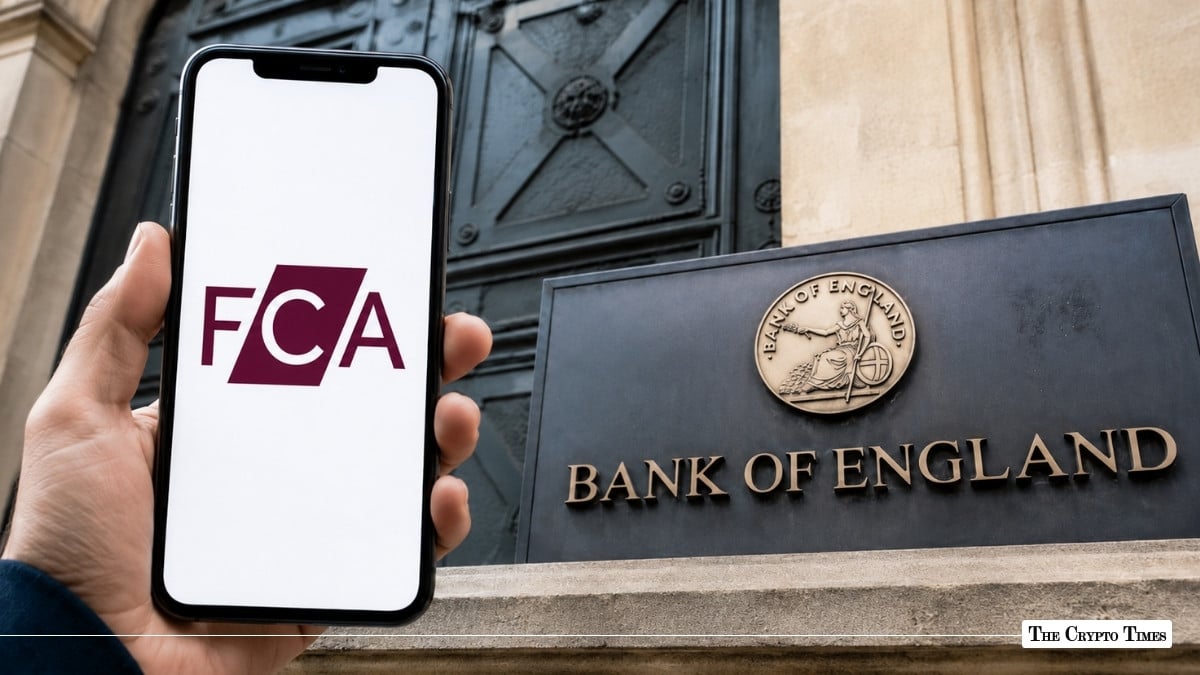
The United Kingdom’s two most powerful financial regulators moved in lockstep on Monday to give the country’s financial sector its clearest tokenization mandate yet. The Financial Conduct Authority and the Bank of England set out a shared vision and sought industry views on the future of UK wholesale markets, publishing their approach in key areas where firms have sought greater certainty—including prudential treatment, tokenized collateral, and settlement instruments.
UK financial firms can now adopt tokenization and distributed ledger technology with greater confidence, the regulators said, as they set out principles for regulation and infrastructure that could facilitate the development of tokenization in wholesale markets.
The publication is accompanied by a formal Call for input—with market participants given until July 3, 2026 to submit responses. Following that deadline, the FCA and Bank of England said they will hold industry workshops, publish a feedback statement in the summer of 2026, and issue a cross-authority roadmap for digital wholesale market development later in the year.
What the FCA and Bank Are Committing To
The joint announcement contains a series of concrete commitments that go beyond principles.
The Bank of England is committing today to launch a live synchronization service, targeted for 2028, and working to enable tokenized equivalents of already eligible assets to be used as collateral both at central counterparties and in its own central bank operations. The synchronization service—sometimes called atomic settlement—would allow tokenized securities and cash legs of transactions to settle simultaneously on distributed ledgers, eliminating the settlement risk that currently requires intermediaries.
The Bank of England has also published a consultation on extending RTGS and CHAPS settlement hours, setting out next steps towards near 24/7 settlement, including weekend and extended daily operating hours, subject to consultation and industry readiness.
This work is also supporting HM Treasury’s pilot issuance of a digital gilt instrument—known as DIGIT — alongside the sandbox work already underway.
The FCA is committing to further work to support tokenization in the UK, including considering how its approach to the application of client asset rules (CASS) may evolve in light of industry feedback.
The Prudential Regulation Authority has published Dear CEO letters setting out updated guidance on the prudential treatment of tokenized assets, stablecoins and other cryptoasset exposures and on innovations in deposits, e-money and stablecoins, reflecting recent market developments and reaffirming expectations on risk.
The Digital Securities Sandbox
The initiative runs alongside the Digital Securities Sandbox, where 16 firms are currently testing the live issuance and settlement of tokenized assets in a regulated environment—the most advanced live tokenization testing environment of any G7 regulator.
The DSS will remain operational until December 2028, with the application window expected to close around March 2027, allowing firms inside the sandbox to prepare for a transition to a possible new permanent regime, provided the new technologies are implemented successfully.
The regulatory posture has shifted decisively. As Sarah Breeden, Deputy Governor for Financial Stability at the Bank of England, put it: “The Bank and FCA have done a huge amount to enable the responsible adoption of tokenization in retail and wholesale finance in the UK, working with the government and the industry.”
Simon Walls, executive director of markets at the FCA, added: “Tokenization has the potential to transform wholesale markets—reshaping how assets are issued, traded and settled. We want to support firms in adopting this technology to lower costs, reduce risk and unlock new services, and our partnership with the Bank of England will ensure a common approach across all parts of wholesale markets.”
Coinbase: The Vision Must Embrace DeFi
In an emailed statement to The Crypto Times, Katie Harries, Head of Policy for Europe at Coinbase, offered the most expansive industry reaction to the announcement—calling for the UK’s tokenization ambition to go further than wholesale settlement and reach the “unbrokered.”
“Fantastic to see the UK setting out a clear vision for tokenisation in wholesale markets,” Harries said. “The ambition should be this: anyone, anywhere, should be able to access global equities — and fractions of them — on their smartphone, to self-custody those assets, send them peer to peer, and borrow against them.”
Harries was direct on what delivering that vision requires: “Delivering this model of tokenization requires an embrace of DeFi. The opportunity is huge—not only for companies seeking new pools of capital but, for the ‘unbrokered’: the many individuals globally who are not able to participate in capital markets today.”
The political case she laid out for the UK government is sharply framed: “Financial participation generates wealth, and with some of the lowest participation levels in the G7, the UK can deliver meaningful benefits for its citizens by taking an ambitious, forward-looking approach to tokenization.”
The Coinbase position is a deliberate push beyond the FCA’s and BoE’s current scope, which focuses on wholesale institutional markets. Harries is arguing that the infrastructure being built for banks and asset managers should be extended to individuals — with self-custody, peer-to-peer transfer, and DeFi composability as the end goal, not a side effect.
Why This Is a Strategic Inflection Point for the UK
Monday’s announcement lands at a precise moment of competitive pressure. The US has moved aggressively on digital asset market structure through the CLARITY Act—currently in Senate Banking Committee markup—and both the EU’s MiCA framework and Singapore’s MAS tokenization pilots are live.
The Transatlantic Taskforce for Markets of the Future—launched in January 2026 between HM Treasury and US Treasury—has identified digital asset collaboration as one of three priority areas, with companies including Coinbase, Circle, Ripple, Citi, Bank of America, and Barclays named as active participants in shaping its agenda.
The government’s own Wholesale Financial Markets Digital Strategy (WFMDS) has already identified tokenization as a significant opportunity—particularly in post-trade processes and collateral management.
The UK’s position is structurally strong. As a leading investment management center with £14.3 trillion in assets under management, the UK benefits from the FCA’s stated objective to be a smarter, innovation-positive regulator. But the gap between ambition and execution — between sandbox testing and production deployment — is exactly what today’s announcement is designed to close.
What Comes Next
The timeline is now set. The July 3 consultation deadline will be followed by industry workshops, a summer feedback statement, and a cross-authority digital wholesale markets roadmap before year-end. The BoE synchronization service has a 2028 production target. The DIGIT digital gilt pilot is in progress. The PRA’s Dear CEO letters give institutions the prudential clarity they have been waiting for.
Also Read: Bank of England Relooks Stablecoin Caps as UK Mulls Easing Crypto Rules