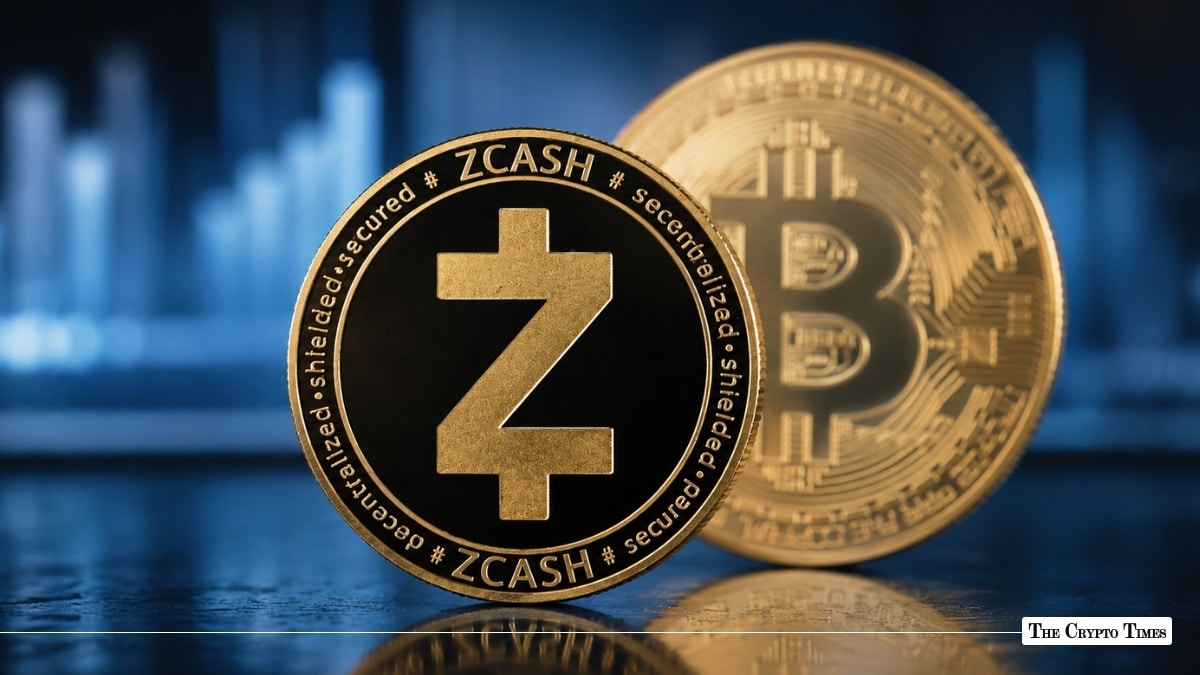
Some of Bitcoin’s earliest and most dedicated supporters are quietly shifting their attention to Zcash, seeing in the smaller privacy-focused token a closer reflection of the revolutionary ideals that first drew them to cryptocurrency.
The Wall Street Journal reported Thursday that disillusionment with Bitcoin’s transformation into a mainstream financial asset has pushed a group of longtime enthusiasts toward Zcash.
Once celebrated for its anonymity and resistance to central control, Bitcoin is now widely held by institutions, traded on Wall Street exchange-traded funds, and even embraced by politicians. For some purists, that success has come at a cost: the network’s transparent ledger no longer delivers the privacy many originally sought.
Launched in 2016, Zcash allows users to send fully shielded transactions that conceal the sender, receiver, and amount using advanced zero-knowledge proofs known as zk-SNARKs. This optional privacy feature has resonated strongly with investors who feel Bitcoin has drifted from its cypherpunk roots.
The Journal highlights prominent backers including Gemini founders Tyler and Cameron Winklevoss, who have placed significant bets on the project. Barry Silbert, founder of Digital Currency Group, compared the current moment for Zcash to “Bitcoin circa 2013.”
Despite the enthusiasm, Zcash remains a small player with a market capitalization of roughly $8.9 billion at the time of reporting—a fraction of Bitcoin’s size. The privacy tools that attract these die-hard users are the same ones that worry regulators and compliance officers.
The article cautions that smaller cryptocurrencies have a long history of dramatic rallies followed by painful collapses, underscoring the high risks involved.
Privacy coins have faced increasing scrutiny over concerns they could facilitate money laundering or other illicit activities. Some exchanges have already restricted or delisted such assets, and governments continue to debate stricter oversight of anonymous transactions.
The Journal article frames this tension clearly: what enthusiasts view as a vital feature, traditional finance often sees as a red flag. This divide reflects broader debates within the crypto industry about balancing personal privacy with regulatory acceptance.
Recent developments on Zcash
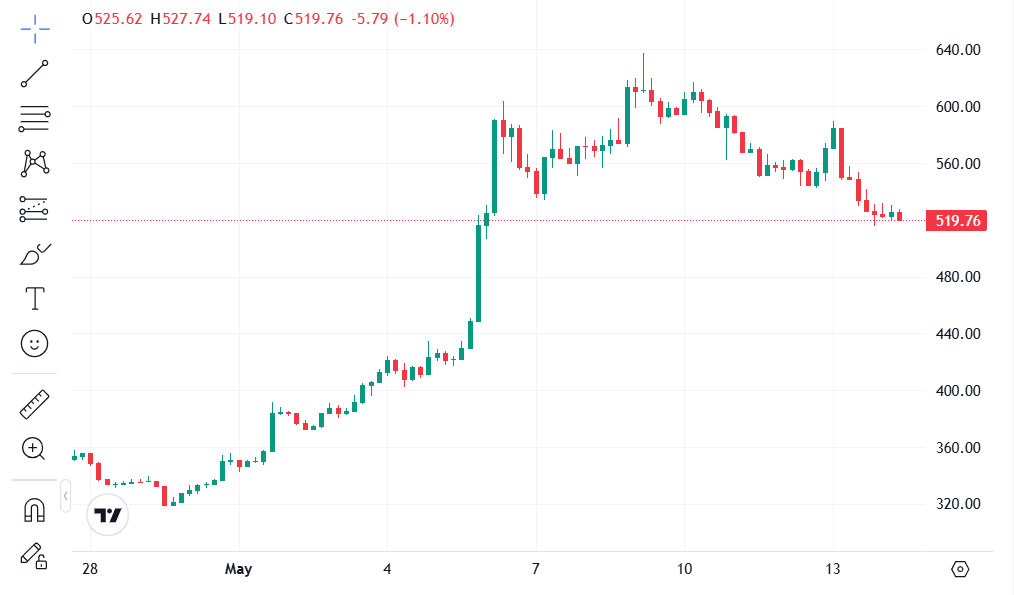
Recent developments on Zcash have centered on explosive price action and growing investor interest. In early May 2026, ZEC surged over 30% in a single day, briefly hitting a 2026 high near $615 before pulling back in the $500 range.
The rally, which pushed its market cap close to $10 billion (top 15 range), was fueled by strong on-chain adoption, with shielded addresses now holding a record ~30% of circulating supply and shielded transaction share exceeding 50% in recent months.
Zcash’s major backers like Multicoin Capital disclosed significant positions, citing privacy as a hedge against surveillance and potential wealth taxes.
At the time of publishing, ZEC price was trading near $520—up roughly 40% in the past month. Though the cryptocurrency is still down 91% from its all time high of $5,941—marked 10 years ago in October 2016.
On the technology and roadmap front, Zcash is pushing forward aggressively. In early May, the Zcash Open Development Lab announced plans to roll out quantum-recoverable wallets within a month and achieve full post-quantum security by 2027, addressing future threats from quantum computing.
In a landmark move, Grayscale—one of the largest digital asset managers—filed to convert its Zcash Trust into the world’s first spot ETF for a privacy coin, which could open regulated institutional access.
Other tailwinds include rising shielded asset activity (ZSAs), ongoing PoS transition discussions, and strong developer funding, including investments from Cypherpunk Technologies and others.
These steps position Zcash as a leading privacy play amid renewed focus on confidentiality in a surveillance-heavy world.
Is Zcash really the next Bitcoin?
For many in the space, Zcash represents a return to crypto’s original emphasis on personal sovereignty and freedom from surveillance. As Bitcoin matures into a digital store of value held by corporations and governments, a niche of ideological supporters is looking elsewhere for the next chapter of the movement.
The WSJ piece does not predict whether Zcash will achieve widespread success or suffer the fate of many previous altcoins. Instead, it captures a sentiment shift happening beneath the surface of a maturing market.
Even as Bitcoin solidifies its position as the dominant cryptocurrency, some of its most committed early believers are searching for a project that feels closer to the vision that started it all.
Also read: DeFi Development Corp Expands Solana Treasury Strategy With 2.3M SOL Holdings