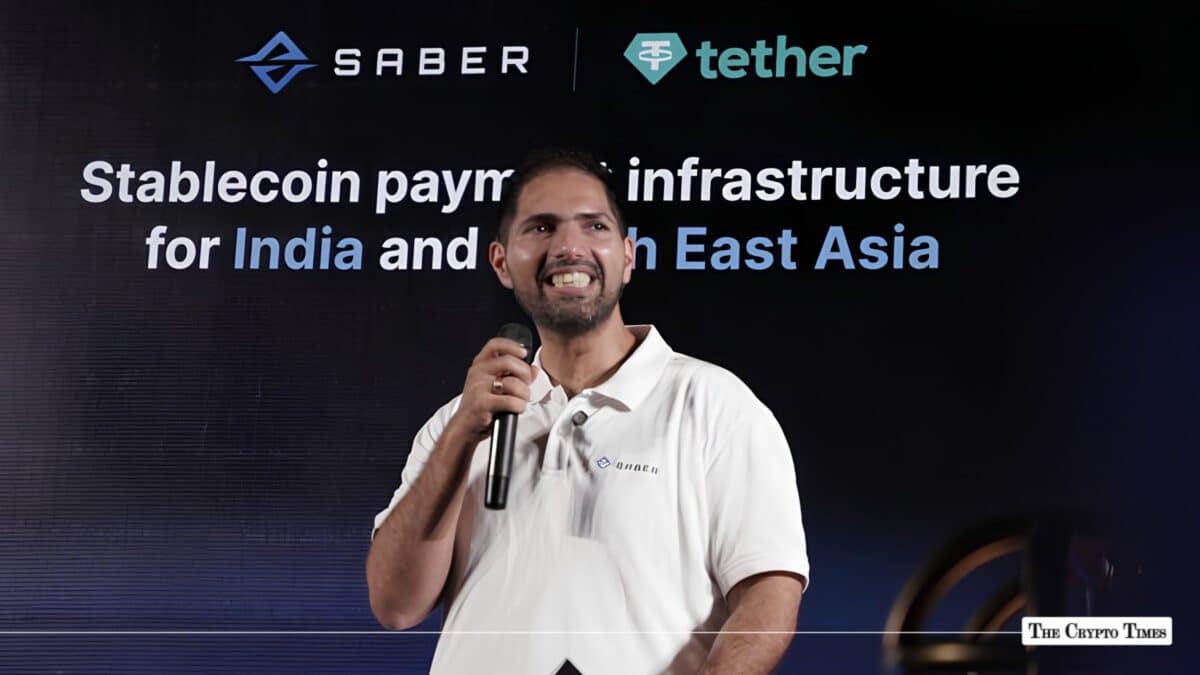
Asia’s stablecoin infrastructure race is gaining pace as founders warn of growing operational and compliance challenges across the region’s payment corridors. Saber Money and Mudrex’s CEO and Co-Founder Edul Patel weighed in after releasing a stablecoin strategy report at a Bangkok event in 2026.
The report outlines how stablecoin builders now face tighter compliance rules, liquidity shortages, and operational risks across Asia’s payment corridors. However, Patel said stablecoins still enable faster and cheaper cross-border transfers compared to traditional systems.
Patel shared the report in a post on X, describing it as “an operator’s blueprint” based on real-world mistakes and market experience. He added that it explains “what works, what doesn’t, and what nobody tells you about building stablecoin payments in Asia.”
Stablecoins target Asia’s payment gaps
Patel’s stablecoin journey began at Mudrex, where his team faced friction in fiat on-ramps and off-ramps. The company then started using stablecoins for crypto purchases through routes such as INR to USDT to Bitcoin. The model later attracted fintech firms and startups looking for faster settlement options.
This operational friction led to the creation of Saber Money, a specialized payments platform focused on India and Southeast Asia, targeting high-volume remittances and B2B settlements.
While Patel acknowledged that Asia runs some of the world’s most efficient domestic payment systems, including UPI in India, PayNow in Singapore, and InstaPay in the Philippines, cross-border transfers remain painfully slow and costly.
“Not because of technology, but because no one owns the full flow..” Patel said in the report.
The whitepaper also pointed to key operational challenges. These include liquidity shortages, compliance requirements, and unstable banking partnerships. It added that many operators misjudge liquidity needs during large transactions and off-peak settlement hours.
India’s sovereignty debate intensifies
Separately, in an unrelated exchange on X, Patel weighed in on the question of stablecoin sovereignty in India. Zerodha’s Nikhil Kamath recently questioned India’s growing interest in dollar-backed stablecoins. He said foreign-issued digital currencies could reduce India’s financial independence over time. He also praised Indian regulators and policymakers for resisting pressure on stablecoin adoption.
“The world still runs on the dollar,” Kamath wrote on X. He suggested India should also explore gold-backed stablecoins linked to unused household gold reserves.
Edul Patel responded shortly after. He said India could lose ground in blockchain-based payment infrastructure as global adoption accelerates. He added that India should build domestic payment systems before global standards fully form.
The urgency of the debate is underscored by explosive market growth. According to data from DeFiLIama, the global stablecoin market capitalization stands at $321.8 billion. The sector has fallen by $1.07 billion, or 0.33%, over the past week. Tether continues to dominate the market with nearly 59% share.
Despite short-term fluctuations, the stablecoin sector has expanded steadily since 2018. It recovered strongly after the 2022–2023 downturn and reached new highs through 2025 and into 2026. Inflows into the sector have also increased as usage grows in payments and trading.
Also Read: BitGo’s $3.8B Surge Overshadowed by Expanding Losses