Key Highlights
- The central bank aims to increase usage of digital won in the real economy through Project Hangang, its CBDC project.
- South Korea has been an active member of Project Agora, an international effort that concentrates on tokenized cross-border payments.
- Although there was previous talk about coexistence, the lack of stablecoin discussion from Shin indicates a move towards more central control.
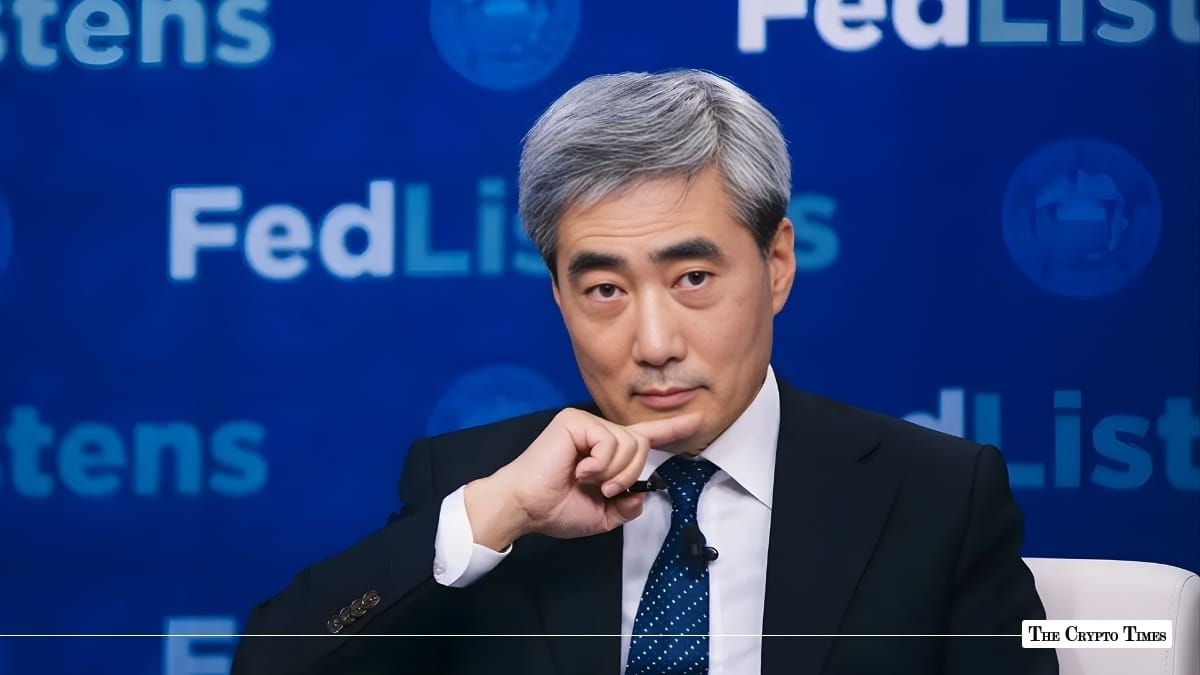
Bank of Korea’s new governor, Shin Hyun-song, in his first public address, outlined the central bank’s priorities by highlighting central bank digital currencies (CBDCs) and tokenized bank deposits while omitting any discussion of private stablecoins.
According to a local report, the governor opened his speech by raising a key question about the evolving role of central banks in a rapidly changing financial world. He then presented plans to boost the real-world use of CBDCs and deposit tokens through the next stage of Project Hangang, the Bank of Korea’s flagship pilot program for testing blockchain-based digital won solutions.
The governor underscored South Korea’s involvement in Project Agora, a global partnership led by the Bank for International Settlements that looks into tokenized cross-border payments.
According to Shin, these moves aim to strengthen payment system stability and boost the international standing of the Korean won in an increasingly digital economy.
Contrast with earlier statements
Notably, the speech did not include any reference to stablecoins. This omission stands out, as during his recent confirmation hearings, Shin suggested that won-denominated stablecoins could coexist with CBDCs and deposit tokens, playing a complementary role in the future monetary system.
South Korea’s first regulated won-backed stablecoin, KRW1, was introduced in February with a collaboration between BDACS and Woori Bank. At the same time, policymakers continue to debate the Digital Asset Basic Act, which would build a broader regulatory framework for digital assets, containing rules for stablecoin issuance.
However, political disagreements between the current party in power and opposition parties have delayed progress on the bill.
Approach to traditional monetary policy
Beyond digital assets, Shin indicated a measured approach to traditional monetary policy. Following the recent decision of the central bank to keep its interest rate at 2.50% at a time of global uncertainty, he emphasized that policy decisions must remain “cautious and flexible” to protect price stability as well as the broader financial system.
He also highlighted ambitions to modernize Korea’s financial markets, including expanding foreign exchange trading to 24-hour operations and establishing an offshore won payment infrastructure to back greater internationalization of the currency.
Last month, South Korea announced restricting stablecoins from corporate digital asset investments, highlighting concerns among businesses reliant on these coins. The Financial Services Commission (FSC) is planning corporate virtual currency trading guidelines, yet dollar-backed stablecoins such as USDT and USDC will probably be excluded.
Increased focus on policy direction
This speech is a sign of how Shin views things at this point; he prefers centrally managed and bank-based digital currencies compared to privately developed digital currencies. He will hold his first monetary policy board meeting on May 28.
The market will be expecting more signs about whether the interest rates will rise and whether the process of developing the digital currency will be accelerated. The rapid growth of innovations related to digital finance around the globe means that, with an eye towards the CBDCs and tokenized deposits, the Bank of Korea wishes to keep tight control of money in Korea.
Also Read: Ledger CTO: Arbitrum Freeze Exposes L2 Control After KelpDAO Hack