Key Highlights
- A Mumbra insurance consultant was cheated of ₹71.6 lakh in a fake crypto investment scheme over seven months.
- The fraud followed a common pattern using WhatsApp groups, fake dashboards, and promises of high returns.
- India reported ₹22,495 crore in cyber fraud losses in 2025, with recovery rates remaining extremely low.
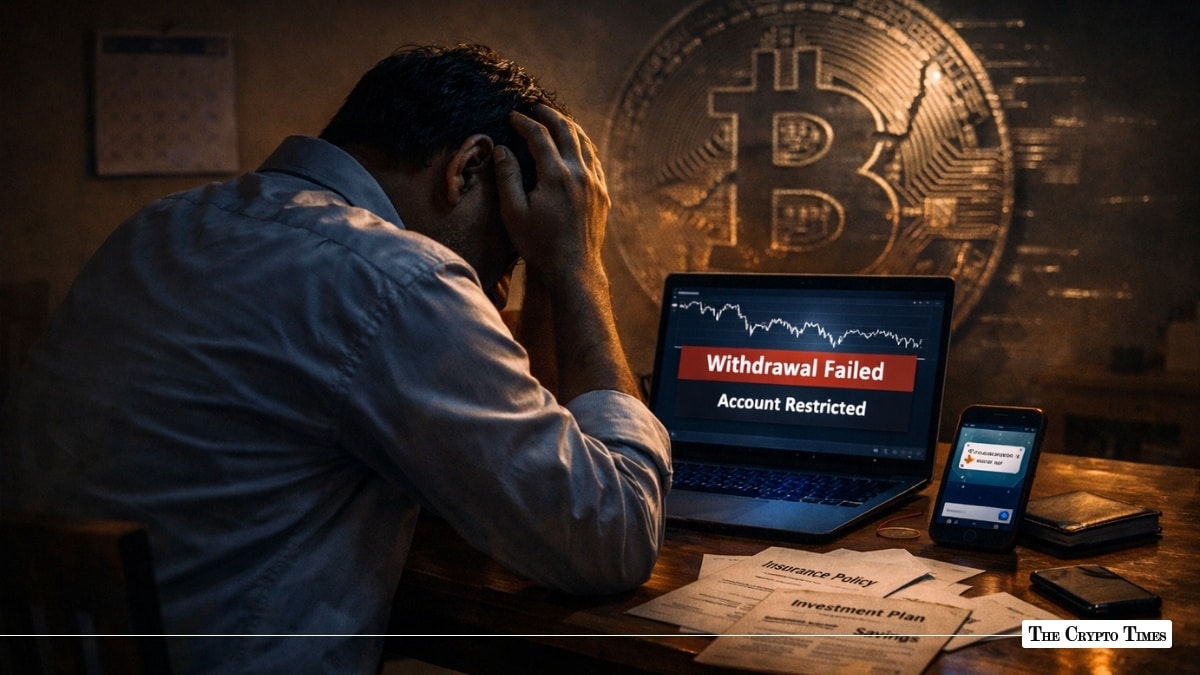
In yet another alarming case of cryptocurrency investment fraud in India, a 42-year-old insurance consultant from the Kausa area of Mumbra in Thane district has been cheated of Rs 71,60,015 by six individuals who allegedly posed as representatives of a cryptocurrency trading platform.
A case was registered at Mumbra police station under relevant sections of the Bharatiya Nyay Sanhita (BNS), including charges of cheating and breach of trust. No arrests have been made so far.
According to police officials in Thane, the accused approached the complainant sometime in August 2025 and persuaded him to invest money in a firm that was purportedly linked to a cryptocurrency platform.
Over a period of seven months, between August 2025 and March 2026, the victim transferred the total amount through a combination of cash payments and online transactions at different intervals. However, the accused never returned the invested amount. Instead, they misappropriated the entire sum, police said.
A pattern that keeps repeating across India
This is far from an isolated incident. The Mumbra case follows a strikingly similar pattern to several other crypto-related frauds reported across the Mumbai Metropolitan Region and beyond in recent months.
In January 2026, a 56-year-old loan consultant from Belapur in Navi Mumbai was cheated of Rs 72.7 lakh in a USDT (Tether) investment scam. The victim was lured by unidentified individuals who promised high and secure returns through investments tied to the popular stablecoin. Mumbai Police registered the case against five unidentified individuals and three web-based platforms.
In February 2026, a 41-year-old immigration staffer working at the Malaysian Consulate in Bandra lost Rs 78.85 lakh to a fraudulent cryptocurrency scheme operated through a WhatsApp group called “EG Plan.” The victim was first added to the group via Instagram in January 2024 and over the following months was gradually persuaded to invest larger sums on a fake trading platform.
The scammers used fake profit screenshots and a professional-looking dashboard to build trust. Fear of social stigma reportedly delayed his complaint by nearly 20 months.
The fraud epidemic extends well beyond Maharashtra. In Hyderabad, three senior citizens were collectively duped of Rs 4.4 crore through investment scams, digital arrest hoaxes, and fake AI-based cryptocurrency trading platforms.
In one case, a fake dashboard showed the victim’s balance rising to Rs 32.53 crore before demands for commissions began. In another, a fraudster posed as a woman named “Anushka Sharma” to manipulate a consultant into investing Rs 3.54 crore across fake crypto and forex portals.
At a larger scale, the CBI recently arrested Darwin Labs’ CTO at Mumbai airport in connection with the Rs 6,000 crore GainBitcoin scam, one of India’s largest cryptocurrency Ponzi schemes. Meanwhile, the Supreme Court denied bail in a Rs 640 crore crypto scam case involving phishing and layered digital laundering, with stolen funds routed through over 5,000 Indian bank accounts.
India’s crypto fraud crisis in numbers
The scale of online financial fraud in India has reached alarming proportions. According to official data presented in Parliament, more than 24 lakh complaints were filed on the National Cyber Crime Reporting Portal (NCRP) in 2025, with total reported fraud losses amounting to Rs 22,495 crore.
Since its inception, the NCRP has received over 38 lakh cyber fraud complaints with cumulative losses exceeding Rs 36,448 crore as of February 2025.
Maharashtra, where the latest Mumbra case was reported, consistently ranks among the worst-affected states. The state recorded approximately 3.03 lakh cybercrime complaints in 2024, the highest in the country, followed closely by Uttar Pradesh with 3.01 lakh cases.
Perhaps the most troubling statistic is the dismal recovery rate. Of the Rs 36,448 crore in reported losses, only Rs 4,381 crore was placed under lien through the government’s Citizen Financial Cyber Fraud Reporting and Management System (CFCFRMS), and a mere Rs 60.52 crore had actually been returned to victims.
Experts note that cryptocurrency transactions are particularly difficult to reverse due to their pseudonymous and decentralized nature.
How these crypto scams work in India: Red flags to watch
Cybercrime investigators and financial experts have identified a consistent playbook used by cryptocurrency investment scammers targeting Indian citizens. Understanding their tactics is the first line of defense for potential investors.
The initial contact usually happens through social media platforms like Instagram, Facebook, or Telegram, and quickly moves to WhatsApp groups. These groups often have 30 to 50 members, many of whom are fake accounts or bots that regularly post fabricated profit screenshots to create “social proof.”
Victims are first encouraged to invest small amounts, and the fake trading platform shows impressive returns. Some scammers even allow small initial withdrawals to build credibility.
Once the victim invests a substantial sum, withdrawal requests are met with demands for additional fees, often disguised using legitimate-sounding crypto jargon like “gas fees,” “swap charges,” “capital gains tax,” and “conversion fees.” Eventually, the platform goes silent or the website disappears entirely.
Scammers frequently impersonate financial experts, use fake celebrity profiles to build emotional trust, and create fraudulent company domains with fake registration details. In several cases, they have used deepfake technology and AI-generated endorsements to appear legitimate. The use of UPI transactions allows them to collect funds quickly and obscure financial trails across multiple bank accounts.
Recent investigations have also revealed that stolen funds are increasingly being routed through overseas crypto exchanges linked to handlers in China and Hong Kong.
What Indian authorities are doing about it
The Indian government has taken several steps to counter the growing cybercrime threat. The Union Budget 2025-2026 allocated Rs 782 crore for cybersecurity projects. As of December 2025, more than 12.21 lakh SIM cards and 3.03 lakh IMEIs linked to fraudulent activities had been blocked. Through the CFCFRMS system, over Rs 8,189 crore had been saved through timely intervention.
The Ministry of Home Affairs introduced the e-Zero FIR initiative in May 2025, which ensures that any cybercrime complaint involving losses above Rs 10 lakh filed through the NCRP portal or the 1930 helpline automatically leads to registration of a Zero FIR with the e-Crime Police Station of Delhi. This eliminates jurisdictional delays that previously hampered investigations.
Enforcement agencies have also stepped up direct action. The CBI recently carried out coordinated raids across six states and arrested three accused in a digital arrest fraud case while simultaneously probing a separate Rs 350 crore crypto Ponzi scheme. The Enforcement Directorate has also frozen Rs 10.24 crore across 94 bank accounts in the HPZ Token investment scam probe.
The World Economic Forum’s latest report has flagged cyber-enabled fraud as one of the most pervasive global threats in 2026, with 77% of surveyed executives noting an increased risk of cyber fraud and phishing over the past year.
How to protect yourself from crypto investment scams in India
Cybersecurity experts and regulators recommend the following precautions to avoid falling victim to cryptocurrency investment fraud:
- Verify before you invest: Always check whether a trading platform or investment advisory firm is registered with SEBI or regulated under RBI guidelines. You can search for registered intermediaries on the SEBI website (sebi.gov.in). No legitimate cryptocurrency exchange in India operates without being registered with the Financial Intelligence Unit (FIU-IND).
- Be skeptical of guaranteed returns: No legitimate investment, whether in stocks, mutual funds, or cryptocurrency, can guarantee fixed or extraordinarily high returns. If someone promises 20-30% monthly profits with zero risk, it is almost certainly a scam.
- Avoid unsolicited investment advice on social media: Be extremely cautious of investment tips received through WhatsApp groups, Telegram channels, or Instagram messages from unknown individuals. Scammers routinely use these platforms to recruit victims.
- Start small and test withdrawals: If you do invest on any platform, begin with a minimal amount and attempt to withdraw your funds before committing more. Inability to withdraw is the clearest warning sign.
- Report fraud immediately: If you suspect you have been defrauded, time is critical. Call the National Cyber Crime Helpline at 1930 or file online within the first hour if possible. According to experts, the chances of fund recovery drop from 60% (when reported within one hour) to under 15% (when reported after 24 hours). Also inform your bank immediately and request a freeze on the transaction.
- Use only regulated exchanges: If you wish to trade in cryptocurrency, stick to well-known, FIU-registered Indian exchanges. You can verify a cryptocurrency’s legitimacy on trusted aggregator websites like CoinMarketCap or CoinGecko before investing.
The bottom line
The Mumbra insurance consultant’s loss of Rs 71.60 lakh is not just one man’s tragedy. It is a symptom of a nationwide epidemic that has cost Indian citizens tens of thousands of crores in the past two years.
As cryptocurrency adoption grows across India and regulatory frameworks continue to evolve, the gap between legitimate trading and fraudulent schemes remains dangerously wide. Until comprehensive crypto-specific legislation is enacted, the burden of protection falls largely on individual investors.
As former IPS officer and cybercrime expert Prof. Triveni Singh has noted, criminals are becoming increasingly skilled at tailoring their methods to target vulnerable demographics. The message is clear: if an investment opportunity sounds too good to be true, it almost always is.
Also Read: India’s ₹32 Cr Bitcoin Extortion Case: Gujarat HC Grants Bail to Ex-SP