Key Highlights
- Raghav Chadha introduces India’s first Asset Tokenisation Bill in Parliament to regulate blockchain-based real-world assets.
- Proposed law covers issuance, trading, custody and settlement of tokenised assets like real estate and commodities.
- Bill aims to bring investor protection, transparency and regulatory oversight to India’s growing RWA ecosystem.
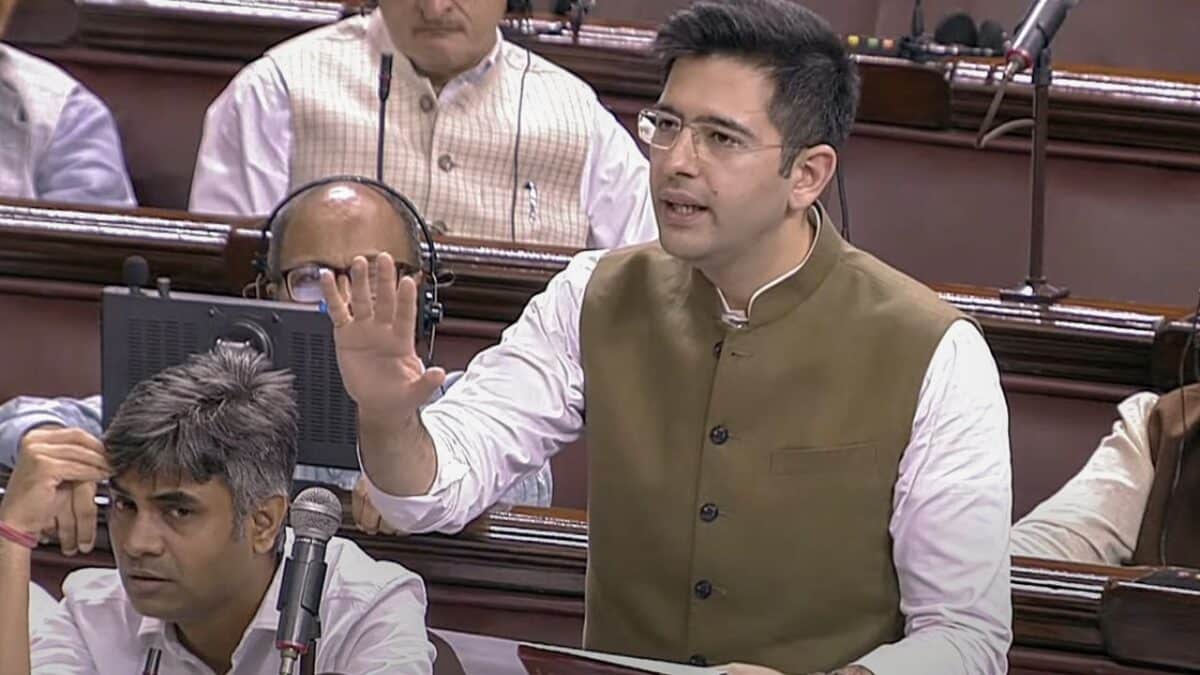
In India, Rajya Sabha MP Raghav Chadha of the Aam Aadmi Party (AAP), a major Indian political party, has introduced a Private Member’s Bill titled “The Asset Tokenisation (Regulation) Bill, 2026” in the Upper House of Parliament on Friday.
The Bill is being seen as India’s first formal legislative attempt to bring legal clarity to the fast-growing ecosystem of tokenised real-world assets (RWAs).
The proposed legislation aims to provide legal recognition to asset tokenisation in India, something the country has lacked so far despite growing global momentum around blockchain-based fractional ownership.
It lays down a statutory framework for the issuance, trading, custody and settlement of tokenised assets that are backed by real-world holdings such as real estate, infrastructure, commodities and intellectual property.
The Bill also introduces provisions for regulatory oversight and supervision of tokenised asset markets, with a stated goal of ensuring investor protection and maintaining financial stability.
According to Chadha, the Bill is designed to bring transparency, accountability and safeguards to a space that has so far operated without clear legal boundaries in India.
Not Chadha’s First Push for Tokenisation
This is not the first time Chadha has brought up the tokenisation conversation in Parliament. Back in December 2025, the MP had urged the government to introduce a dedicated Tokenisation Bill during a Rajya Sabha address. At the time, he argued that asset tokenisation could make investment and asset ownership as inclusive as digital payments became after the rise of UPI.
He had pointed to the limited investment options available for the Indian middle class, saying that commercial real estate, infrastructure projects and private asset classes remain out of reach for ordinary citizens. His pitch centred around breaking these high-value assets into smaller digital tokens that could be bought, sold, and traded on a blockchain, much like shares.
Chadha had also cited global examples to support his case, referencing the SEC’s integration of tokenisation into the Securities Act in the United States, Singapore’s Project Guardian, the EU’s Markets in Crypto-Assets (MiCA) regulation, and the UAE’s Virtual Asset Regulatory Authority (VARA).
Then in February 2026, during the Union Budget debate, Chadha went a step further. He called for a national blockchain-based registry for land and property records, calling India’s existing land records system “utter chaos.” He highlighted that land disputes account for nearly 66% of civil cases in the country and that around 45% of properties lack clear titles. He had proposed a phased rollout beginning with 10 major cities.
Why this bill matters for India’s RWA space
The introduction of this Bill comes at a time when India’s crypto and blockchain ecosystem is navigating a complicated regulatory landscape. On one hand, the government has shown interest in blockchain through initiatives like MeitY’s Blockchain India Challenge, launched in February 2026 with an Rs 8.80 crore prize pool.
On the other hand, the crypto tax regime remains harsh, with a 30% flat tax on gains and a 1% TDS on every transaction, which the industry says has pushed over 70% of trading volume offshore.
Asset tokenisation, however, sits in a slightly different bracket. It is not about speculative crypto trading but about bringing real assets onto the blockchain for fractional ownership and improved liquidity.
Countries like the UAE, Singapore, and the EU have already moved ahead with regulatory frameworks for this space. India, despite being one of the fastest-growing economies and having a strong digital infrastructure backbone through UPI and Aadhaar, has been slow to act on this front.
By formally introducing a Bill, Chadha has shifted the conversation from policy suggestions to an actual legislative proposal. While Private Member’s Bills rarely get passed in Parliament, they serve as an important signalling tool and can influence the government’s legislative priorities over time.
The Bill is also significant because it does not just talk about enabling tokenisation. It builds in safeguards for investor protection and market integrity, which have been consistent pain points in India’s digital assets space. Whether or not the government picks up the Bill in its current form, the fact that it now exists as a formal document in Parliament is a step forward for India’s RWA narrative.
Also Read: India Plans Crypto Monitoring Lab to Track Offshore Exchanges