Key Highlights
- Circle said Nanopayments is live on testnet, enabling $0.000001 USDC transfers with zero gas.
- The product uses bundling/batched settlement to reduce per-transaction costs for high-frequency payments.
- The rollout comes as USDC supply sits around ~$76B by major trackers, keeping Circle’s stablecoin at scale for payment experiments.
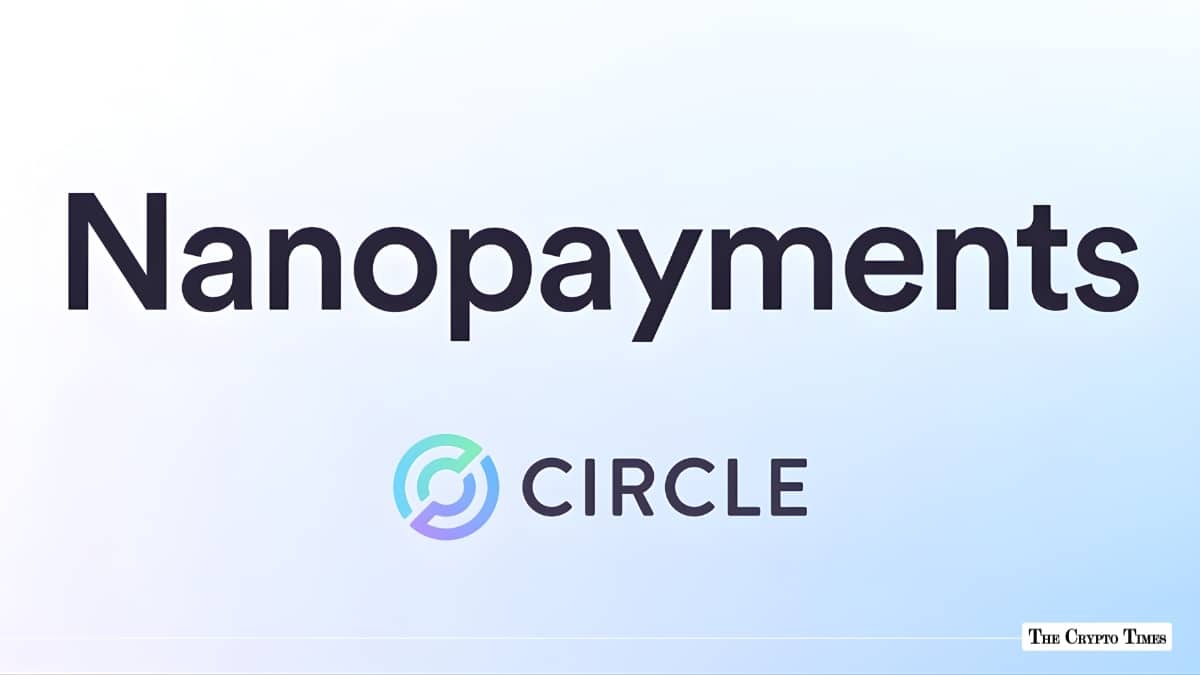
Circle has introduced “Nanopayments” on testnet, pitching it as a payments rail designed for agentic commerce—where AI agents and apps can move tiny amounts of value frequently without users worrying about gas fees.
In an X post, Circle said the system supports transfers down to $0.000001 and “pays zero gas,” signaling a push toward microtransactions that would be uneconomical on typical public chains when fees spike.
On its product page, Circle explains that Nanopayments achieves “gas-free transfers” by bundling small payments into a single onchain transaction, and settling them in batches, an approach aimed at making high-frequency, low-value transfers viable for developers.
Micropayments: A long running crypto promise
Micropayments have been a long-running crypto promise, but transaction fees often break the model. By abstracting those costs through batching, Circle is effectively trying to make USDC usable for:
- AI agents paying for tools/data/compute
- Streaming payments (pay-per-second/minute)
- Usage-based billing (API calls, metered services)
- Machine-to-machine settlement
Circle’s timing is notable as USDC remains one of the largest dollar stablecoins, with major market trackers placing circulating supply around the $76B range large enough for payments products to attract real developer attention if the UX holds up.
The key open questions will be how Circle structures costs (if any) for developers using the service at scale, which chains/environments it expands to beyond testnet, and whether “agentic commerce” usage turns into measurable onchain volume once pilots move toward production.
Also Read: Circle Stock Surges 30% on Q4 Earnings and USDC Growth