Crypto Times Logo Black
Google News Follow Banner
  • News
    • Market
    • Bitcoin
    • Ethereum
    • Altcoins
    • Regulations & Policies
    • DeFi News
    • Blockchain News
    • Industry
  • Exclusive
    ExclusiveShow More
    GENIUS Act stablecoin regulation 2026 — US Treasury, OCC, FDIC and NCUA rulemaking on federal vs state oversight
    GENIUS Act at 10 Months: Inside America’s New Stablecoin Rulebook
    $10.8 Million Drained Inside the THORChain Exploit That Froze Cross-Chain DeFi for 13 Hours
    $10.8 Million Drained: Inside the THORChain Exploit That Froze Cross-Chain DeFi for 13 Hours
    BG Wealth and DSJ Exchange collapse exposes 2026 crypto scam pipeline
    How BG Wealth and DSJ Exposed the New Pipeline Model Behind 2026 Crypto Fraud
    Chainalysis’ Regional Director on Asia’s Crypto Growth and Stablecoin Revolution
    Exclusive: Chainalysis’ Regional Director on Asia’s Crypto Growth and Stablecoin Revolution
    CLARITY Act Markup Vote Today
    CLARITY Act Timeline: From 15-9 Senate Win to July 4 Signing, Here Is Every Step Ahead
  • Opinion
    OpinionShow More
    The CLARITY Act The Final Hand — Everyone's Bluffing, Nobody's Folding, and Thursday Changes Everything
    The CLARITY Act: The Final Hand — Everyone’s Bluffing, Nobody’s Folding, and Thursday Changes Everything
    WazirX Debuts ‘Guardians of Trust’ Hub Security Pivot or Distraction from the 15% Debt
    WazirX Debuts ‘Guardians of Trust’ Hub: Security Pivot or Distraction from the 15% Debt?
    What Does Bitcoin Become in a World Questioning the Dollar?
    What Does Bitcoin Become in a World Questioning the Dollar?
    What Happens to the One Asset Designed to Escape Control
    What Happens to the One Asset Designed to Escape Control?
    A System Built on Control, and a Question That Refuses to Settle
    A System Built on Control, and a Question That Refuses to Settle
  • Learn
    • Explained
    • How To
    • Insights
  • Podcasts
  • More
    • About Us
    • Our Authors
    • Contact Us
    • Editorial Policy
The Crypto TimesThe Crypto Times
  • All News
  • Market
  • Bitcoin
  • Ethereum
  • Altcoins
  • Regulations & Policies
  • Blockchain
  • DeFi
  • Industry
  • Exclusive
  • Opinion
Search
  • News
    • Market
    • Bitcoin
    • Ethereum
    • Altcoins
    • Regulations & Policies
    • Blockchain
    • DeFi
    • Industry
    • Exclusive
    • Opinion
  • Learn
    • Explained
    • How To
    • Insights
  • Quick Links
    • About Us
    • Our Authors
    • Contact Us
    • Editorial Policy
    • AI Policy
    • Sponsored & Advertorial Policy
  • Podcasts
Follow US
© 2026 By Crypto Times. All Rights Reserved.
Regulations & Policies

Korea’s Regulator Turns the Heat on Bithumb in “Ghost Coin” Probe

The FSS is particularly focused on whether Bithumb, or potentially other virtual asset operators, may have violated the Virtual Asset User Protection Act.

Written By:
Dhara Chavda

Last updated: February 10, 2026 1:58 PM
Published February 10, 2026 1:34 PM
Share
Last updated: February 10, 2026 1:58 PM
Published February 10, 2026 1:34 PM
Korea’s Regulator Turns the Heat on Bithumb in “Ghost Coin” Probe

Key Highlights

  • The FSS upgraded its investigation level just three days after the incident, deploying additional personnel to probe.
  • Authorities are investigating whether Bithumb breached the Virtual Asset User Protection Act.

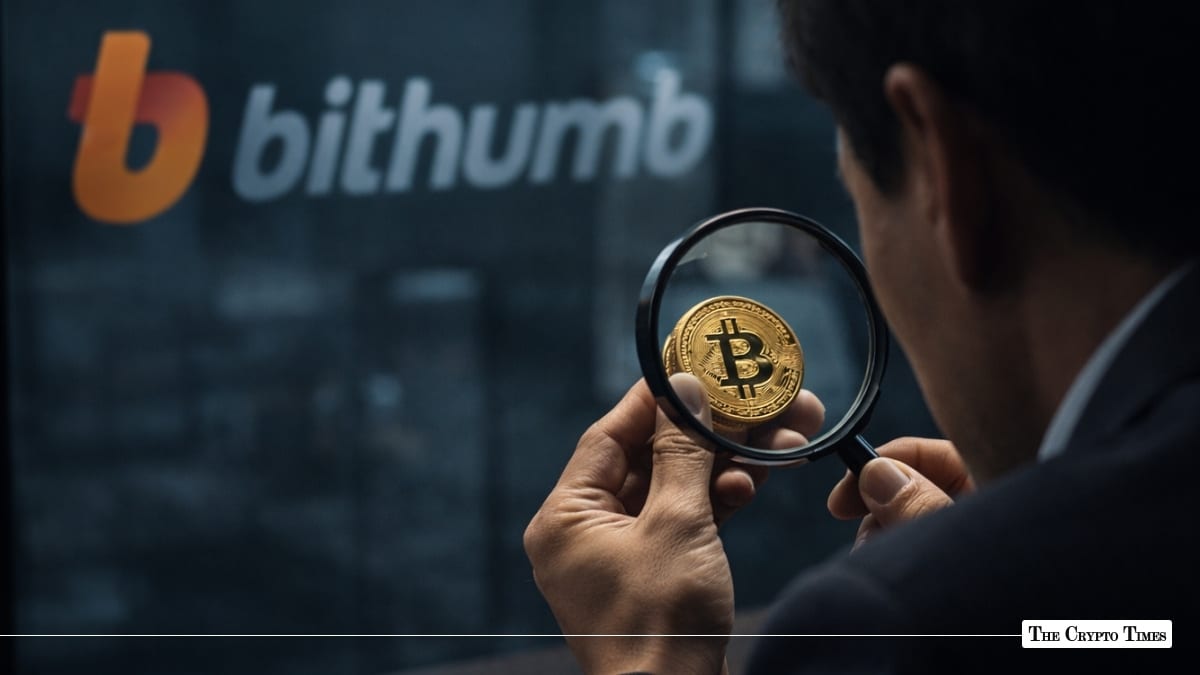
The Financial Supervisory Service (FSS) has dramatically escalated its scrutiny of Bithumb, one of South Korea’s leading virtual asset exchanges, transforming what began as an on-site check into a full-scale inspection. 

This decisive move comes in the wake of a monumental Bitcoin overpayment incident, where an erroneous transaction saw a payout of 620,000 Bitcoin units, an amount far exceeding Bithumb’s actual holdings. 

Following the recent operational glitch, Bithumb announced that it would give 110% compensation to affected users after the Bitcoin (BTC) price drop on the exchange.

Bithumb has successfully clawed back 99.7% of the Bitcoin erroneously credited to user accounts. Of the 1,788 BTC that were quickly sold by users before the platform could intervene, Bithumb has managed to recoup 93%, and roughly 125 BTC remains unrecovered. Bithumb has confirmed it will use its own corporate reserves to cover this remaining gap, ensuring that all customer balances are fully collateralized.

The incident, which unfolded recently, has not only cast a long shadow over Bithumb’s operational integrity but has also ignited profound concerns across the entire virtual asset market regarding internal controls, user asset protection, and the efficacy of current regulatory frameworks.

From on-site to intensive inspection

According to a report from Yonhap, on February 10, the FSS formally initiated its intensified inspection after providing advance notice to Bithumb the previous day. This rapid escalation, occurring just three days after the initial on-site inspections commenced on February 7, underscores the gravity with which financial authorities view the situation. 

An FSS official sternly stated, “We are taking this matter very seriously,” emphasizing a commitment to “crack down on any acts that undermine market order.” At the heart of the investigation is the colossal discrepancy between Bithumb’s actual Bitcoin reserves and the erroneously paid-out amount. 

Centralized exchanges (CEXs) like Bithumb operate on a “ledger transaction” model. This system involves customers depositing coins into the exchange’s wallets, with transactions then recorded internally on a ledger rather than directly on the blockchain. 

As of the third quarter of last year, Bithumb held approximately 42,000 Bitcoins, with customer consignments forming the bulk of this figure. Current estimates suggest Bithumb’s holdings have since risen to around 46,000 Bitcoins. The FSS is intensely scrutinizing how 620,000 units—an astonishing 13 to 14 times the exchange’s actual holdings—could have been issued.

Violation of user protection laws

This incident directly impacts Bithumb, its users, and by extension, the entire virtual asset ecosystem. The FSS is particularly focused on whether Bithumb, or potentially other virtual asset operators, may have violated the Virtual Asset User Protection Act. This critical legislation mandates that exchanges hold virtual assets of the same type and quantity as those entrusted by users, a principle seemingly jeopardized by the overpayment.

Beyond Bithumb’s immediate operational and reputational fallout, the broader market faces significant uncertainty. Another financial authority official remarked, “This is an issue that could shake the trust in the virtual asset market as a whole.” The inspection will delve into the technical feasibility of withdrawing such a massive, incorrectly paid sum, questioning the fundamental safeguards designed to prevent such occurrences. Should the findings reveal systemic weaknesses, it could trigger a comprehensive review of bookkeeping and asset custody standards across all virtual asset exchanges.

FSS Governor’s remarks

The inspection commenced immediately and is expected to be thorough, with the FSS deploying additional personnel. The results of this investigation will not only dictate Bithumb’s future but are also earmarked to serve as crucial supplementary tasks for the second phase of legislative discussions on virtual assets. 

FSS Governor Lee Chan-jin highlighted this linkage, stating, “If we cannot properly resolve the ghost coin issue, how can (the virtual asset market) be incorporated into the system?” He further confirmed that “the inspection results have been reflected in the tasks that need to be strongly supplemented in the second phase of legislation.” This suggests that the regulatory landscape for virtual assets is poised for significant adjustments in the near future.

Structural reform

The FSS’s probe will meticulously examine Bithumb’s internal control system. Key areas of focus include identifying the loopholes that permitted a single worker to initiate such a substantial coin payment with a “single click.” 

Regulators will also assess the efficacy of Bithumb’s monitoring systems, which are supposed to cross-reference ledger balances with actual asset holdings. The revelation of such internal control deficiencies is already fueling discussions, lending greater momentum to proposals for limiting major shareholders’ ownership of virtual asset exchanges to 15-20%, a measure aimed at bolstering corporate governance and reducing single points of failure.

The Bithumb incident serves as a stark reminder of the inherent risks and the critical need for robust regulatory oversight in the rapidly evolving virtual asset sector. The FSS’s escalated inspection is a clear signal that financial authorities are prepared to take decisive action to safeguard market integrity and protect user assets, potentially reshaping the operational mandates for all virtual asset exchanges in South Korea.

Also Read: South Korea’s FSS Launches Strict 2026 Crypto Oversight and AI Plan

Disclaimer: The information researched and reported by The Crypto Times is for informational purposes only and is not a substitute for professional financial advice. Investing in crypto assets involves significant risk due to market volatility. Always Do Your Own Research (DYOR) and consult with a qualified Financial Advisor before making any investment decisions.

Follow The Crypto Times on Google News to Stay Updated!      Google News
Google News Banner

TAGGED:Crypto ExchangeSouth Africa
Share This Article
Whatsapp Whatsapp LinkedIn Telegram Copy Link
Dhara Chavda- Crypto Research Analyst at The Crypto Times
By Dhara Chavda
Follow:
Dhara Chavda is a Content Strategist and Research Analyst with 5 years of experience in the crypto industry. She holds a Bachelor’s degree in Computer Engineering and brings a strong technical perspective to her work. Dhara specializes in DeFi, price analysis, and the core mechanics of cryptocurrencies. She also works on crypto news, including research, analysis, and assigning stories, ensuring accurate and timely coverage of key developments in the space.

Latest News

Shinhan Eyes Hong Kong Crypto License to Expand Tokenized Finance
AI Financial $271M WLFI Hit Sparks Going-Concern Warning for Trump Crypto Play
US Lawmakers Move to Make CBDC Ban Permanent in Housing Bill
Gujarat Deputy CM Uncovers Dark Web Crypto Network in India Linked to Terror
RBI HaRBInger 2025 Winners Feature India CBDC, Tokenised KYC & AI Fraud Tools

Find Us on Socials

You may also like

Minnesota Approves Crypto Custody Services for Banks and Credit Unions

Minnesota Approves Crypto Custody Services for Banks and Credit Unions

Swan Bitcoin Sued for $970M Over Alleged Prime Trust Tipoff

Swan Bitcoin Sued for $970M Over Alleged Prime Trust Tipoff

SEC Prepares Framework for Tokenized Stock Trading in Major Crypto Policy Shift

SEC Prepares Framework for Tokenized Stock Trading in Major Crypto Policy Shift

New York Greenlights Galaxy’s Institutional Crypto Expansion

New York Greenlights Galaxy’s Institutional Crypto Expansion

The Crypto Times Logo PNG

Providing real-time, accurate Crypto reporting. Your trusted source for Crypto News and Research.

Stay Updated

All News
Exclusive
Opinions
Learn
Podcasts

Company

About Us
Our Authors
Editorial Policy
AI Policy
Advertorial Policy

Get In Touch

Contact Us
Career

Find Us on Socials

X-twitter Linkedin Telegram Youtube Instagram

© 2026 The Crypto Times | A BITROCK TECHNOLOGIES L.L.C. Company.

DMCA.com Protection Status
  • Terms and Conditions
  • Disclaimer
  • Privacy Policy
  • Cookie policy
Do Not Sell or Share My Personal Information