Key Highlights
- A system configuration error during a promotional event led to Bitcoin (BTC) being distributed instead of small Korean Won (KRW) incentives.
- Bithumb successfully recovered 99.7% of the assets; the remaining 0.3% (1,788 BTC) was covered by the exchange’s own funds to ensure a 1:1 reserve ratio.
- Affected traders who sold at “glitch prices” will receive 100% of their selling price plus a 10% consolation bonus
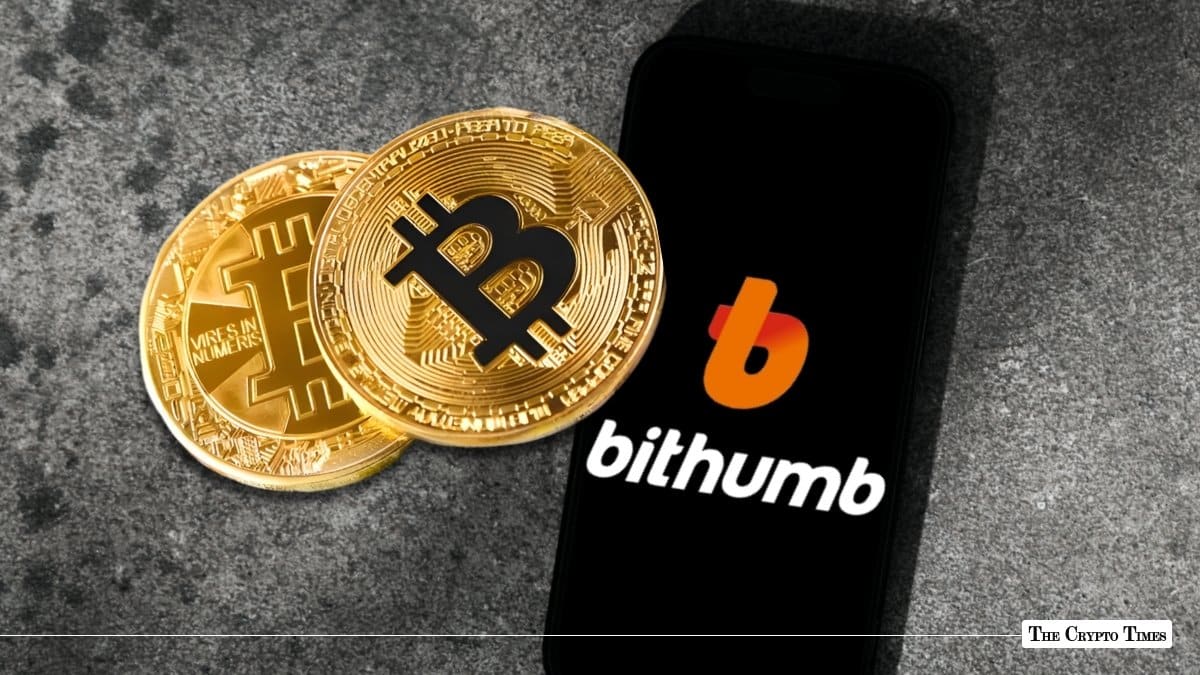
South Korean cryptocurrency exchange Bithumb has officially declared its platform stable and all customer assets secured following a high-stakes operational error that briefly sent the local Bitcoin price into a tailspin.
On the evening of February 6, 2026, an internal system configuration error occurred during a routine reward event. While users were meant to receive nominal incentives in Korean Won (KRW), the system inadvertently credited accounts with Bitcoin (BTC).
The sudden influx of “free” Bitcoin prompted a wave of immediate selling, causing the BTC/KRW pair on Bithumb to diverge sharply from global market prices. Within 35 minutes of the error, Bithumb moved to freeze affected accounts, but not before a small percentage of the assets had been liquidated or moved.
Restoring the reserves
In a statement released by CEO Jaewon Lee, Bithumb confirmed that 99.7% of the overpaid Bitcoin was successfully recovered within 24 hours. To address the remaining 0.3%—amounting to approximately 1,788 BTC—the exchange utilized its own corporate holdings to bridge the gap.
“Bithumb’s holdings of all virtual assets, including Bitcoin (BTC), are 100% equivalent to or exceeding user deposits,” the exchange stated, reassuring the public that the incident was an operational failure rather than a security breach.
Unprecedented compensation measures
After the incident, the Bitcoin price dropped 10% on Bithumb, while other exchanges were unaffected. To mend user trust and address the “localized liquidity shock,” Bithumb has rolled out an aggressive compensation.
Users who sold BTC at unusually low prices during the glitch will receive the full selling price plus 10% in consolation money. All customers logged into the platform during the incident will receive KRW 20,000. Starting February 9, 2026, Bithumb will implement 0% trading fees for all instruments for a period of seven days.
Bithumb’s decision to cover the 1,788 BTC shortfall (worth roughly $176 million at current market rates) out of its own pocket sets a high bar for exchange accountability. By offering “100% + 10%” compensation, they are attempting to prevent a mass exodus of users to competitors like Upbit.
FSS 2026 policy enforcement
South Korea’s financial watchdog, the Financial Supervisory Service (FSS), announced a sweeping 2026 policy agenda on Monday, vowing to impose “bank-grade” oversight on the cryptocurrency market.
Crackdown on market manipulation
In a direct response to the “structural vulnerabilities” exposed by Bithumb, FSS Governor Lee Chan-jin unveiled a toughened regulatory framework during Monday’s policy briefing. The FSS will launch targeted probes into “whale” activities and “price-pumping” schemes.
Using new AI-powered surveillance tools, the watchdog will monitor API Order Manipulation, Social Media Misinformation, and Investigate tokens that see artificial price spikes while exchange deposits/withdrawals are paused.
Punitive fines and IT accountability
The watchdog is moving to treat crypto IT failures with the same severity as banking outages. Under the upcoming legislation, exchanges may be held strictly liable for user damages during IT failures, regardless of proven negligence.
The FSS is reviewing measures to hold executives personally responsible for “systemic negligence” in internal control systems.
The Digital Asset Basic Act
A dedicated task force has been formed to finalize the Digital Asset Basic Act by the first quarter of this year. The Digital Asset Basic Act requires issuers to hold 100% reserve assets in trusted institutions like banks. It will also standardize white papers to prevent the listing of “scam” or “ghost” tokens.
This incident highlights the fragility of localized markets. Because South Korean exchanges are often “walled gardens” due to strict capital controls, a single operational error can create a massive price divergence (a “reverse Kimchi Premium”) that doesn’t reflect global sentiment but can trigger algorithmic liquidations.
Also Read: South Korea’s FSS Launches Strict 2026 Crypto Oversight and AI Plan