Key Highlights
- The Ethereum activation bottleneck has stretched to nearly two months as over 3.5 million ETH sit in the entry queue.
- A near-zero exit queue indicates that current stakers are prioritizing long-term holding over immediate liquidity.
- Staking participation has crossed the 30% threshold of total supply.
In a market that is ‘now or never,’ Ethereum (ETH) investors are doing something unexpected. They are waiting. As of today, the Ethereum validator entry queue has reached 3.53 million ETH, creating a 61-day bottleneck that is in contrast to the exit queue of under 40 ETH. This huge imbalance indicates a surge in institutional and retail demand to lock up capital, even as staking yields have compressed to a low of 2.83%.
By choosing a two-month waiting period over immediate liquidity, investors appear to be signaling a shift in Ethereum’s market role. ETH is increasingly being viewed as a long-term investment rather than just a speculative asset for short-term trading. The desire for stability is outweighing the demand for high immediate returns.
Surge in demand despite low yields
The entry queue has risen sharply over the last 30 days, even with a limit of 256 ETH per epoch in place to control validator movement. Current data shows that 30.02% of the total ETH supply, roughly 36.4 million tokens, is now staked. This represents over $118 billion and sets a new record for the network.

This strong commitment remains steady, even though the staking APR has reached all-time lows. It shows that investors are prioritizing the network’s security and their long-term positions rather than short-term returns.
Evolution of ETH
In the past, staking offered higher yields of almost 6% and shorter entry times. However, as the network has developed, institutional investors and major exchange-traded product issuers have become the main drivers of this growth.
For example, companies like BitMine have increased their assets, now owning over 4.2 million ETH tokens. The proposed Grayscale Ethereum Staking ETF has also helped bring “native yield” and attention into traditional financial systems. This change follows important technical upgrades, such as the Fusaka upgrade.
Introduction of DVT
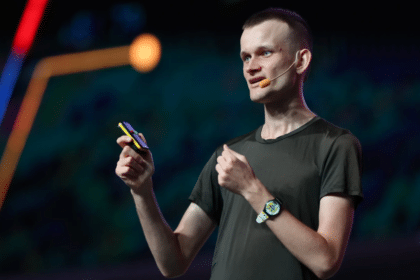
Ethereum co-founder Vitalik Buterin has proposed integrating native Distributed Validator Technology (DVT) directly into the protocol to support network security and decentralization. This proposal aims to simplify the current complexities of DVT, allowing stakers to split a single validator across multiple independent nodes to eliminate single points of failure and reduce slashing risks.
For the millions of ETH currently waiting in the entry queue, such an upgrade could provide a more resilient infrastructure, making it safer for the growing wave of institutions and stakers to lock up their capital long-term.
Impact on market dynamics
At the time of writing, Ethereum is trading at $3,003, reflecting a gain of 1.31% over 24 hours. The total market capitalization stands at approximately $363.5 billion. The circulating supply currently is 120.69 million ETH, accounting for 100% of the current total supply. The current queue situation has major effects on Ethereum’s market dynamics:
- Lower Sell Pressure: A nearly empty exit queue shows that current stakers are not selling their holdings immediately. This contrasts with earlier periods of congestion and demonstrates strong confidence in the asset’s future value.
- Demand Over Yield: Investors’ readiness to wait almost two months for a 2.8% return confirms that Ethereum staking is increasingly seen as a safe option.
- Supply Impact: With nearly one-third of the total supply locked up, the amount of liquid ETH available on exchanges continues to shrink. This could increase the effect of any future demand spikes on market prices.
Ethereum stakers are willing to wait almost two months for a 2.8% yield as the network builds a native yield system accepted by global capital markets. While Ethereum’s price has remained sensitive to wider market sentiment and leverage, the underlying on-chain data shows a strong and growing ecosystem where long-term capital is opting to stay locked in the consensus layer rather than seeking to exit.
Also Read: Vitalik Calls for “Garbage Collection” to Prevent Ethereum Bloat