Key Highlights
- Tether froze over $5M in USDT across three wallets, proving even widely used stablecoins can be centrally controlled and aren’t fully safe.
- S&P’s downgrade warns that USDT carries risks, as reserves include Bitcoin, gold, and bonds, showing volatility can impact stablecoin stability.
- Tether shut operations in Uruguay, laying off most staff due to high energy costs and tariffs, highlighting challenges for global crypto firms.
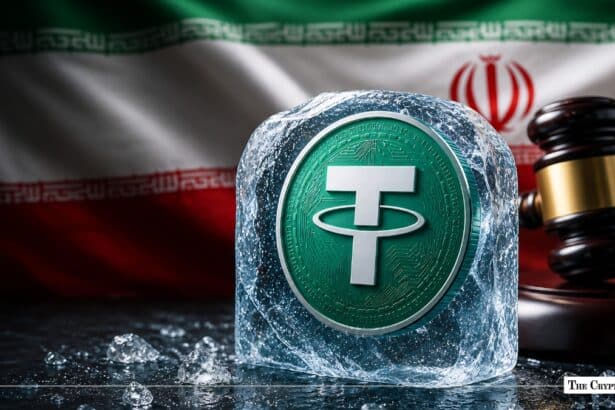
Tether (USDT) has frozen over $5 million across three Ethereum wallets, sparking renewed debate about stablecoin decentralization. According to Defimon Alerts, the first address, 0x09..db76, held $1,099,441. Two other addresses, 0x01..6840 and 0xe4..18f0, had $2 million each frozen. The total blocked amount reached approximately $5.1 million.
These actions emphasize the centralization risk inherent even in widely used stablecoins like USDT. The addresses were blacklisted using Tether’s on-chain usdt_blacklist function, preventing any movement of the affected funds.
Hanzo, a crypto commentator, highlighted the broader issue: “All these stablecoins can be frozen: $USDT, $USDC, $BUSD, $PYUSD, $TUSD, $USDS. Stablecoins are not even crypto, they are internet money, digital numbers on your screen.” The freeze has reignited debates on whether holders are genuinely safe, even in supposedly stable digital assets.
Concerns over reserve transparency
This comes shortly after S&P Global Ratings assigned Tether its lowest stablecoin risk rating of “5 (weak)”. The agency pointed to inconsistent disclosure of Tether’s reserve holdings. Additionally, S&P noted that the reserves now include higher-risk assets like Bitcoin, gold, corporate bonds, and secured loans, increasing exposure to market volatility.
Bitcoin alone represents 5.6% of USDT’s supply, exceeding Tether’s 3.9% overcollateralization buffer. Consequently, major declines in these assets could challenge USDT’s redemption stability. Despite these risks, S&P acknowledged that USDT maintained strong price stability during market stress periods.
About the matter, analyst Ran Neuner responded on X, criticizing the downgrade: “It’s clear at this point that crypto is being attacked and the weapon is the rating and index agencies.” He emphasized that Tether remains largely backed by US Treasuries, gold, and a modest Bitcoin portion, questioning the rationale behind the rating.
Elsewhere, Tether Holdings Ltd. recently announced it has stopped operations in Uruguay and laid off 30 of the 38 employees. It did this due to high energy costs and uncompetitive tariffs. This underlines operational challenges for crypto firms worldwide.
Tether’s freezing of wallets, along with the recent S&P downgrade, proves that not even popular stablecoins are completely risk-free. People should check what backs these coins and remember that companies can still control them.
Also Read: KuCoin EU Secures MiCA License in Austria, Expands Across Europe