
Key Highlights
- Bitmine holds 3.5M ETH despite deep unrealized losses.
- Vitalik Buterin warns rising institutional ETH ownership threatens decentralization.
- ETF-driven accumulation could push Ethereum toward centralized control.
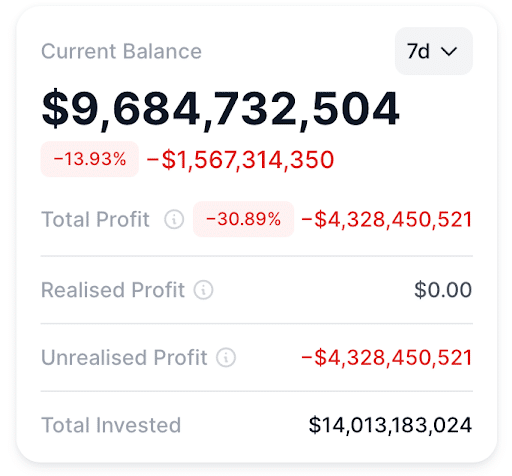
Bitmine’s massive Ethereum (ETH) bet is facing its sharpest stress test yet. According to new data from Dropstab, the company is sitting on $4.47 billion in unrealized losses, with its total treasury down 31.9% from cost basis.
The company has invested over $14 billion into Ethereum in under two years, making it the largest corporate ETH holder, according to CoinGecko. The strategy is now being challenged by the largest market correction since October.
$49M ETH purchase despite losses
Just days before reporting unrealized losses, Bitmine added 17,242 ETH worth $49 million, increasing its holdings above 3.5 million ETH (over $10 billion at early-November prices).
The company says it aims to accumulate roughly 5% of all circulating ETH, funding purchases through equity raises, staking rewards, and cash reserves. Most buys are routed through OTC desks like FalconX and BitGo to avoid moving the market.
A market at a crossroads
While Bitmine continues doubling down on ETH, conviction alone may not shield it from volatility. The company’s $4.4B unrealized deficit underscores how aggressively leveraged corporate accumulation can expose balance sheets during downturns.
For Ethereum, the moment is broader than Bitmine’s losses. As ETF issuers and treasury firms increase their holdings, the network’s decentralization model, long its core differentiator, is facing new structural pressures.
ETH drop triggers $4.4B hit as accumulation alarms rise
With ETH breaking below major support and hitting $2,700 today, according to TradingView, anxiety inside the Ethereum ecosystem is rising. Vitalik Buterin’s warnings now carry new weight. He says steep drops let large players scoop cheap ETH and gain influence as smaller participants are forced out.
Buterin warns that sharp price declines create two risks: smaller developers and validators may exit the ecosystem, weakening Ethereum’s decentralized base, and concentrated buying during downturns lets large players influence technical decisions, such as faster block times or heavier node requirements, that only big operators can support.
In a market where ETH has dropped sharply and liquidity is thin, Buterin warns the community to stay vigilant against creeping centralization driven by volatility rather than design.
Also read: ARK Invest Spends $39M to Buy Dip in Bullish, Circle, and BitMine Shares