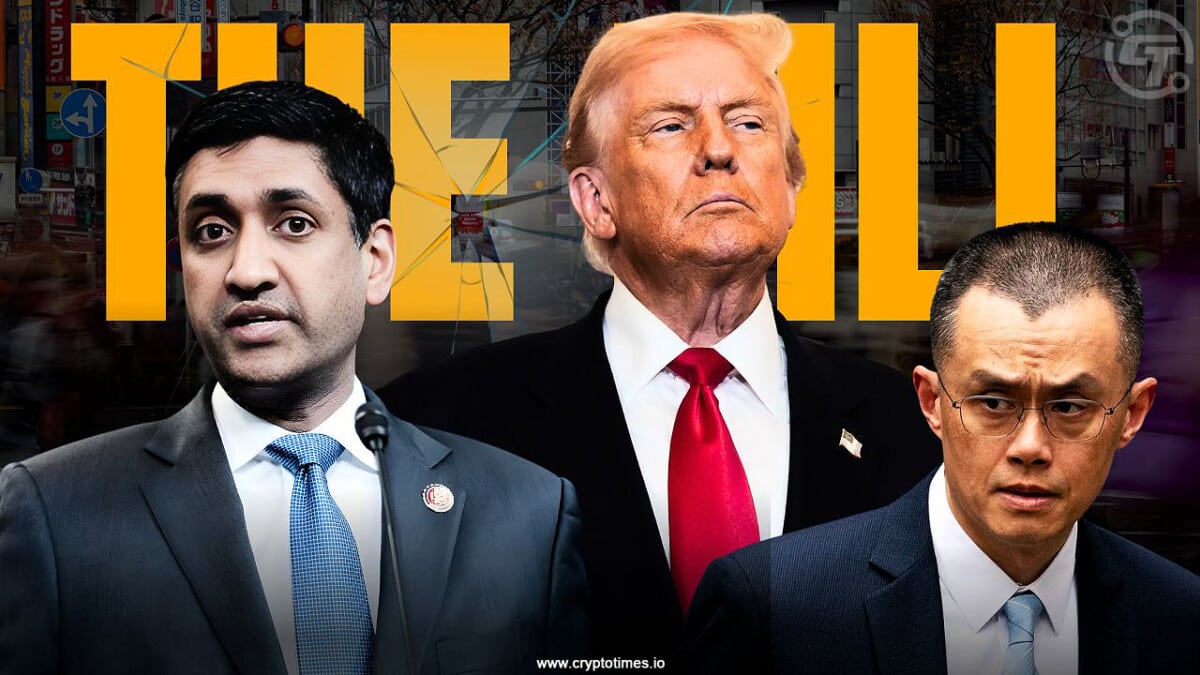
In the final week of October 2025, an unexpected collision between ethics, power, and digital finance sent shockwaves through Washington and Wall Street alike. Representative Ro Khanna of California, a progressive Democrat long known for his stance on corporate accountability, introduced a sweeping bill aimed at curbing political profiteering and reinforcing transparency in digital markets.
The move came just days after President Donald Trump issued a controversial pardon to Binance Co-Founder Changpeng Zhao, known globally as CZ — a decision that reopened old wounds and reignited debates about corruption, crypto, and the fragile intersection between money and politics.
Khanna’s proposed Ethics in Public Service and Digital Transparency Act seeks to limit presidential and congressional financial entanglement with private companies, especially those operating in volatile sectors like cryptocurrency, and mandates new disclosures on crypto holdings by elected officials.
The timing could not have been more explosive: the White House was still facing backlash over Trump’s decision to free Zhao, the billionaire who once pleaded guilty to federal money-laundering violations.
“We have a president who is enriching himself and his family in an obscene wealth that is unprecedented in American history,” Khanna told MSNBC on October 27. “People need to wake up to what’s going on – it’s corruption right before our very eyes.”
Why did Ro Khanna introduce this bill?
Khanna’s office has framed the bill as a moral reset — a direct response to what he and other Democrats call a growing conflict-of-interest crisis inside the Trump administration.
The proposal would restrict senior officials and their families from launching, investing in, or promoting digital-asset ventures while in office. It also calls for real-time public disclosure of crypto transactions by government leaders, with mandatory audits by an independent ethics board.
Under the bill, the President, cabinet members, and members of Congress, as well as their immediate family members, would have to publicly disclose all crypto assets they hold. It also includes disclosing any partnerships or equity stakes linked to blockchain ventures, and any gifts or payments received through digital assets. These disclosures would be published in a centralized database accessible to the public, allowing watchdogs and journalists to trace potential conflicts of interest in real time.
But beyond its immediate political target, the Ethics in Public Service and Digital Transparency Act seeks to redraw the boundaries between governance and speculation in an era where a single tweet from a public figure can send token markets soaring or crashing.
Policy analysts view this as an unprecedented attempt to institutionalize transparency, not only to curb corruption, but also to bring credibility to the digital-asset industry itself. By decoupling public office from private investment, the bill’s advocates argue it could build a fairer foundation for crypto innovation in the U.S.
At the core of Khanna’s push also lies a fear that power is being leveraged to influence speculative markets. To many in Washington, the Binance pardon is the spark that lit the fuse.
Still, even critics concede that the timing of the bill, arriving just days after Trump’s pardon of Binance Co-Founder Changpeng Zhao, makes its political message impossible to ignore. Khanna’s effort taps into a broader national question: Can public trust survive in a world where financial power and political influence trade hands in real time?
Trump’s crypto turnaround
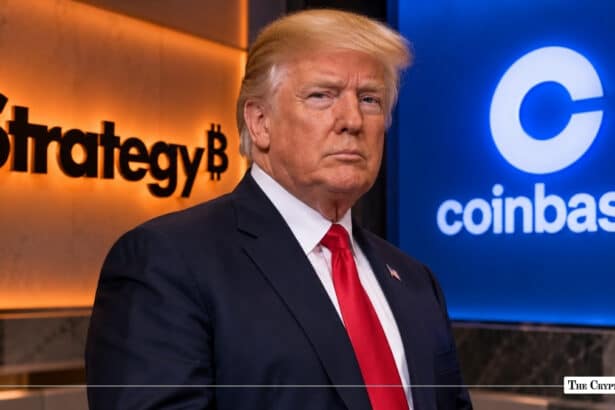
Only five years ago, Donald Trump had dismissed digital assets as “a disaster waiting to happen.” Yet by late 2024, the president had recast himself as crypto’s most powerful ally, proclaiming the United States “America the crypto capital of the world.”
Why did Trump fall in love with crypto?
Before Trump’s presidency, the White House under Joe Biden took a hard stance against cryptocurrencies. Biden’s administration was widely viewed as anti-crypto, it introduced stricter regulations, cracked down on exchanges, and failed to support digital innovation. During that period, several major scandals and hacks rocked the crypto world, including the infamous FTX collapse, which shook investor confidence globally.
As the industry suffered under Biden’s watch, much of the crypto community felt abandoned and voiceless. Trump saw an opportunity, not because he admired the technology, but because he recognized the political and financial potential in adopting it.
He understood that the crypto community was large, passionate, and hungry for political representation. By aligning himself with their cause, Trump could not only tap into a new voter base but also position himself as the champion of innovation and freedom against government overreach.
Trump didn’t embrace crypto for its principles of decentralization or financial liberty; instead he embraced it because it was profitable, both economically and politically. Recognizing the void Biden left, Trump moved quickly to fill it. He became the first U.S. president to accept Bitcoin (BTC) donations for his campaign, launch his own merchandise in crypto, and later release his own family-branded coins and tokens.
How crypto made Trump profitable: Financially and politically
Trump’s entry into the crypto market was more than symbolic; it became a cornerstone of his financial empire and political messaging.
When the crypto-friendly narrative gained traction, Trump’s popularity among digital investors soared. He positioned himself as the leader who would “end the war on crypto,” and in doing so, united millions of traders, miners, and blockchain enthusiasts under his banner.
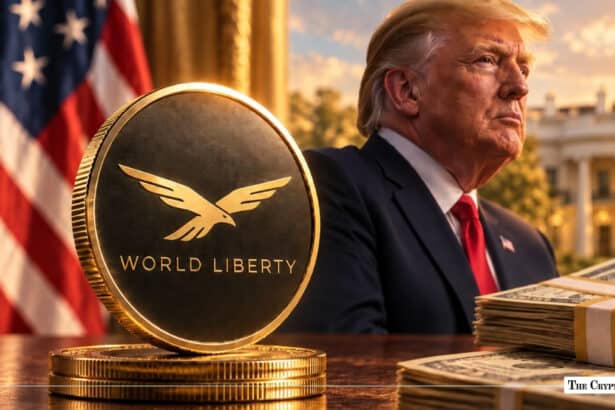
Financially, his ventures were groundbreaking. The World Liberty Financial Inc. (WLFI) project turned into a multi-billion-dollar ecosystem, with the Trump family collectively holding nearly a quarter of its total tokens. This made WLFI more valuable than the Trumps’ real estate holdings combined.
Politically, this pivot was genius. By connecting with the crypto crowd, Trump gained a loyal online army, vocal, influential, and global. His name became synonymous with crypto freedom, transforming him into a cultural icon for decentralization and anti-establishment sentiment.
The Trump family’s crypto empire grew rapidly. His sons, Donald Jr. and Eric, helped launch World Liberty Financial Inc. (WLFI), a crypto platform that markets Trump-themed tokens and stablecoins. His wife, Melania, released a series of NFTs that grossed millions.
Then, in late 2025, the family’s flagship token debuted, and it was nothing short of historic.
The Trump family notched as much as $5 billion in paper wealth after its venture opened public trading of WLFI, a new digital currency designed to anchor its crypto ecosystem. The launch was akin to an initial public offering: the token could now be bought and sold freely, valuing the Trumps’ holdings at unprecedented levels.
Before the listing, early investors could not exchange their privately purchased tokens. The debut changed that overnight, turning WLFI into one of the most talked-about assets in global crypto.
The Trump family, including the president himself, holds just under a quarter of all WLFI tokens in existence. The company lists Trump as “Co-Founder Emeritus,” while his sons are active co-founders and executives. WLFI says founders’ tokens remain “locked,” meaning they cannot sell, but their valuations now dwarf even the family’s iconic real-estate empire.
WLFI has quickly become the Trump family’s most valuable asset, eclipsing hotels, golf courses, and licensing ventures combined.
Influence matters: How power shapes perception in crypto
In the world of cryptocurrency, influence is everything. Prices and public trust can shift with a single post, interview, or endorsement, especially when it comes from someone powerful.
When Donald Trump, the sitting President of the United States, began openly endorsing crypto, it gave the entire industry an aura of legitimacy. People naturally trust authority, and when the most powerful political figure in the world starts promoting digital assets, millions take notice.
There were three major reasons this influence was so strong:
- Presidential Power: As the U.S. President, Trump’s words carried massive weight. Every statement he made about Bitcoin or crypto could move markets within minutes.
- Pro-Crypto Leadership: Trump became the first “pro-crypto president,” publicly accepting Bitcoin, launching coins, and celebrating digital innovation.
- Mass Influence and Perception: When the First Family — including Melania Trump, launched NFTs and tokens, it sent a message that crypto wasn’t just safe but elite, patriotic, and endorsed by power. Millions followed suit, investing in Trump-branded projects and fueling a massive speculative surge.
In short, Trump’s brand became the market, and his influence converted trust into wealth, both political and financial.
The pardon that shook the markets
When news broke that Binance had entered into a partnership with WLFI, eyebrows raised. Then came the pardon. Within days of Zhao’s release, the crypto world erupted with claims of quid pro quo.
Senator Chris Murphy (D-Conn.) posted, “One week after Trump pardoned Binance’s owner… Binance starts promoting Trump crypto.” The next day, he added a single word: “payback.”
Murphy later described the move as “stunning,” and by Thursday was calling the administration “Trump’s corruption factory.”
To Trump’s allies, Zhao’s pardon was an act of justice. To his critics, it was an open invitation to suspicion.
Trump himself defended the decision, saying he did it “at the request of a lot of very good people.”
White House press secretary Karoline Leavitt echoed the president’s line, insisting that the decision had been “thoroughly reviewed” and that “Neither the president nor his family have ever engaged, or will ever engage, in conflicts of interest.” She added, “In their desire to punish the cryptocurrency industry, the Biden administration pursued Mr. Zhao despite no allegations of fraud or identifiable victims.”
Her message concluded with a flourish: “The Biden administration’s war on crypto is over.”
But opponents, from Capitol Hill to Silicon Valley, weren’t convinced. Representative Jerry Nadler (D-N.Y.) fired back on X: “Trump is selling pardons to anyone who can personally profit him. It’s a shameful abuse of power and a mockery of justice.” Palantir Co-Founder Joe Lonsdale warned, “POTUS has been terribly advised on this; it makes it look like massive fraud is happening around him in this area.”
CZ’s redemption arc
Zhao’s fall from grace was swift. In 2023, the U.S. Treasury accused Binance of “wilful violations” of federal anti-money-laundering laws. Then-Treasury Secretary Janet Yellen announced that “Binance turned a blind eye to its legal obligations in the pursuit of profit,” adding, “Its wilful failures allowed money to flow to terrorists, cybercriminals, and child abusers through its platform.”
Changpeng Zhao accepted responsibility at the time: “I made mistakes, and I must take responsibility,” he wrote, calling his guilty plea “the right thing to do.”
Now, he is a free man, and seemingly emboldened. “deeply grateful for today’s pardon and to President Trump for upholding America’s commitment to fairness, innovation, and justice,” Zhao posted on social media the day of his release.
When asked about the decision, Trump appeared nonchalant: “Are you talking about the crypto person?” he said, later adding it came “at the request of a lot of good people.”
Changpeng Zhao’s allies insist nothing improper occurred. “CZ has never given WLFI a single dollar,” Gitcho stated. “Our understanding is that neither Steve nor Eric met with CZ.” She brushed off suspicions of coordination: “Dealing with Binance is like selling ice cream and dealing with the milk distributor.”
Binance lawyer Wayne F. Dennison reiterated, “Binance and its legal team remain committed to complying with all legal requirements with integrity and transparency.”
The speculation storm
Still, the online reaction has been ferocious. On X, theories abound linking Trump’s pardon to Binance’s subsequent marketing of WLFI’s stablecoin, USD1. Some users accused the two camps of manipulating markets through influence and timing.
“First, Changpeng Zhao pleaded guilty to a criminal money-laundering charge. Then he boosted one of Donald Trump’s crypto ventures and lobbied for a pardon,” wrote Senator Elizabeth Warren to WIRED, adding, “If Congress does not stop this kind of corruption in pending market structure legislation, it owns this lawlessness.”
Binance.US quickly denied any political linkage: “To be clear, this was a business decision on the part of Binance.US and nothing more. It’s unfortunate that even routine business decisions are now unfairly politicized by our elected officials.”
The White House, for its part, continued to paint the pardon as a corrective to Biden-era overreach. “This was an overly prosecuted case by the Biden administration,” Leavitt argued. “So the president wants to correct this overreach of the Biden administration’s misjustice and he exercised his constitutional authority to do so.”
From Dubai to D.C.: CZ’s vision reborn
For Zhao, the post-pardon months have been a global rebranding tour. At a Binance summit in Dubai, he declared, “a war on crypto by the last administration. But now there is a counter-reaction. Now they’ll let us accelerate much faster.” In another interview, he mused, “Obviously this would be a good guy for our industry, and also for any sort of people who have a criminal charge, unfairly I think.”
Later, at the same event, Zhao said, “Everything changes. Agreements can be updated with new agreements. Even governments change.”
After his release, he posted on X, “No felon would mind a pardon,” then cryptically posted in Arabic: “God has willed it.”
The broader fallout
The Binance-Trump connection has rippled through the industry. A few days after the pardon, Coinbase found itself under renewed scrutiny for its own political donations and ties to pro-Trump super PACs. Industry figures warned of lasting reputational damage.
“What the hell happened,” Zhao himself had once asked rhetorically — a question that now hangs over the entire sector.
To some, like Patrick Hillmann, a former Binance executive, Zhao’s motives are simpler: “For him, I think this is really about clearing his name. I think this is closure for him.”
But to Washington insiders, the optics remain damning. As Warren put it bluntly, “If Congress doesn’t fix this, it owns it.”
The politics of power and price
Khanna’s bill, in that sense, isn’t just about ethics, it’s about restoring confidence in governance itself. By demanding full disclosure and restrictions on presidential financial dealings, it aims to prevent markets from swinging on a single tweet or pardon.
Crypto analysts warn that such volatility has become systemic. Each time Trump speaks about digital assets, trading volumes spike. Each time Zhao posts, token prices swing. The blend of political influence and speculative capital has created what one economist calls “a new shadow market of perception.”
As one Democratic aide noted privately, “When one man’s pardon can add billions to token valuations overnight, we have a structural problem, not just an ethical one.”
A nation divided between innovation and integrity
At its heart, this saga is less about technology than about trust. Trump’s supporters hail him as a visionary freeing America’s innovators from bureaucratic chains. Critics see the same moves as proof of unbridled cronyism.
Khanna’s bill will face a steep climb in the Republican-controlled House, but its political message has already landed. It reframes the crypto debate not as left versus right, but as power versus principle.
For now, both Trump and CZ appear undeterred. “deeply grateful,” Zhao wrote, while Binance called the decision “incredible news.”
And as markets rally on rumors and reposts, Washington prepares for another season of hearings, investigations, and half-truths.
Because in the age of political tokens and presidential pardons, the price of trust, like the price of Bitcoin, can change overnight.
A question of trust
Ro Khanna’s bill comes at a time when the line between power and profit feels thinner than ever. The Ethics in Public Service and Digital Transparency Act may not fix everything, but it represents a step toward rebuilding faith in how leaders handle money and influence.
Today, financial markets move not only on data but on reputation. A single post, a speech, or even a pardon can shift billions of dollars in value. Ordinary people often find themselves caught in the middle, investing their hopes and savings in systems shaped by those in power.
Khanna’s proposal is an attempt to restore some balance. It asks for honesty, clearer rules, and accountability in a world where trust itself feels uncertain. It also reminds us that transparency isn’t about punishment, it’s about protection.
When public figures can profit from the very industries they regulate, it’s fair to ask who they are really serving. Is this bill the beginning of a cleaner and fairer system, or just another political statement? And in a market driven so much by influence, can transparency still keep pace?
But it raises deeper questions too.
- Can a democracy truly function when wealth and influence move faster than regulation?
- Should public officeholders be allowed to hold private stakes in industries they can directly impact?
- When every statement from a leader can move markets, where does leadership end and profit begin?
- And if power can shape perception so easily, what chance do ordinary investors have in playing fair?
Perhaps this is where it starts, not with accusations, but with reflection. A quiet reminder that in politics and in markets, everything still depends on one thing, that is trust.