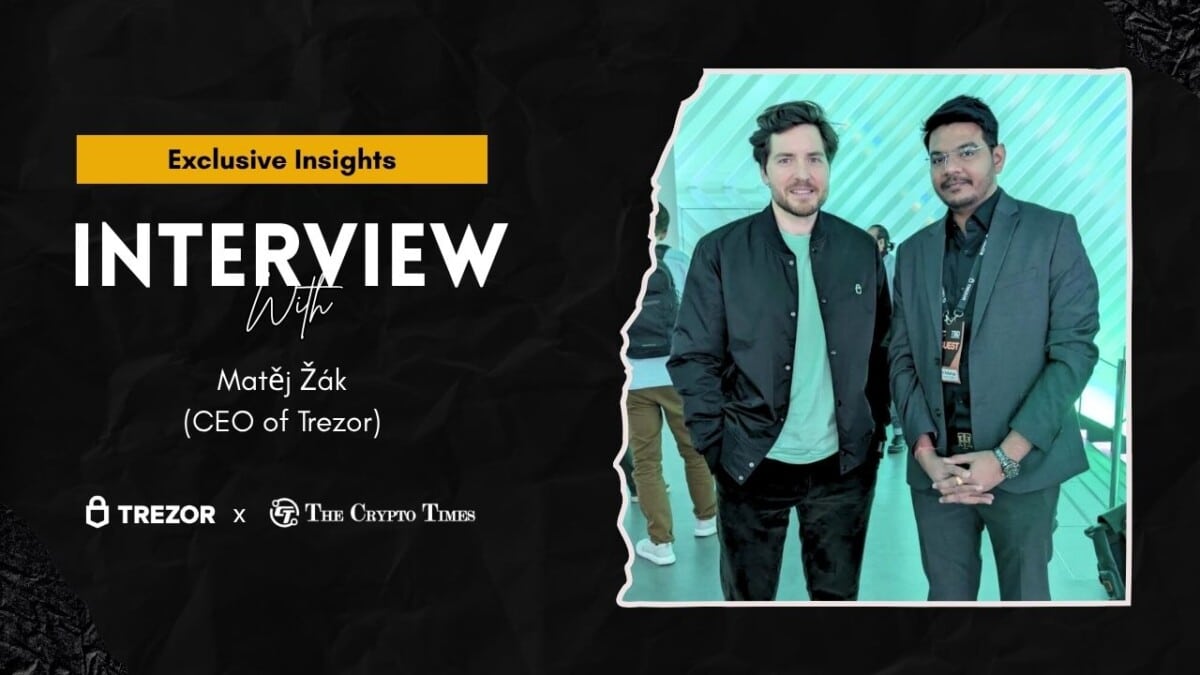
Trezor’s Prague headquarters was buzzing as The Crypto Times founder and CEO Mr. Hardik Katariya, sat down with CEO Mr. Matěj Žák for an exclusive chat. With the company unveiling its new Trezor Safe 7 hardware wallet, the discussion quickly went beyond product specs — into philosophy, privacy, and the personal story behind one of crypto’s most trusted names.
A musician who learned code
Before leading a global crypto firm, Žák was a musician. A guitarist, to be specific, practicing for hours daily, obsessing over precision. That discipline, he says, shaped everything that came after.
When he joined Trezor, it wasn’t as a tech visionary but as someone curious to fix things. Over time, that curiosity turned into leadership. “One of the key experiences that I have early on in life was basically working super hard on my technical skills of playing guitar. I was basically practicing, you know, eight hours a day… I kind of realized that if I spent enough time working hard on something, that I would ultimately get better at it.”
The lesson that changed Trezor
Trezor’s identity today, fully open source, radically transparent, wasn’t born out of marketing. It came from a painful realization.
Years ago, the company discovered a serious flaw in a closed-source security chip used by rival wallet makers. However, due to an NDA with the chip manufacturer, Trezor was unable to publicly warn anyone.
That, Žák said, was the turning point.
“We tried in the past to work with secure elements that were closed sourced. We find some vulnerability with those chips and those chips were by the way used by our competitors… But because of the NDA… we are not allowed, legally allowed to talk about it with anyone… We realized, well, the security by obscurity is not the way to go. We need to go transparent way.”
Out of that frustration came Tropic Square, Trezor’s open-source chip venture, ensuring that every layer of its devices could be audited and improved by the community.
Trezor Safe 7: A quiet start with a loud response
The newly launched Trezor Safe 7 embodies that same belief, practical, auditable, and built for people who are serious about self-custody.
What surprised Žák was the response. Even before any ad campaigns or influencer buzz, the wallet was selling fast.
“Ultimately, I like to say the market sort of speaks for itself whether, the product is successful or not… I think, you know, the customers will tell whether this is a good product or not. We obviously believe it is. I believe it is one of the most, one of the best hardware wallets in the market today. But, yeah, let the customer decide,” he said with a smile.
For him, that organic traction wasn’t about hype; it was validation that trust still matters in crypto.
Data Privacy: “The safest data is the one you don’t have”
Trezor’s data philosophy is brutally simple: delete everything you don’t need.
In an age where user data is treated as a commodity, Trezor does the opposite. Customer information collected during purchase or shipping is automatically erased after about 90 days.
Žák explained it best: “The safest data is the one you don’t have. So when customers order through our E Shop… after certain… like 90 days… we actually delete it from the database and we don’t have it. Right.”
It’s not just a slogan; it’s an operational rule that few companies in crypto, or tech in general, follow so strictly.
Navigating regulation without compromise
With global regulators turning their eyes to crypto, Trezor has managed to stay largely unaffected. But Žák knows it’s only a matter of time before self-custody faces scrutiny.
He’s clear on where Trezor stands: if ever pushed by authorities to compromise user access, they wouldn’t bend easily. Protecting users’ freedom is, in his words, “non-negotiable.”
Not the cheapest, and proud of it
In a market filled with low-cost wallets and overpromised security, Trezor takes a different route. The Safe 7 isn’t aimed at beginners chasing discounts; it’s built for users who value independence.
“I accept the fact that our most premium Device now, Trezor Safe 7, is not for everyone… That being said, it does not break the bank for many people… Yeah, it’s very reasonable… So I think the right people will buy it. Again, the market will speak.”
That mindset, prioritizing reliability over reach, has kept Trezor relevant even as dozens of new hardware wallet brands come and go.
Prague’s crypto heartbeat
Trezor was born in Prague more than a decade ago, back when Bitcoin meetups could fit inside a café. Today, the city has become a quiet capital for crypto builders, and Trezor remains its cornerstone.
Beyond hardware, the company invests in local conferences, education, and open-source initiatives that expand Bitcoin’s footprint across Europe.
Bitcoin’s Future: Between realism and faith
Žák isn’t one for wild price calls, but he humored one prediction when asked where he sees Bitcoin next.
“Price speculations are always hard…,” he said, laughing. “My fair prediction would be somewhere between 200 and 300.”
What does matter, he added, is how people understand Bitcoin, not how much it’s worth.
The core message: Self-custody above all
For Žák, the takeaway is simple: learn, research, and take control of your crypto.
“If you’re not into crypto yet, then research Bitcoin and ultimately buy some… For the crypto users, if you are on an exchange, get into a self-custody of a hardware wallet. It doesn’t even have to be us. But I just really believe that hardware wallets are superior.”
He’s careful not to make it a sales pitch. “It doesn’t even have to be us,” he added. “But it should be secure.”
Why Trezor still feels different
After over a decade, Trezor hasn’t lost its identity in a market obsessed with hype. It’s still the same company that believes openness is strength, that real security comes from being auditable, not secretive.
From the way it handles customer data to how it designs chips, every choice comes back to that same moment years ago, the chip flaw they couldn’t warn the world about.
That, Žák said, was the day they decided never to rely on silence again.
Also Read: How a Govt Collapse Inspired the Biggest Wallet Company