The headlines are easy. Aave’s $161 million DeFi United coalition. Stani Kulechov’s personal 5,000 ETH. Mantle’s 30,000 ETH credit facility. Consensys and Joseph Lubin’s 30,000 ETH pledge. Circle buying AAVE in a public show of support. The cross-protocol bailout is the kind of story DeFi rarely produces—and it deserves most of the airtime.
But the harder question facing Aave isn’t whether the rsETH backing gets restored. It’s who actually pays for what’s left over—and the protocol’s community forum is starting to make clear that the answer depends on three governance votes whose outcomes will land very differently for three different sets of users.
The Llamarisk Report Most Coverage Has Glossed Over
Aave Labs and risk service provider Llamarisk published a formal incident report on April 20 modelling the protocol’s exposure under two distinct scenarios. Most secondary coverage has cited the headline numbers—$123.7 million to $230.1 million in bad debt—without unpacking what those scenarios actually mean for users.
Scenario 1: uniform socialisation
The 112,204 unbacked rsETH is socialised across the entire rsETH supply, producing a 15.12% depeg. Bad debt on Aave totals approximately $123.7 million, with Ethereum Core absorbing $91.8 million in absolute terms and Mantle facing a 9.54% WETH reserve shortfall. Mainnet rsETH holders take the largest haircut, but the haircut is small.
Scenario 2: L2 isolation.
Losses are isolated to L2 rsETH, applying a 73.54% haircut on collateral on remote chains while leaving Ethereum mainnet rsETH fully intact. Bad debt jumps to approximately $230.1 million, concentrated on Mantle at a 71.45% WETH reserve shortfall and Arbitrum at 26.67%.
The asymmetry is the story. Under Scenario 1, mainnet users absorb most of the absolute pain but each individual takes only a 15% hit. Under Scenario 2, mainnet users walk away whole while L2 users — particularly on Mantle — see the value of their rsETH collateral cut by nearly three-quarters.
This is the fairness debate the bailout headlines have not been forced to confront. The DeFi United funds reduce the residual deficit either way, but the allocation methodology itself is a Kelp DAO governance decision that determines which set of users bears what’s left.
The Umbrella Module’s First Test — and an Awkward Optic
The April 18 incident also produced the first real-world stress test of Aave’s Umbrella safety module, the slashing-based backstop that replaced the older Safety Module in early 2026. Umbrella holds staked aWETH that can be slashed to absorb shortfalls in the WETH reserve.
The optics from the live test are uncomfortable. Per Llamarisk’s report, 18,922 of 23,507 staked aWETH had entered the unstaking cooldown by the time the report was published—meaning roughly 80% of the module’s largest backstop position was already trying to exit before slashing could be triggered. Llamarisk’s recommendation under Scenario 1 was an immediate pause of the WETH Umbrella module, blocking deposits, withdrawals, transfers, and slashing while keeping rewards distribution active.
The Umbrella WETH module currently holds about 23,500 WETH (~$54 million) against potential Ethereum Core exposure that could reach $91.8 million under Scenario 1 — a structural gap that the governance forum has not yet fully addressed in public.
The Community Pushback the Bailout Story Has Buried
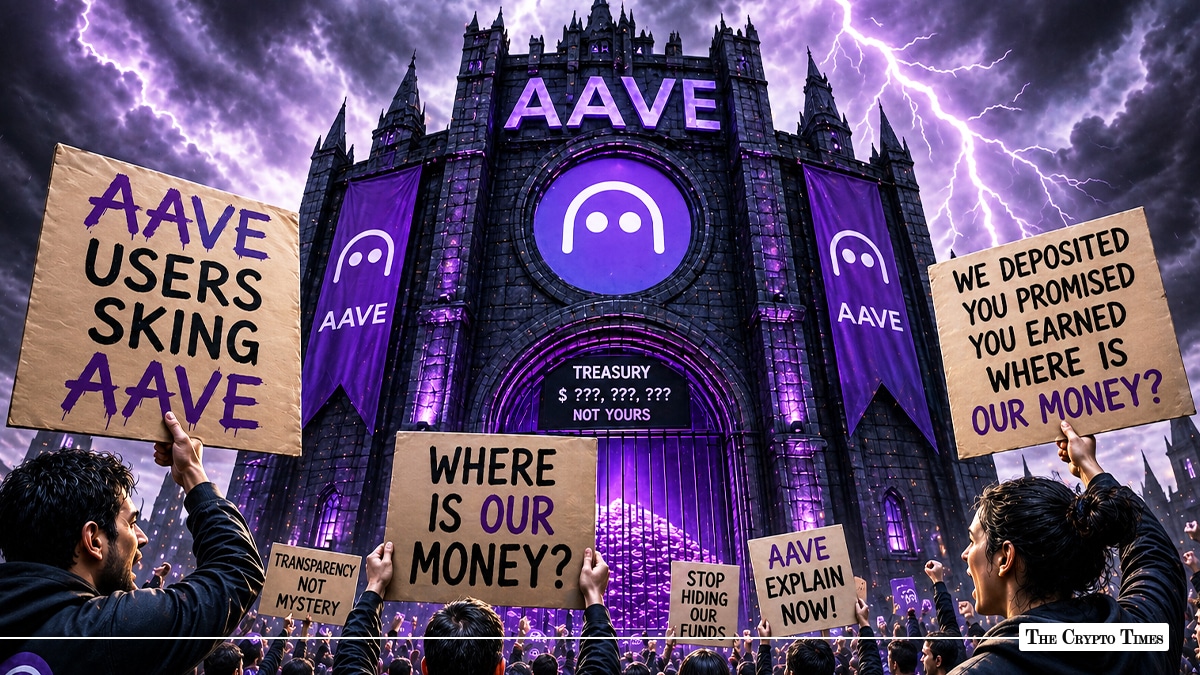
Beneath the cross-protocol coordination headlines, the Aave governance forum has produced sharper criticism than secondary coverage has reflected. Forum user robtg4 published a notable response to the 25,000 ETH ARFC, acknowledging the DeFi United coordination (“genuinely impressive… collective responsibility… that matters”) while raising a fundamental objection: the proposal asks the DAO to commit 25,000 ETH to make users whole without requiring, as a precondition, specific reforms to the listing process that admitted rsETH at 93% LTV in LST eMode shortly before the exploit.
A separate forum user, ApuMallku, has questioned aggressive asset listings, low governance turnout, and what they characterized as over-reliance on the Aave Guardian for emergency freezes. Others have raised alleged conflicts of interest involving risk advisors with ties to Kelp DAO, and demanded structural reforms: fewer assets listed overall, on-chain autonomous freeze mechanisms, and withdrawal cooldowns to prevent bank-run dynamics during incidents.
Solidity auditor 0xQuit flagged the worsening bad debt and 100% utilisation in the immediate aftermath, urging clarity on loss allocation before depositors could be expected to make informed decisions about whether to withdraw. The bank-run dynamic—multiple WETH and stablecoin pools hitting 100% utilisation as users rushed for the exit—is itself a governance question, since Aave’s interest rate models are calibrated by the same DAO that’s now being asked to underwrite the recovery.
What Users Are Actually Asking
While the governance forum debates allocation methodology and risk firewalls, the questions dominating X, Reddit, and the Aave forum from regular users are blunter and more immediate: “Is my money frozen?” “Who pays for the bad debt?” “Will my staked AAVE get slashed?”
The practical answers, two weeks in, are uncomfortable. Users with rsETH or wrsETH positions remain locked out across Aave V3 and V4 deployments on Ethereum, Arbitrum, Base, Mantle, and Linea — the Guardian’s freezes have prevented further damage but also prevented affected holders from doing anything with their collateral while the recovery executes. Users without rsETH exposure haven’t been spared either: multiple WETH and stablecoin pools have hit 100% utilisation, with depositors reporting they cannot withdraw because borrowers haven’t repaid and rates have spiked to liquidation-discouraging levels.
The bank-run dynamic is itself a structural question. Aave’s pooled-liquidity architecture means a stress event in one collateral type can freeze withdrawals across unrelated assets—the contagion exactly that the Risk Firewalls TEMP CHECK is designed to address.
Capital Rotation Has Already Started
The market is not waiting for governance. SparkLend, the MakerDAO-aligned lending protocol that preemptively delisted rsETH before the exploit, has captured measurable inflows from Aave depositors over the past two weeks. Analyst @chaichin77 noted on X that while Aave’s TVL outflows have slowed since the immediate post-exploit panic, trust remains fragile — and the comparison to Spark’s earlier conservative listing decision has become the cleanest counterfactual for users debating whether to return.
The longer-term question is whether Aave’s shared-pool lending architecture and external collateral acceptance — the same features that drove its TVL dominance — are the right design for a DeFi environment increasingly dependent on bridged, restaked, and cross-chain assets. The coming votes determine not just how losses are distributed, but whether the protocol’s risk model evolves to match the assets it lists.
The Live TEMP CHECK on Risk Firewalls
The most concrete governance reform now on the table is a TEMP CHECK titled “Risk Firewalls: Tier-Based Isolation & Liquidity Silos,” filed April 25 by forum user litostarr and tagging Stani Kulechov, Aave Labs, and Llamarisk. The proposal’s framing is direct:
The rsETH incident, it argues, exposed a systemic vulnerability in Aave’s current architecture — contagion risk. When liquidity is uniform across asset classes, a failure in one collateral type cascades into pools that have nothing structurally to do with it. The TEMP CHECK proposes tier-based isolation, hard caps on liquid restaking token (LRT) exposure, wrap-depth ineligibility limits, and stricter rules for assets that depend on cross-chain bridges to maintain backing.
The proposal does not yet have a binding vote attached, but its timing and authorship matter. Filed seven days after the exploit, tagging the Aave founder directly, and explicitly framing the rsETH listing as the case study, it represents the structural reform conversation that the bailout vote has not yet been asked to confront.
Three Votes, Three Different Outcomes for Three User Groups
What’s unfolding on the Aave forum is effectively three parallel governance questions, each with a different distributional consequence:
The 25,000 ETH ARFC determines whether the DAO treasury contributes to making rsETH holders whole. If it passes without preconditions, Aave’s broader token holder base subsidises the recovery; if it passes with reforms attached, the listing process tightens but disbursement may slow.
The Kelp DAO loss-allocation decision — which scenario gets executed — determines whether mainnet users take a small hit or L2 users take a large one. This is not directly an Aave vote, but the Aave Guardian’s frozen markets and oracle adjustments interact with it.
The Umbrella module’s pause-or-slash decision determines whether existing aWETH stakers absorb shortfall via slashing, or whether the module is paused to preserve the backstop for a future incident. The 80% cooldown rate before any vote suggests the answer the largest stakers prefer.
What’s Underreported
DeFi United is genuinely historic. Competing protocols pooling capital to rescue a shared user base, without a central authority, on a one-week timeline, is a coordination feat that traditional finance does not produce—and X commentary from analysts including @chaichin77 and @Dannfox_22 has rightly framed it as a “DeFi immune system” prototype.
But the bailout is the easy part. The harder governance work sits in the votes that follow: how Aave reforms collateral onboarding, whether Umbrella’s first test produces structural changes to the slashing model, and whether the L1-vs-L2 fairness asymmetry produces a debate about whether shared-pool lending across chains was ever the right architectural choice for liquid restaking tokens with cross-chain dependencies.
The forum is asking those questions. Whether the votes that follow answer them—or simply ratify the bailout and move on—will define Aave’s governance credibility well past this incident.
Also Read: DeFi United Targets $71M Recovery From Aave in rsETH Backing Plan