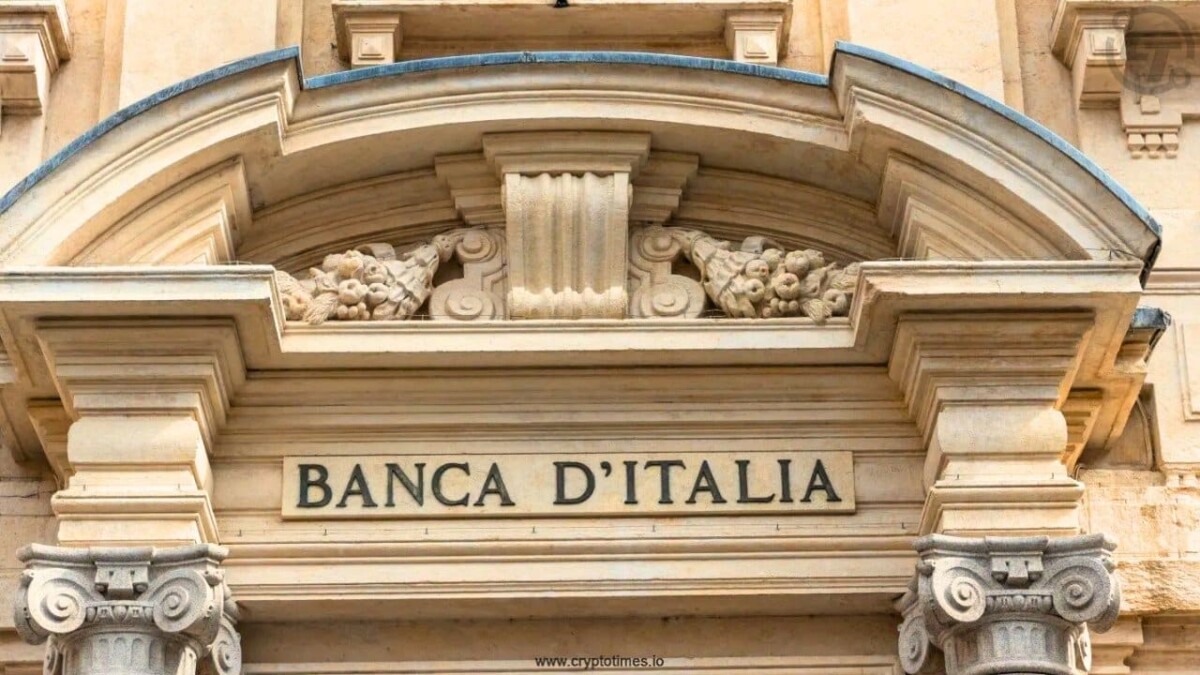
A senior Bank of Italy official has warned that multi-issuance stablecoins, tokens issued simultaneously across multiple jurisdictions, could threaten financial stability in Europe unless tightly restricted. Speaking at the Economics of Payments Conference in Rome, Vice Director Chiara Scotti said such structures magnify legal, operational, and liquidity risks, particularly when issuers operate outside the EU’s regulatory perimeter.
Stablecoins under tighter scrutiny
Scotti argued that while multi-issuance designs may boost liquidity and scale, they also risk undermining the EU’s Markets in Crypto-Assets (MiCA) framework, which already imposes strict reserve, disclosure, and governance rules on issuers. She urged that these stablecoins be limited to jurisdictions with equivalent standards, that redemption at par be guaranteed, and that cross-border crisis protocols be developed to prevent systemic disruption.
The vice director acknowledged that stablecoins remain “promising tools” for reducing transaction costs and enabling 24/7 availability but stressed that only single-currency–pegged tokens are viable as payment instruments. “Only stablecoins pegged to a single fiat currency are suitable for this function, also because they offer a high level of customer protection through the right to redemption at their nominal value,” she said.
Italy doubles down on regulation
Italy’s hardline stance reflects growing concern among European regulators about the rise of stablecoins. The country’s financial watchdog has already joined France and Austria in pushing for supervisory power over crypto firms to be centralized under the European Securities and Markets Authority. Earlier this year, Bank of Italy Governor Fabio Panetta suggested that a euro central bank digital currency would be a safer alternative to address rising crypto adoption.
A Bank of Italy report in April warned that dollar-pegged stablecoins could become systemic, with disruptions in U.S. Treasuries spilling into global markets. Economy minister Giancarlo Giorgetti went further, warning that U.S. policy on stablecoins may erode the euro’s dominance in global finance.
For investors, the message is: the EU sees stablecoins as a necessary bridge between crypto and traditional markets, but it is preparing to clamp down on structures it deems unstable or unaligned with its regulatory vision. As global adoption accelerates, the Italian push shows that Europe’s response will be strict, and potentially decisive in shaping the next phase of stablecoin growth.
Also read: Malta resists France’s push to centralize EU crypto rules