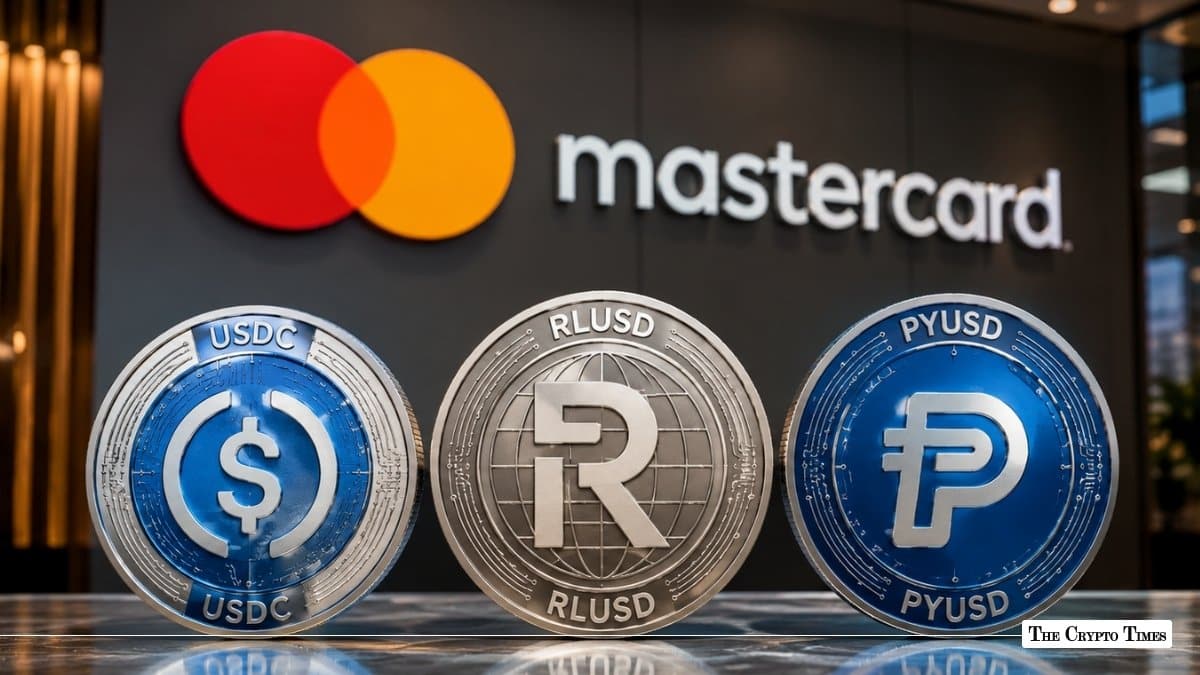
Payment giant Mastercard is expanding its digital asset strategy by introducing stablecoin-based settlement options across its global payments network, allowing issuers and acquirers to settle transactions using regulated stablecoins alongside traditional fiat currencies.
According to the announcement made on June 3, 2026, the initiative will add intraday, weekend, and holiday settlement capabilities, giving financial institutions greater flexibility in managing liquidity and supporting payment flows that operate beyond traditional banking hours.
Circle Chief Commercial Officer Kash Razzaghi described the initiative as a response to growing demand for faster and more flexible movement of money: “As demand grows for faster and more flexible movement of money, organizations are increasingly seeking infrastructure that can operate beyond traditional banking hours.”
Integrating stablecoins into global settlement
The new framework treats cryptographic assets not as an isolated asset class, but as an alternative, hyper-efficient accounting unit. Mastercard’s core infrastructure will run concurrent settlement processes using a strictly vetted selection of highly regulated stablecoin variations.
It will support settlement using several regulated stablecoins, including Circle’s USDC, Paxos-issued PYUSD, USDG and USDP, Ripple’s RLUSD, and SoFi’s SoFiUSD. These assets will be supported across multiple blockchain networks, including Ethereum, Solana, Polygon, Base, Arbitrum, XRPL, Canton, and Tempo.
According to Mastercard, the enhanced settlement options will operate alongside existing fiat-based processes, allowing partners to choose how and when transactions are settled without disrupting existing workflows.
The company said the new capabilities are particularly suited for cross-border payments, treasury management, and payout services where settlement speed and transparency are increasingly important.
Stablecoin adoption moves beyond payments
Mastercard noted that stablecoin settlement represents an additional settlement choice rather than a replacement for existing systems.
The company revealed that Circle’s USDC is already supporting early on-chain settlement flows in select markets, while additional stablecoins will be integrated as adoption grows.
Several financial institutions and payment providers are expected to be among the first participants in the rollout, including ARQ, CBW Bank, Cross River, Lead Bank, and Nuvei across the United States and Latin America.
Raj Dhamodharan, Executive Vice President of Blockchain & Digital Assets at Mastercard, said, “By introducing intraday and weekend settlement options across our global network, we’re expanding how partners manage liquidity and operate in an always-on digital economy while maintaining the trust, resilience, and safeguards they expect from Mastercard.”
Deepening the regulated Web3 footprint
The announcement builds on Mastercard’s accelerating digital asset strategy.
In May, Mastercard secured a New York BitLicense through one of its subsidiaries, allowing it to operate under one of the most comprehensive virtual asset regulatory frameworks in the United States.
The company also recently partnered with Yellow Card to pilot stablecoin settlement solutions across Africa and the Middle East using Mastercard’s Multi-Token Network infrastructure. The initiative aims to explore how regulated digital assets can improve cross-border payments and settlement efficiency in emerging markets.
Mastercard’s latest move reflects a broader shift occurring across the payments industry as major financial institutions increasingly explore stablecoins as a settlement mechanism.
Also read: Franklin Templeton Expands Onchain Fund Access Via MoonPay