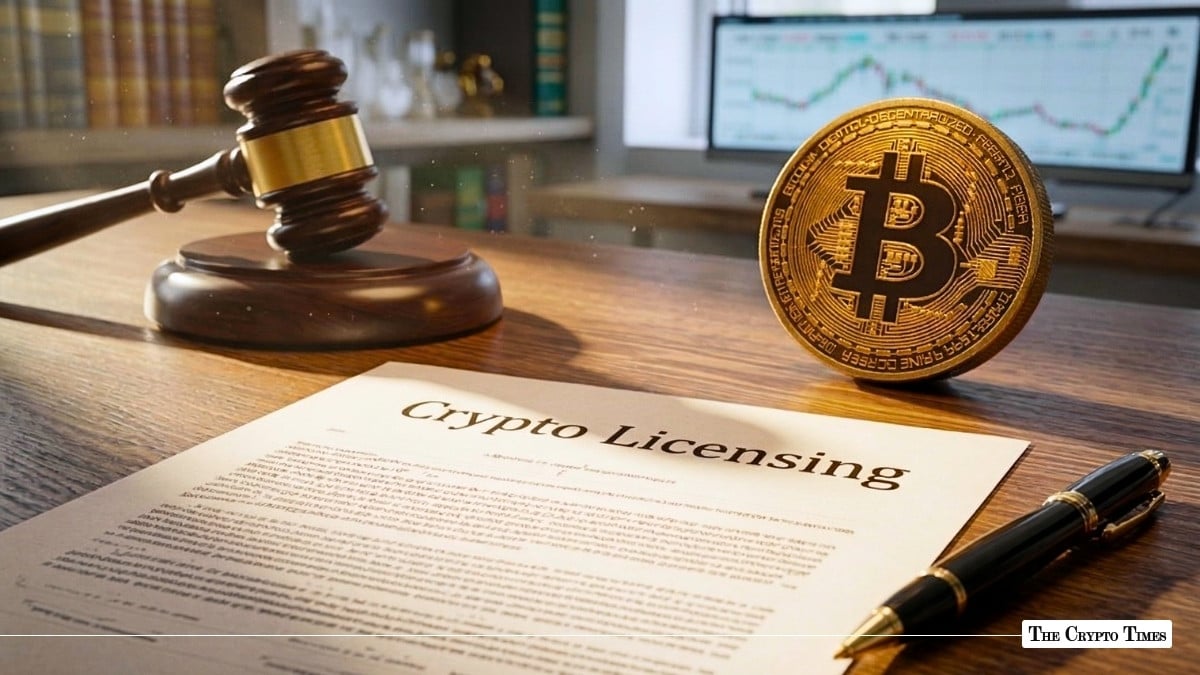
Crypto licensing has matured from a niche compliance checkbox into a non-negotiable foundation for any sustainable digital asset business. Whether you are building the next regional exchange, a custody provider targeting Europe, or a Web3 startup eyeing global scale, operating without proper authorization in 2026 exposes you to shutdown risks, banking blocks, investor flight, and hefty penalties.
This comprehensive guide breaks down everything global founders need to know. We cover why licensing matters, the exact type of license you need, the current global landscape, and how to successfully navigate the application process.
Why Your Crypto Business Needs a License in 2026
Unlicensed crypto operations are increasingly unsustainable. Regulators worldwide treat Virtual Asset Service Providers (VASPs) and Crypto-Asset Service Providers (CASPs) like traditional financial institutions — with strict AML/CFT, consumer protection, and capital rules.
Key Benefits of Licensing
- Legitimacy and Trust: Licensed entities win customer confidence, especially in India, where FIU-IND registration signals compliance under the Prevention of Money Laundering Act (PMLA).
- Banking and Partnerships: Traditional banks and payment rails open doors only to regulated players. Unlicensed firms face repeated account closures.
- Investor and Institutional Access: VCs, exchanges, and custodians prefer (or require) licensed partners.
- Global Expansion: EU MiCA passporting or Dubai VARA recognition unlocks 27+ markets without re-applying everywhere.
- Risk Mitigation: Avoid fines, enforcement actions, or outright bans. In 2025–2026, regulators ramped up enforcement on unlicensed offshore platforms serving local users.
Real Risks of Operating Unlicensed
The cost of non-compliance in 2026 is no longer abstract. Fines reaching multiple millions of dollars, app store and website blocks in key markets like India and France, banking relationships cut without appeal, public blacklists maintained by regulators, and—in post-MiCA EU jurisdictions—personal criminal liability for directors are all active risks. Licensed businesses, by contrast, report faster growth through institutional inflows and partnerships. The gap between the two groups is widening every quarter.
For Indian founders: FIU-IND registration is your mandatory entry point if you serve Indian users or handle Virtual Digital Assets (VDAs). It’s not a full “license” like VARA or MiCA, but it establishes you as a Reporting Entity with ongoing AML obligations and is the prerequisite for almost every other compliance step you will take.
Which Type of Crypto License Do You Actually Need?
“Getting a crypto license” is not a one-size-fits-all process. The regulatory burden and capital requirements scale entirely with the services you provide. Before choosing a country, you must define your exact operational model:
- Exchanges & Trading Platforms (VATP/Full VASP): Operating an order book or matching engine requires the highest tier of licensing. Regulators demand significant minimum share capital, rigorous market surveillance to prevent manipulation, and deep cybersecurity audits.
- Custodial Wallets & Depositaries: If you hold user private keys, regulators will scrutinize your tech stack. Expect intense requirements regarding Proof of Reserves, segregation of corporate and user funds, and insurance mandates, and increasingly, third-party cryptographic attestations of key management practices.
- OTC Desks & Brokers: Facilitating large block trades usually carries lower minimum capital thresholds than a full exchange, but requires the absolute strictest KYC (Know Your Customer) and Source of Funds checks.
- DeFi Protocols & Token Issuers: The landscape is shifting rapidly. Under MiCA, issuing a fiat-backed stablecoin requires an electronic money institution (EMI) license, whereas pure decentralized utility tokens face different disclosure requirements (Whitepaper registration). Truly decentralized protocols remain in a regulatory gray zone, but the direction of travel is toward more oversight, not less.
Global Regulatory Landscape: Key Frameworks at a Glance (2026)
Crypto regulation in 2026 is a mix of harmonized standards (EU MiCA) and tailored innovation hubs (Dubai). Here’s a high-level comparison of the most relevant jurisdictions for global founders:
| Jurisdiction | Regulator | License Type | Minimum Capital | Typical Timeline | Key Features & Benefits | Drawbacks | Best For |
|---|---|---|---|---|---|---|---|
| India | FIU-IND | VASP Registration (PMLA) | None (but robust compliance systems required) | 4–12 weeks | Direct access to 1.4B+ Indian market; strict KYC/STR filing | No passporting; focused on local users | Indian-centric exchanges, wallets |
| Dubai (UAE) | VARA | VASP License (2-stage: ATI + Full) | Activity-specific (often AED 400k+ / ~$109k for exchanges) | 4–9 months | Innovation-friendly; 0–9% tax; physical presence in DWTC; global reputation | Physical office & local substance required | Global exchanges, custodians, high-net-worth focus |
| Poland (EU) | KNF (MiCA) | CASP Authorization | €50k–€150k (by service class) | 6–9 months (transitional rules until July 2026; current delays due to pending Crypto-Assets Act) | EU passporting to 27 countries | Licensing process stalled in early 2026; must transition from old VASP by July 1 | EU market entry with lower setup costs |
| Lithuania (EU) | Bank of Lithuania | CASP Authorization (MiCA) | €50k–€150k (by service class) | 6-12 months | Fastest MiCA entry; full passporting; local AML officer required | Substance rules (resident director/AML officer) | Quick EU passporting for ambitious founders |
| United States | FinCEN + State Regulators | MSB (federal) + MTL/BitLicense/DFAL (state) | Varies; BitLicense ~$500k+ net worth | 6–36 months (state-dependent) | Access to world’s largest crypto market | Patchwork (49 states + NY BitLicense); high compliance burden | US-focused or institutional businesses |
Notes on 2026 Realities:
- MiCA (EU): Fully effective. CASPs must hold authorization for services like trading, custody, or exchange. Existing VASPs had transitional periods ending mostly by July 1, 2026.
- VARA (Dubai): Remains the gold standard for agile regulation with clear rulebooks covering exchanges, custody, and more.
- US: Still fragmented. FinCEN MSB is baseline; states add layers. California’s DFAL ramps up in July 2026.
- India: FIU-IND registration is mandatory for any VDA activity targeting Indians. Updated 2026 AML/KYC guidelines emphasize selfie verification, geo-fencing, and penny-drop bank checks.
The Hidden Elephant: Securing Corporate Banking
It is a harsh reality of the industry: a license does not guarantee a bank account. Even with proper authorization, tier-1 traditional banks frequently de-risk and reject crypto clients regardless of their compliance status.
However, holding a respected license (such as a MiCA-compliant CASP or a Dubai VARA license) is the mandatory first step to securing a fiat on/off-ramp. Highly regulated EMI (Electronic Money Institution) partners and crypto-friendly banking networks will only integrate with platforms that can prove regulatory authorization. When choosing a jurisdiction, you must simultaneously map out which local banks and payment processors are willing to service your specific license type.
How to Choose the Right Jurisdiction: A Decision Framework
No single “best” country—it depends on your business model, target users, budget, and growth stage.
8 Key Decision Factors
- Target Market — Serve Indians? Start with FIU-IND. Eye Europe? Choose Lithuania or Poland for passporting.
- Capital & Cost — MiCA is relatively affordable (€50k–150k); VARA and US states can be higher.
- Timeline & Substance — Lithuania offers speed; Dubai requires physical office.
- Tax Environment — Dubai’s low-tax edge vs. standard corporate rates elsewhere.
- Passporting & Scalability — MiCA wins for EU-wide reach.
- Regulatory Reputation — Licensed in Dubai or under MiCA signals credibility to banks/investors.
- Ongoing Compliance Burden — US is heaviest; Dubai balances innovation with rules.
- Exit Strategy — Some jurisdictions make future licensing or acquisition easier.
Quick Recommendation Matrix for Indian Founders
- Budget < $100k & India-first: FIU-IND + later layer MiCA.
- Global ambition & fast EU access: Lithuania CASP.
- Premium branding & Middle East/Asia focus: Dubai VARA.
- US market entry: FinCEN MSB + select state MTLs (start with friendlier states before NY).
Step-by-Step Guide to Obtain a Crypto License
The process is similar across jurisdictions but with local nuances.
- Entity Setup — Incorporate locally (or in free zone for Dubai). Appoint directors (often local substance required).
- Business Plan & Policies — Detailed model, AML/CFT program, KYC/Travel Rule procedures, risk assessments, cybersecurity plan.
- Capital Proof — Deposit minimum share capital (varies by jurisdiction and activity).
- Fit & Proper Assessment — Background checks on UBOs, directors, and key personnel.
- Application Submission — Submit via regulator portal with fees. Includes governance docs, IT infrastructure proof.
- Review & Approval — Expect questions, site visits (Dubai), or interviews. Timelines vary.
- Post-Approval — Pay supervision fees, implement systems, begin operations under conditions.
Jurisdiction-Specific Tips (2026)
- India FIU-IND: Appoint Principal Officer + Designated Director → Submit via FINnet portal → Focus on AML policy and KYC tech.
- Dubai VARA: Stage 1 (ATI) → Stage 2 (Full VASP). Strong emphasis on local office and “fit & proper.”
- MiCA (Poland/Lithuania): EU-wide application; class-based capital; governance and conflict-of-interest rules.
- US: Register MSB with FinCEN first (quick), then tackle state-by-state MTLs.
Pro tip: Engage specialized consultants early — documentation quality determines approval speed.
Compliance Beyond the License: Building a Sustainable Operation
A license is the starting line, not the finish. Ongoing obligations include:
- Travel Rule compliance (originator/beneficiary info sharing).
- Continuous AML monitoring, STR/CTR filing, and record-keeping (5+ years).
- Cybersecurity audits and consumer protection measures.
- Annual reporting, capital maintenance, and audits.
- Staff training and internal controls.
Common pitfalls: Underestimating ongoing costs or failing to adapt policies as rules evolve (e.g., stablecoin rules under US GENIUS Act).
Future-Proofing Your Crypto Business
The direction of regulatory travel in 2026 is toward greater harmonization and stricter oversight, and founders who build with that in mind will outlast those who treat each new rule as an inconvenience. Three trends are worth watching closely:
- MiCA as a global template. The EU framework is already influencing regulatory design in the UK, Singapore, Hong Kong, and beyond. What you build for MiCA today will likely satisfy frameworks in other jurisdictions within the next two to three years.
- Tighter DeFi and stablecoin rules. The regulatory gray zone around decentralized protocols is shrinking. If your business touches stablecoins, lending, or automated market-making, expect formal oversight within this regulatory cycle.
- Increased cross-border cooperation on AML/sanctions. Regulators are sharing data and enforcement actions across jurisdictions more aggressively than ever. A compliance failure in one market increasingly becomes a compliance failure in all of them.
Start with your core market (FIU-IND for India), then add one strong international license (e.g., Lithuania for EU or VARA for prestige). Monitor updates via CryptoTimes.io — we’ll refresh this guide annually.
Conclusion
Crypto licensing in 2026 is your competitive edge — it separates serious builders from short-term players. Indian founders who combine local FIU compliance with a strategic international license are best positioned for global success.
This guide is for educational purposes. Regulations change — always verify with official sources or qualified legal counsel before acting.
Disclaimer:
Some elements of this content may have been enhanced with the help of our artificial intelligence (AI) assistants for purposes such as basic refinement, review, image generation, and translation to deliver high-quality news in a shorter time frame. However, all AI-assisted content is reviewed and approved by our team to ensure accuracy, fairness, and editorial integrity.