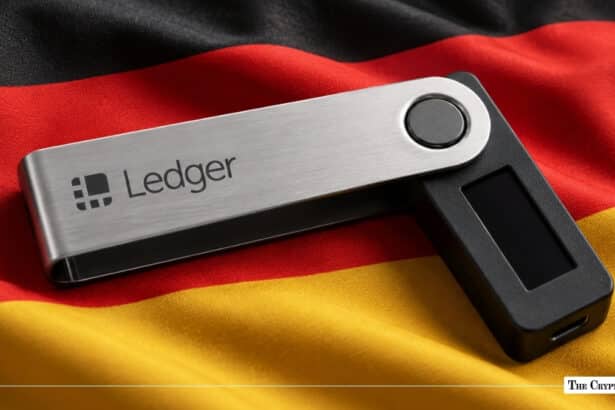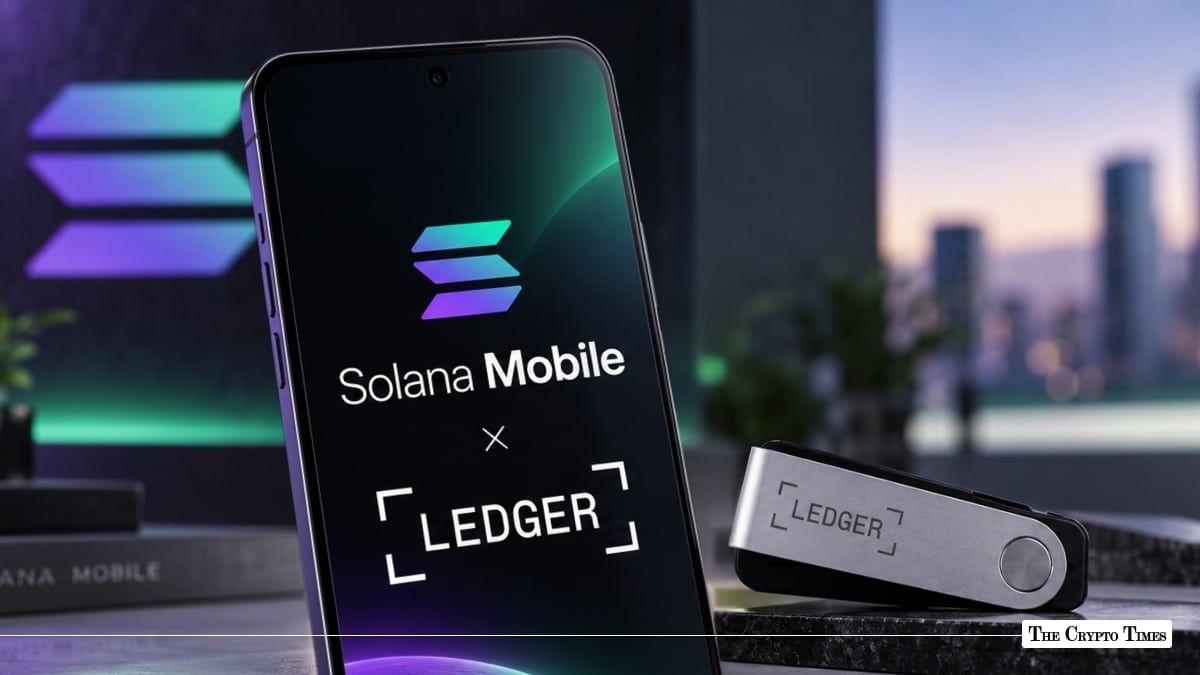
Solana Mobile, the company behind the Saga and Seeker crypto smartphones, on Thursday named hardware wallet maker Ledger as its first hardware expansion partner. The announcement, made on stage at Ledger’s Op3n 2026 event in Paris on October 15, 2026, means Ledger’s newly unveiled Atom device will ship with Solana Mobile’s Seeker app preinstalled. The app combines the Solana decentralized application (dApp) Store and a self-custody wallet in one place.
The deal arrives while Ledger is still dealing with the fallout of the CryptoBilis incident, in which buyers of Ledger devices from a Southeast Asian reseller lost funds after hidden hardware implants captured their recovery phrases.
What Ledger Atom Is and How the Seeker App Fits In
According to Solana Mobile’s press release, Atom runs the Android Open Source Project (AOSP), the open-source base version of Android, alongside a Secure Element (SE), a tamper-resistant chip certified at Evaluation Assurance Level 6+ (EAL6+). The SE runs Ledger OS, the company’s own operating system, and the device’s display and touch controls are physically isolated from the Android environment.
Inside the Seeker app, signing and approvals will take place in Atom’s Secure Mode, which is backed by the SE and Ledger OS. Solana Mobile said more than 1,500 dApps currently on Seeker will come to Atom, covering trading, payments, gaming, and artificial intelligence (AI). The company added that existing Seeker phones will remain fully supported.
Ian Rogers, Ledger’s Chief Human Agency Officer, said having the Seeker app on Atom from day one “just makes sense.”
In a launch post, Ledger Chairman and CEO Pascal Gauthier said buyers can reserve a Founders Edition with a fully refundable $100 deposit at a reserve price of $849. Ledger lists the estimated delivery date as the second quarter (Q2) of 2027 and states that Atom is still in development, with specifications, features, and price subject to change.
Solana Mobile said Atom will be sold only through Ledger’s official website and will include anti-tampering and tamper-evident measures, from packaging to the device itself, including methods to help detect whether the enclosure has been opened.
Solana Mobile’s Shift Beyond Its Own Phones
The partnership builds on Solana Mobile’s decision in March 2026 to open the Solana Mobile Stack (SMS), its software toolkit for native crypto features, to Android hardware manufacturers at Mobile World Congress (MWC) in Barcelona. Ledger is the first company named to put that strategy into practice.
In the same October 15 release, Solana Mobile reported more than $13 billion in transaction volume on Seeker, 154 million transactions, more than 1,500 apps on its dApp Store and over 200,000 devices sold across Saga and Seeker. These are company-reported figures and have not been independently audited.
The release also ties the expansion to SKR, the native token of the Solana Mobile ecosystem, which the company says rewards users, developers, and hardware makers that integrate its stack. No SKR allocation or revenue-sharing terms for Ledger were disclosed.
The CryptoBilis Investigation Behind the Timing
Buyers began reporting drained wallets on October 9, and early on-chain estimates put suspected losses above $86 million. A later trace by security publication Yfarmx counted $103.4 million taken from 530 addresses. Ledger has not confirmed an aggregate loss figure.
Ledger confirmed on October 10 that one affected user’s device contained an unauthorized hardware implant. On October 13, its in-house security lab, Ledger Donjon, explained how the implant works: it sits inside the device enclosure, reads the 24-word recovery phrase shown on screen during setup, decodes it with a microcontroller and transmits it over Long-Term Evolution (LTE) cellular networks using a provisioned embedded SIM (eSIM). Ledger said the implant does not modify the Secure Element or Ledger OS and does not alter transactions or signatures.
Hours before the Atom reveal, Ledger published a statement on the attack saying an organized criminal group bought genuine devices, fitted them with custom components, and returned them to distribution through resellers in Southeast Asia. The company said there was no flaw in its chip, operating system, or servers, and described the event this way: “This was not a systemic supply chain attack, it was a localized distribution attack.”
Ledger said it asked authorized resellers and distributors to suspend sales in Southeast Asia and Hong Kong, screened its own stock without finding compromised units, and introduced new rules requiring resellers to keep devices off shelves and hand them over only at purchase. Returned devices can never be resold.
Concerns have also reached Europe. MediaMarkt Saturn halted Ledger sales on October 13 after a customer in Germany reported an implant, while a public catalog of suspect devices has logged 15 wallets from nine sellers. Ledger says its German stock is clean and that no implant-related losses have been reported in Europe.
A Longer Security Record on Both Sides
Ledger has faced trust issues before. Its 2020 e-commerce database breach exposed about one million email addresses and, according to the company’s CEO letter, detailed personal data of roughly 272,000 customers. In December 2023, an attacker who phished a former employee published malicious versions of Ledger Connect Kit, a JavaScript library that lets dApps connect to Ledger devices.
Solana Mobile’s hardware history is also mixed. Its first phone, the Saga, shipped in 2023 and saw a rush of buyers in December 2023 when a bundled 30 million BONK token airdrop became worth more than the phone’s $599 price. The company has since stated that Saga has reached the end of its support lifecycle, with no further software updates or security patches.
Its successor, Seeker, began shipping in August 2025 to more than 50 countries after over 150,000 pre-orders, with Founder pricing starting at $450 before rising to $500. On December 3, 2025, Ledger Donjon published research showing that electromagnetic fault injection (EMFI) could fully compromise the MediaTek Dimensity 7300 (MT6878) system-on-chip (SoC), the processor used in Seeker. The attack required physical access and laboratory equipment, and because the flaw sits in the chip’s boot ROM, it cannot be fixed through software updates.
What Comes Next
The partnership gives Solana’s dApp Store a preinstalled spot on a major hardware security brand’s next device, while giving Ledger a ready-made Solana application for Atom. Ledger’s own disclaimer notes that app availability depends on certifications and licenses and will be confirmed before devices ship. The company said it will name more Atom partners starting at Solana Breakpoint, the Solana ecosystem’s annual conference, next month.
Whether the integration drives sustained use beyond initial distribution remains unproven. With delivery estimated for 2027, independent testing of Atom’s tamper protections will only be possible once devices reach users and security researchers.
Also Read: Uniswap Activates Dynamic Fees with VolatilePair Hook on Ethereum Mainnet