Key Highlights
- HYPE surged 11% to a new all-time high above $90, with its market cap reaching $20.3 billion.
- Hyperliquid launched borrowing, allowing users to use HYPE or BTC as collateral to borrow USDC or USDT.
- NEAR and Payward are expanding access to Hyperliquid, while the SEC’s tokenized stock exemption has added attention to its markets.
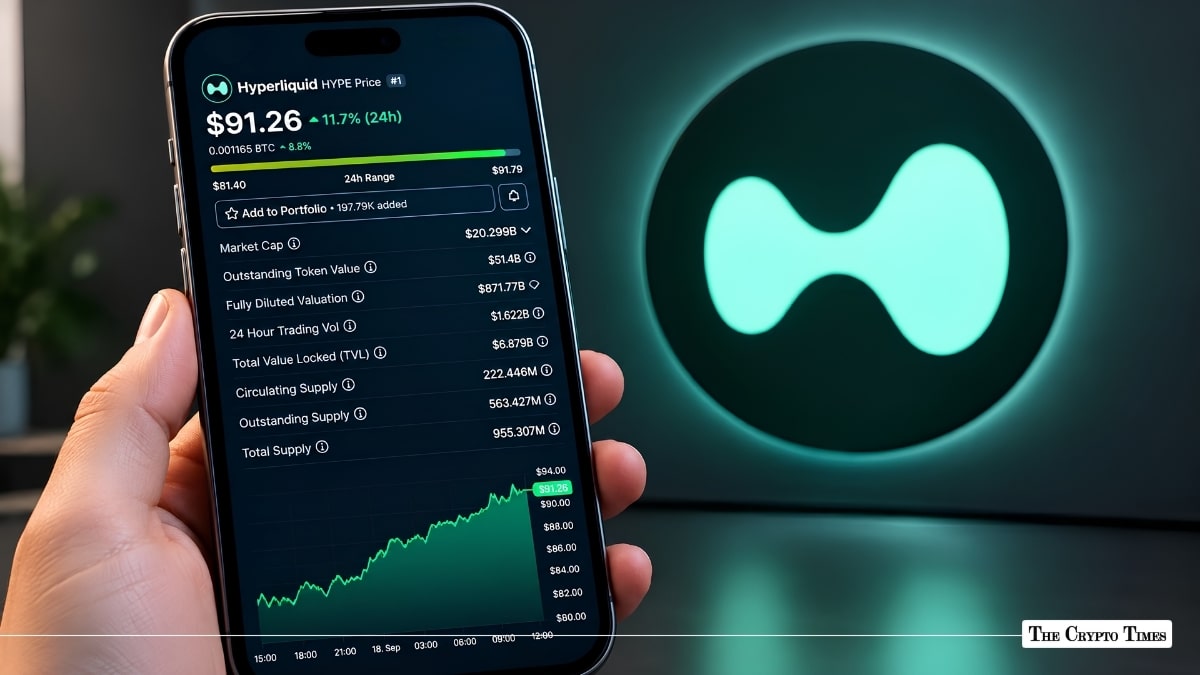
Hyperliquid (HYPE) climbed around 11.7% in 24 hours on Friday, reaching a new all-time high above $90 as several developments brought additional attention to the trading platform.
According to CoinGecko data, HYPE was trading at $91.26 after touching $92, up from a daily low of around $81.58 as of September 18 at 2:53 PM UTC.
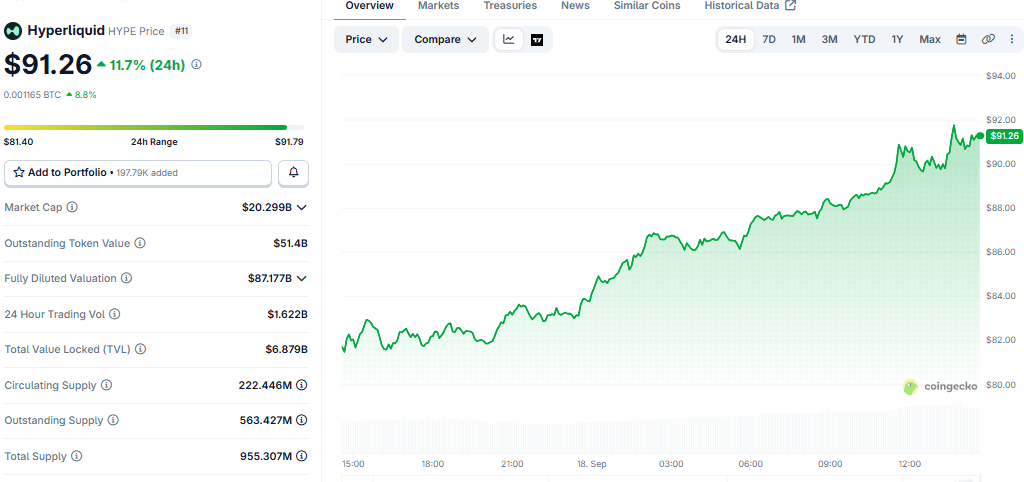
The move pushed Hyperliquid’s market capitalization to about $20.3 billion, while its 24-hour trading volume reached $1.622 billion. CoinGecko data also shows that HYPE has gained more than 250% since the start of the year, making it the best-performing asset among the 10 largest cryptocurrencies by market capitalization based on the figures provided.
Why is the token surging
The rally comes as Hyperliquid expands the range of products and markets available on its platform. New borrowing options, tokenized stock markets, and plans involving U.S. users have emerged around the same period.
One major development came from the US Securities and Exchange Commission (SEC) on September 17. The agency announced what it calls an Innovation Exemption, giving certain tokenized securities trading venues a temporary, conditional five-year exemption from being treated as an “exchange” under the Securities Exchange Act of 1934.
The exemption allows eligible venues to trade certain tokenized US stocks through approved automated market makers and liquidity pools.
However, the order is limited. It covers tokenized stocks where holders keep normal shareholder rights, including voting and dividends. Synthetic products, including tokenized security swaps, are not included.
Hyperliquid expands its tokenized markets
Hyperliquid already has activity around tokenized equity products through its HIP-3 framework. The system allows builders to stake HYPE and create their own perpetual markets on Hyperliquid’s order book. The framework has been used to list tokenized equity perpetuals.
That part of Hyperliquid’s business has also grown sharply. Real-world asset markets reportedly represented about 2% of the platform’s total volume in January. They now account for around half of its volume.
Borrowing goes live on HyperCore
Hyperliquid also launched borrowing on HyperCore on September 18. Users can now provide HYPE or Bitcoin as collateral to borrow USDC or USDT.
In a post on X, the platform said about $269 million in assets had been borrowed on the first day alone.
According to the shared document, HYPE has a 65% loan-to-value limit, while Bitcoin has a 50% limit. Partial liquidation starts at 82.5% for HYPE and 75% for BTC. Borrowers pay interest on the USDC or USDT they take out, while suppliers earn interest based on how much the assets are being used.
The new borrowing system gives HYPE holders another way to use their tokens without necessarily selling them. Hyperliquid also keeps 10% of borrowed interest as a buffer for future liquidations.
NEAR and Payward expand Hyperliquid access
Elsewhere, NEAR has routed its perpetual futures trading through Hyperliquid. Hyperliquid provides the order book and matching system, while NEAR provides the user-facing platform. The setup gives NEAR users access to more than 50 markets and leverage of up to 40 times.
On September 16, Payward, the parent company of Kraken, also said it plans to bring onchain perpetual futures to US customers, starting with Hyperliquid and HIP-3 markets. However, the plan still needs regulatory approval.
These developments have emerged within a short period as HYPE reaches a new all-time high. The token has gained almost 60% since President Donald Trump commented on the CFTC working to bring Hyperliquid into the U.S. market.
The latest developments have added to attention around the token, although the individual factors behind its price move cannot be isolated from the broader crypto market.
Also Read: Coinbase Files to Expand U.S. Derivatives Into Single-Stock Perpetuals