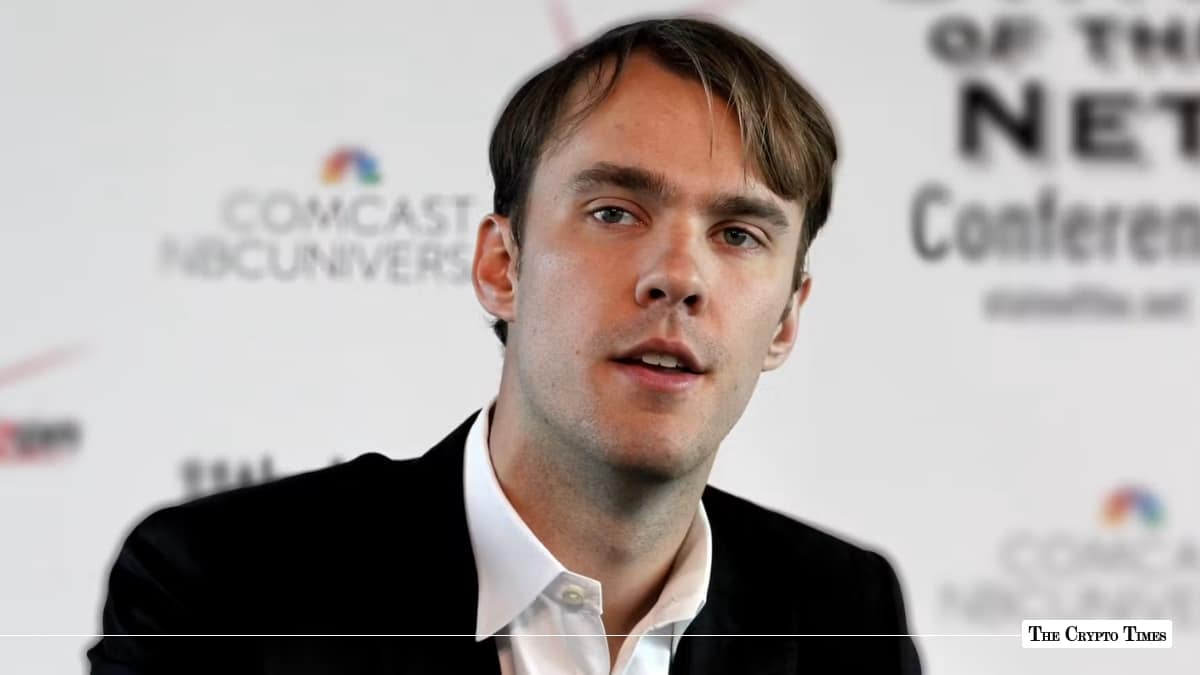
Fred Ehrsam, the co-founder of Coinbase and the crypto venture firm Paradigm, is in talks to take operating control of at least three oil fields in Venezuela’s Orinoco Belt, in what would be his first known move from crypto financing into physical energy assets.
The push is playing out inside a wider American-led restructuring of Venezuela’s oil sector that began after the January capture of Nicolás Maduro. No transaction has been announced, and none of the parties has confirmed the negotiations on the record.
What is on the table
The three blocks, known as Boca, Guico and Guara, sit on the northeastern edge of the Orinoco Belt, the vast heavy-oil basin in eastern Venezuela that Caracas markets as the Faja Petrolífera del Orinoco. They are currently operated by Alvorada Heavy Industries Ltda, a Brazilian driller backed by São Paulo-based Galapagos Capital. The bid was first reported by Bloomberg on September 1, 2026, citing people familiar with the discussions who requested anonymity because the talks are not public.
According to the same report, U.S. officials are reviewing whether to revoke Alvorada’s existing contracts as part of a broader effort to replace operators active during the Maduro period with investors closer to the Trump administration. Ehrsam’s approach runs through Primavera, a firm he co-founded specifically to invest in the country. A spokesperson for Primavera declined to Bloomberg’s comment; Alvorada also declined; Ehrsam did not respond to an email seeking comment; and the White House did not reply to a request for comment.
Chris Wright lands in Caracas, and the bigger deal above it
The timing is not accidental. U.S. Energy Secretary Chris Wright arrived at Simón Bolívar International Airport in Maiquetía shortly after 8:30 p.m. local time on Tuesday, September 1, and was received by Hydrocarbons Minister Paula Henao and U.S. chargé d’affaires John Barrett. It is Wright’s second trip to Venezuela since the January operation that removed Maduro from Miraflores; he first visited in February 2026.
On arrival, Wright told reporters the United States wants “mucha inversión,” or a lot of investment, from American firms in Venezuela and said the deals to be announced this week could more than double Venezuelan crude output over the coming years, as per a Tribune report. Venezuelan production has hovered around 1.1 million to 1.2 million barrels a day in recent months, well below the country’s late-1990s peak above 3 million.
Wright’s visit is tied to a wider framework President Donald Trump announced on Friday, August 28, as per the PBS NewsHour report, and that interim Venezuelan President Delcy Rodríguez described in a state television address the following night as a 25-year bilateral project covering 17 strategic oilfields with a production target of more than 1.5 million barrels a day.
White House materials cited by Venezuelan and regional outlets describe 100-year concessions to be operated by a private vehicle, North American Blue Energy Partners, over fields holding about 65 billion barrels of proven reserves. Those durations and figures are government claims; the underlying legal texts have not been made public. Chevron, currently the only U.S. oil major operating in Venezuela, is separately expected to unveil an expansion of its existing operations during Wright’s trip.
How Ehrsam’s Venezuela file grew from May
The oil-field talks did not come out of nowhere. Bloomberg first reported on May 14, 2026, that Ehrsam, then 38 years old with a fortune of about $2.6 billion on the Bloomberg Billionaires Index, had been flying repeatedly to Caracas and had met interim President Delcy Rodríguez, U.S. Interior Secretary Doug Burgum and other senior officials. Discussions at that stage covered oil and gas, fintech and digital payments, and were characterized as exploratory.
Ehrsam had already surfaced publicly a day earlier. On Wednesday, May 13, 2026, he appeared at the state-owned Banco de Venezuela alongside its then-president Román Maniglia at a session on the “finance of the future,” where he laid out a three-part pitch built on dollar-referenced stablecoins, blockchain rails for access to global markets, and the tokenization of physical assets such as oil, gas and minerals.
Attendees at a private meeting with local business leaders the day before said he told the room that Venezuelan assets were deeply undervalued and that it was time to invest.
Ehrsam is best known as a co-founder of Coinbase, the U.S.-listed cryptocurrency exchange he started with Brian Armstrong in 2012, and of the crypto venture firm Paradigm, which he co-founded with former Sequoia Capital investor Matt Huang in 2018. He stepped away from a day-to-day role at Coinbase in early 2017 and is currently chief executive of the neurotechnology start-up Nudge. Primavera, the vehicle now identified in the Venezuela reporting, is a separate entity from Paradigm.
Alvorada’s position, and what it says about the reset
Alvorada is not a stranger to this acreage. In an April 22, 2026 interview with Bloomberg, chairman Paulo Buzanelli said the company had entered the fields in 2023, was producing about 4,000 barrels a day across the three blocks, and planned to reach 20,000 barrels a day within two years. He noted that the crude was medium grade rather than the extra-heavy oil more typical of the belt, which allows it to be blended with heavier streams so those grades can flow through pipelines.
The September 1 report added that Alvorada had invested about $30 million to restart idle wells and had been required by state-owned PDVSA to work with a politically connected local contractor. One person familiar with the situation said the driller is trying to engage U.S. officials to keep its position. In the space of four months, in other words, Alvorada moved from presenting a growth plan built on post-sanctions relief to negotiating for its own survival on the same fields.
Why the “crypto goes into oil” framing overstates the deal
Ehrsam’s public identity remains crypto, and that is what has pulled the story into crypto news feeds. It should not be confused with the deal itself. No reporting on the bid for Boca, Guico and Guara has said it includes a token issuance, a stablecoin mandate, or an on-chain offtake contract.
The three-pillar framework he described in Caracas in May, which does touch on the tokenization of oil and gas, is a policy pitch attributed to him by attendees and characterized further by secondary outlets. It is not the disclosed structure of any acquisition. What is on the table, as reported, is a conventional operator handover: control of producing wells.
There is also a compliance paradox that has trailed this story since May. Coinbase itself, the platform Ehrsam co-founded, still restricts Venezuelan resident access under U.S. Office of Foreign Assets Control rules. The founder is scouting the country while the exchange he built cannot serve users there. That gap is a fact of platform compliance, not evidence that Coinbase the company is bidding on the fields.
What is still open
None of the parties has publicly confirmed a transaction or a purchase price. Alvorada’s contracts have not been revoked in any public filing; U.S. officials are only reported to be considering that step. Ehrsam’s group has not been named in any published concession award.
Government projections on output, reserve size, and contract length are projections, and Washington and Caracas have used different numbers in their public remarks, from a 25-year initial term to a 100-year lease. The Ehrsam file, as of the morning of September 2, sits in the space between an active negotiation and a completed deal. The difference matters.
Also Read: Coinbase CEO Pushes Clarity Act, Says Banks See Opportunity Ahead of September 15 Vote