HTX, one of the longest-running major crypto exchanges since its founding in 2013, has issued a fresh statement on the ongoing controversy surrounding small unsolicited USDT transfers that appeared to originate from wallets tagged as HTX addresses.
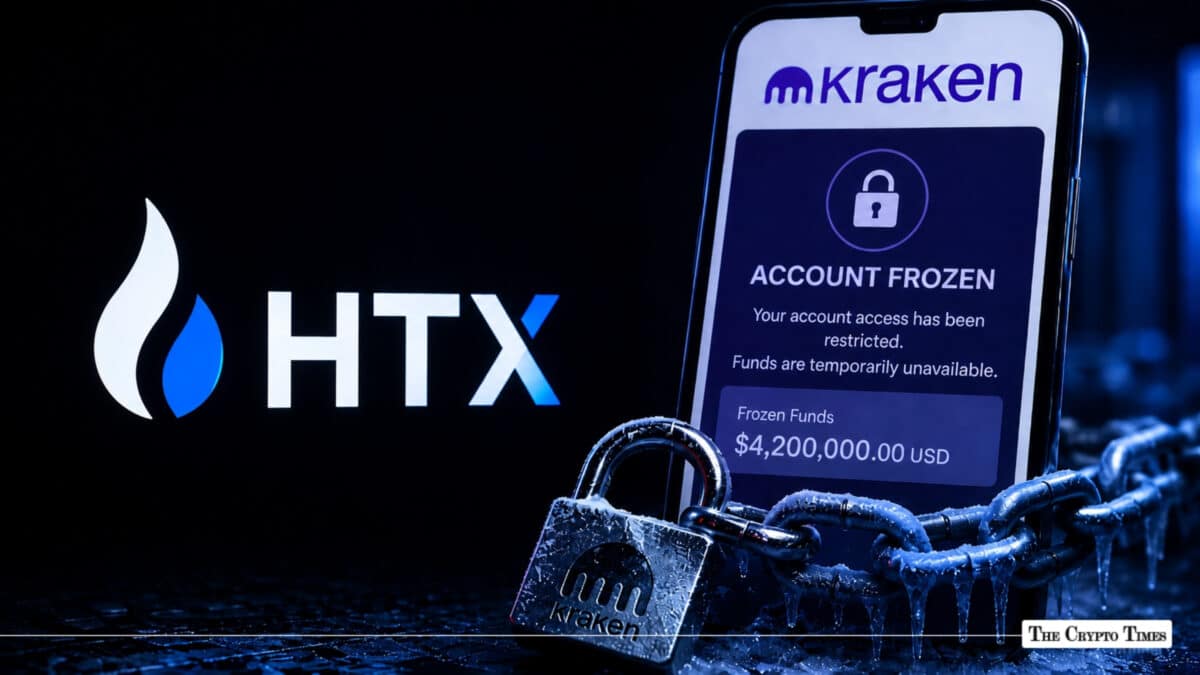
The exchange said an internal review turned up no evidence that any of its official accounts were behind the reported address-poisoning activity, and suggested that some individuals may have acted on their own after seeing their deposits frozen on Kraken, with known cases involving amounts as high as $4.2 million.
The clarification was posted by HTX market representative Molly on X, and marks the third public update from the exchange since community members first flagged the transfers on August 18, 2026.
HTX Says No Official Accounts Behind Transfers
In her latest post, Molly reiterated that the exchange treats user account and asset security as a priority and stressed that HTX conducted a full internal check across its operational wallets, deposit systems, and testing environments as soon as reports began circulating.
According to the statement, none of HTX’s official accounts initiated the small USDT transfers that landed in addresses linked to major exchanges including Binance, Coinbase, and Kraken. Molly said the exchange has now widened its review to look at whether third parties, address-tagging errors, or misread on-chain data may have contributed to the pattern that community members labelled as “compliance poisoning.”
The statement went a step further than earlier posts by pointing toward a possible motive for at least some of the transfers. Molly noted that a number of users had already seen significant balances locked at Kraken following sanctions related risk controls, with the largest known case involving around $4.2 million in frozen funds.
The exchange indicated that some of these users may have acted independently to send small amounts from HTX-linked wallets to other addresses in an attempt to draw attention to their situation or pressure exchanges to release their assets.
HTX said it does not endorse such actions, and repeated that its official channels have not conducted any related transfers or testing activity.
Kraken Freezes and User Complaints Mount
The reference to Kraken follows weeks of user complaints on social media and consumer review sites about deposits from HTX that were neither credited nor returned. In one publicly documented case on Trustpilot, a user said they initiated a withdrawal of 24,509.24 USDT from HTX to Kraken on July 20, 2026, only to see the transaction frozen without a stated reason, with Kraken also refusing to return the funds to the original HTX sender address.
Other complaints have described similar patterns, with fully KYC-verified users saying their assets have been held in limbo since the United Kingdom sanctioned Huobi Global S.A. in May. HTX has previously blamed what it called “indiscriminate risk tagging” by rival platforms for the collateral damage to ordinary users.
Kraken has not issued a public statement on the specific $4.2 million figure cited by HTX, and has not confirmed how many accounts remain under review.
Background on UK and EU Sanctions
The dispute over the recent transfers unfolds against the backdrop of formal sanctions actions in two of the world’s largest regulated jurisdictions. On May 26, 2026, the United Kingdom’s Foreign, Commonwealth and Development Office designated Huobi Global S.A. under the Russia (Sanctions) (EU Exit) Regulations 2019.
The official Sanctions Notice listed the entity along with the variations HTX, HTX Exchange, and Huobi Global Limited, and imposed an asset freeze along with restrictions on correspondent banking and payment processing.
On July 23, 2026, the Council of the European Union adopted Council Regulation (EU) 2026/1848 amending Regulation (EU) No 833/2014, adding “HTX (HUOBI GLOBAL SA)” to Annex XLV, Part A. The listing subjects the entity to a prohibition on direct and indirect transactions by operators within the scope of EU restrictive measures, and takes effect from August 23, 2026.
Following these actions, Binance published an official announcement on August 14, 2026, stating that starting August 23 it would cease processing transactions involving HTX (Huobi Global SA) and 10 other listed crypto-asset service providers. The notice warned that transfers attempted after the cutoff may be held for compliance review, with restrictions applied to affected wallets.
Justin Sun, the TRON founder and adviser to HTX, responded the same day, saying the Binance restriction only concerns UK and EU users, adding that HTX does not conduct business in either region and that settlement talks with UK and EU regulators are already under way.
On-Chain Findings Complicate the Picture
Independent on-chain research has also cast doubt on parts of the original poisoning narrative. Community investigator 0xMoon examined HTX hot wallet #48 and confirmed that around 166 small USDT outflows had been sent from it in the hours before the story broke.
However, when 0xMoon tracked every 7.5 USDT transfer, all 15 receiving addresses turned out to be Kraken deposit addresses, with none belonging to Coinbase as had initially been claimed by user 0xZiye. Many of those addresses also showed normal deposit and withdrawal activity afterwards, indicating that they had not been risk-controlled.
Justin Sun briefly weighed in on the findings, saying the earlier viral report was fabricated. HTX has not disputed the on-chain review, and its latest statement is consistent with that reading in pointing to independent user action rather than a coordinated exchange-run campaign.
What Comes Next
As of the publication of Molly’s latest statement, HTX said it will continue its verification work and will share confirmed information with the community without setting a public deadline.
The full EU transaction ban is scheduled to take effect on August 23, 2026, after which European regulated entities will face stricter prohibitions on dealings with the listed entity.
For affected users, the picture remains messy. Kraken has yet to address the $4.2 million figure publicly, HTX maintains that none of its official operations sent the disputed micro-transfers, and compliance teams across the industry are still weighing how to distinguish genuine sanctions exposure from tagging noise.
The episode has also revived a wider debate about whether ordinary users should bear the burden when automated risk systems flag their wallets over passive receipt of small amounts of stablecoin.
Also Read: Unsolicited HTX Transfers Trigger Account Freezes on Binance and Other Crypto Exchanges