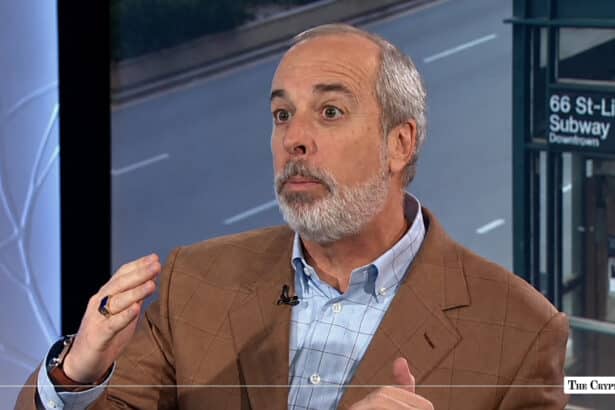
On-chain analyst Willy Woo has stepped into the widening custody debate triggered by the Coldcard hardware wallet exploit, arguing that self-custody remains the only path to genuinely sovereign Bitcoin ownership even as thousands of users move funds back to exchanges and ETF wrappers.
In a post on X, Woo said he holds nothing against ETFs or custodial products and acknowledged their benefits, including recognition and integration onto TradFi rails. His broader point, however, was that Bitcoin sits in a category of its own.
“Bitcoin is unique because it’s the only mature digital property that’s truly sovereign. It has no nationality, it cannot be blocked by a nation state, nor debased, or seized,” Woo wrote, adding that “only learning the ropes of SELF CUSTODY can deliver this to you.”
Woo framed the argument through Bridgewater founder Ray Dalio’s long-cycle research, noting that most of the West has lived in a “nice safe bubble” since the Second World War and that stability itself moves in cycles. Echoing Dalio’s 15% allocation call, he told followers that late-cycle portfolios should carry a similar weighting in what he described as sovereign assets, specifically BTC and gold.
The Exploit That Reopened The Custody Question
Woo’s defence lands as the Coldcard exploit crosses $88.6 million in stolen Bitcoin, with Galaxy Research tracking 1,367.05 BTC drained across 4,585 addresses through three distinct attack waves.
The root cause was a March 2021 firmware bug that quietly rerouted seed generation to a weak software pseudorandom number generator rather than the device’s hardware RNG, cutting entropy from a claimed 128 bits to as low as 40 bits on Mk3 devices.
The attacks have not stopped. Galaxy Digital’s Alex Thorn flagged what he called a likely fourth organised wave, with hundreds of BTC lifted from hundreds of victim wallets in a matter of hours. The Crypto Times reported that 449 BTC were swept live as victims raced to migrate their funds.
Balchunas And The ETF Camp Push Back
Bloomberg senior ETF analyst Eric Balchunas has taken the opposite view. Following the exploit, he argued that spot Bitcoin ETFs like BlackRock’s IBIT shift custody risk to regulated institutions and eliminate the seed-management burden. His comment that “an ETF fixes this” has become a rallying point for institutional custody advocates.
ARK Invest’s director of digital asset research Lorenzo Valente went further, calling the self-custodial hardware space “a disaster at this point” and stated that investors have simply traded counterparty risk for “software risk, hardware risk, supply-chain risk, phishing risk, backup risk, and the possibility of losing everything through one mistake.”
Samson Mow Says It May Be Worse Than An Exchange Hack
Woo also amplified a post by JAN3 CEO Samson Mow, who described the Coldcard RNG vulnerability as potentially worse than an exchange hack because it hit “at the core of sovereign bitcoin holders” and struck those who “did all the research, understood why self-custody is important, and didn’t keep coins on exchanges.” Mow followed up with a five-point guide urging affected users to document evidence, watch for coordinated recovery efforts, and avoid social-engineering scams.
Binance founder Changpeng Zhao chimed in on the same thread, warning users not to place blind trust in hardware wallets and reminding the community that no system, including cold storage, is bug-free. His comments came shortly after Galaxy confirmed a second attack wave that pushed losses past the $75 million mark.
Recovery Odds Look Thin
In a separate post, Woo put the probability of recovering the stolen Coldcard Bitcoin at just 20% to 40%, and even that outcome would likely take years. He referenced a table of major crypto hack recoveries to make the point. Binance’s SAFU fund restored 100% of user losses after the 2019 breach, and Poly Network recovered roughly 95% of $610 million voluntarily returned by the attacker in 2021.
On the other end of the spectrum, Mt. Gox creditors have received only 16% to 20% across proceedings dating back to 2014, and Bybit’s $1.5 billion 2025 exploit has seen just 3% recovered to date.
Analyst Take
The Coldcard episode has split the Bitcoin holder base into two philosophical camps. One side, represented by Balchunas and parts of the institutional research community, treats the exploit as evidence that self-managed keys are too risky for the average investor. The other, led by Woo and Mow, argues that a single firmware error at one manufacturer does not invalidate the founding premise of Bitcoin as bearer property.
The on-chain data supports both readings depending on where you look. CryptoQuant flagged that sub-1 BTC transfers reached 39,600 BTC on Friday, the largest daily figure from small holders since the FTX collapse in November 2022, suggesting a defensive rotation rather than fresh accumulation. Whether that flow ends up parked in ETF wrappers or redeployed into fresh multisig setups remains the open question.
For Woo, the answer is less architectural and more philosophical. As he put it in the post, “institutions that hold your assets will collapse, governments have and will seize your assets, your family may need to relocate under the chaos.”
His late-cycle recommendation of 15% into BTC and gold, borrowed directly from Dalio’s macro playbook, is not a comment on wallet firmware. It is a comment on where the counterparty ultimately sits, and whether the holder trusts it to survive the next turn of the cycle.
Also Read: Michael Saylor Says BIP-110 Lacks Bitcoin Economic Consensus