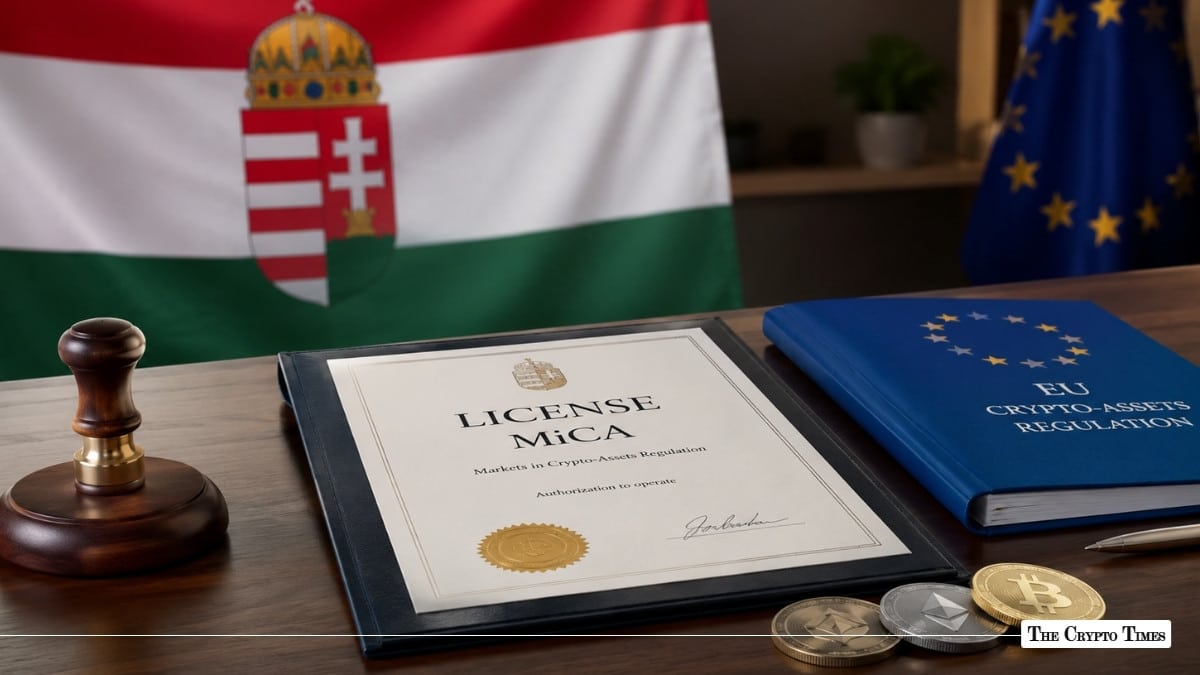
Hungary has officially repealed its controversial domestic crypto asset validation requirement after lawmakers voted to align the country’s legal framework directly with the European Union’s Markets in Crypto-Assets (MiCA) regulation.
The policy reversal follows the National Bank of Hungary (MNB) granting the country’s first official MiCA license to Budapest-based exchange platform CoinCash.
The Hungarian parliament approved the legislative repeal by a 143–46 vote (with 1 abstention), effectively abolishing mandatory third-party validation declarations for cryptocurrency-to-fiat and crypto-to-crypto conversions. According to the government’s justification, the domestic requirement created severe friction, conflicted with overarching EU law, and placed an unsustainable burden on digital asset businesses.
Government course correction
The repealed validation obligation was originally enacted under Hungary’s 2024 Crypto Assets Act and enforced starting July 1, 2025. Under that framework, no crypto conversion could occur without a certified “validator” verifying wallet ownership, identity, and the origin of funds prior to execution.
The extra layer of regulation, often described by industry analysts as “gold-plating,” prompted major international fintechs and local operators to restrict or halt operations in Hungary.
Finance Minister Kármán András said the government decided to remove the validation requirement after it disrupted Hungary’s crypto market and prompted several service providers to suspend or terminate operations. In a Facebook post, András said the strict regulations had pushed many crypto businesses to suspend or end their services in Hungary, but noted that the market is now showing signs of improvement.
The repeal also removes related criminal offenses introduced under the previous framework, including penalties tied to unauthorized crypto exchange services and violations of the validation requirement.
CoinCash secures inaugural MiCA license
As Hungary steps away from its standalone checks, CoinCash (operated by Tiwala Solutions) has become the first domestic company authorized as a Crypto Asset Service Provider (CASP) directly by the National Bank of Hungary under MiCA.
In a LinkedIn post, CoinCash co-founder Gábor Galántai shared this update and added that CoinCash will gradually restore its services in the coming weeks, with the authorization covering custody, crypto-to-fiat and crypto-to-crypto exchange, transfers, investment advice, and portfolio management.
The MiCA license allows CoinCash to offer those services under the EU’s unified regulatory framework, making it the first crypto asset service provider in Hungary to receive authorization from the country’s central bank.
CoinCash voluntarily paused its operations in December 2025 to meet MiCA requirements. After completing the regulatory approval process, the company said it will gradually resume services and later expand its range of MiCA-regulated offerings.
How the validation system worked
Hungary introduced the validation obligation under its 2024 crypto assets law, with the rules taking effect on July 1, 2025.
Under the framework, cryptocurrency conversions into fiat currency or other digital assets could only proceed after a licensed validator issued a declaration confirming compliance. Validators were required to verify information including the origin of crypto assets, wallet ownership and customer identity before approving transactions.
The validation process operated alongside MiCA licensing requirements, making Hungary one of the EU’s strictest jurisdictions for crypto service providers. The country also shortened the MiCA transition period for crypto asset service providers (CASPs), requiring compliance by July 1, 2025, one year earlier than the EU’s maximum transition deadline of July 1, 2026.
Restoring EU regulatory harmony
The repeal marks a significant policy reversal for Hungary, which had previously imposed stricter requirements than those mandated under MiCA. By removing the transaction-level validation process while retaining broader licensing and compliance obligations, the government is bringing its crypto framework closer to the EU’s harmonized approach.
With CoinCash now holding Hungary’s first MiCA license and the validation requirement abolished, the country’s digital asset market is expected to reopen under the bloc’s standardized regulatory regime, potentially encouraging other crypto service providers to return or seek authorization.
Also Read: European Blockchain Initiative RL1 Goes Live With 10 Banks