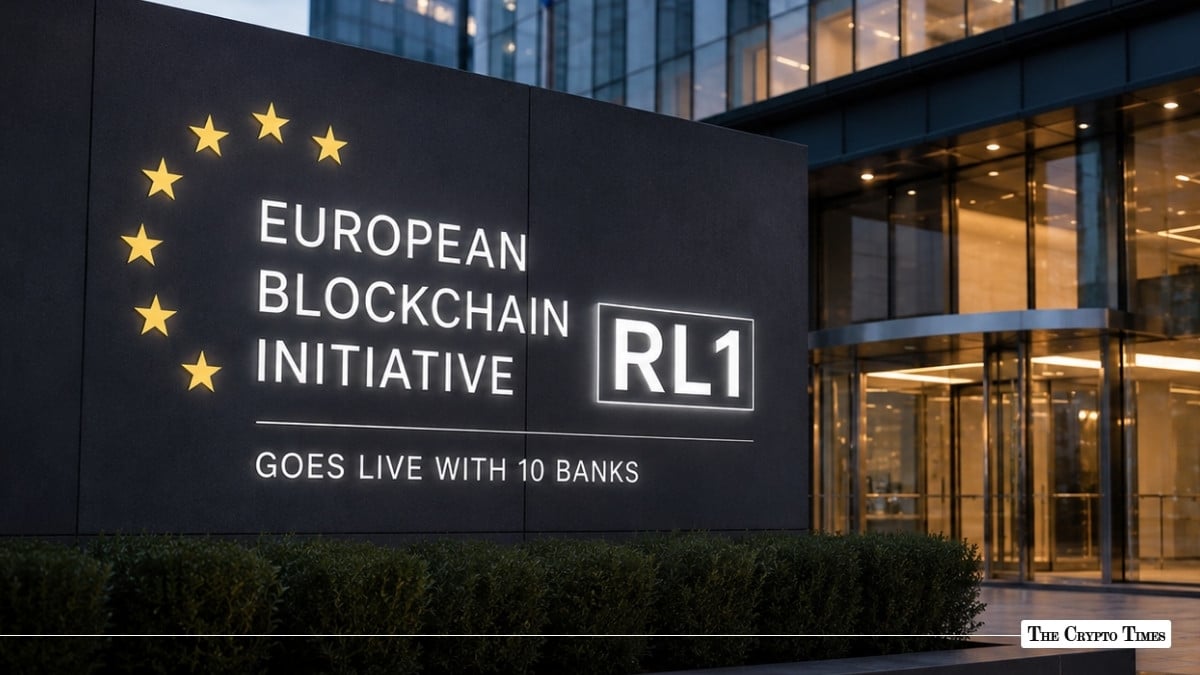
Europe’s Regulated Layer One (RL1), a blockchain network built for regulated financial markets, has officially launched operations as a European Cooperative Society (SCE) in Luxembourg with the backing of 10 founding financial institutions.
As per the official announcement, the member-owned network aims to provide a shared distributed ledger technology (DLT) infrastructure for tokenized assets, digital money, and institutional settlement. It is designed to reduce fragmentation across Europe’s regulated financial sector by bringing institutions onto a common blockchain network.
Equal voting cooperative structure
The cooperative’s founding members include ABN AMRO, Cecabank, Chartered Investment, Crédit Mutuel Alliance Fédérale, DekaBank, DZ BANK, LBBW, Natixis CIB, SC Ventures, and Seturion. Development banks KfW and L-Bank will continue supporting the initiative, while RL1 said discussions are underway with additional European banks, including NatWest.
Henning Vollbehr, formerly managing director of SWIAT, has been appointed managing director of RL1 and will oversee the network’s expansion.
Vollbehr said the launch marks the culmination of years of work that began with SWIAT. He said RL1 aims to become the shared infrastructure for Europe’s digital financial markets, helping institutions move beyond isolated tokenization projects toward a more connected, scalable and liquid capital market ecosystem.
Unlike privately controlled blockchain platforms, RL1 operates as a cooperative where every member has equal voting rights. The model gives participating institutions a shared role in governance while supporting common infrastructure for regulated financial services.
Built on SWIAT’s existing network
RL1 is built on SWIAT’s production-grade blockchain infrastructure, which has been operating for three years. According to the announcement, the network has processed more than 50 transactions worth over €700 million during that period.
SWIAT’s blockchain software will remain fully compatible with RL1, allowing financial institutions to deploy applications such as bond tokenization immediately. Existing services, including Germany’s BaFin-supervised electronic securities registry, will continue under SWIAT while transitioning to the RL1 network.
Why it matters
The launch comes as European financial institutions increasingly move beyond blockchain pilot projects toward production-scale tokenization. RL1 said initiatives involving digital bonds, tokenized money market funds, stablecoins and collateral management require shared infrastructure that connects regulated institutions and enables more efficient settlement.
As a permissioned and interoperable blockchain, RL1 is designed to connect regulated participants across jurisdictions and support compliant digital asset services.
RL1 expects more financial institutions to join the cooperative as Europe continues expanding blockchain-based financial market infrastructure.
Also Read: Nexo Confirms MiCAR Compliance Across Europe With New Partners