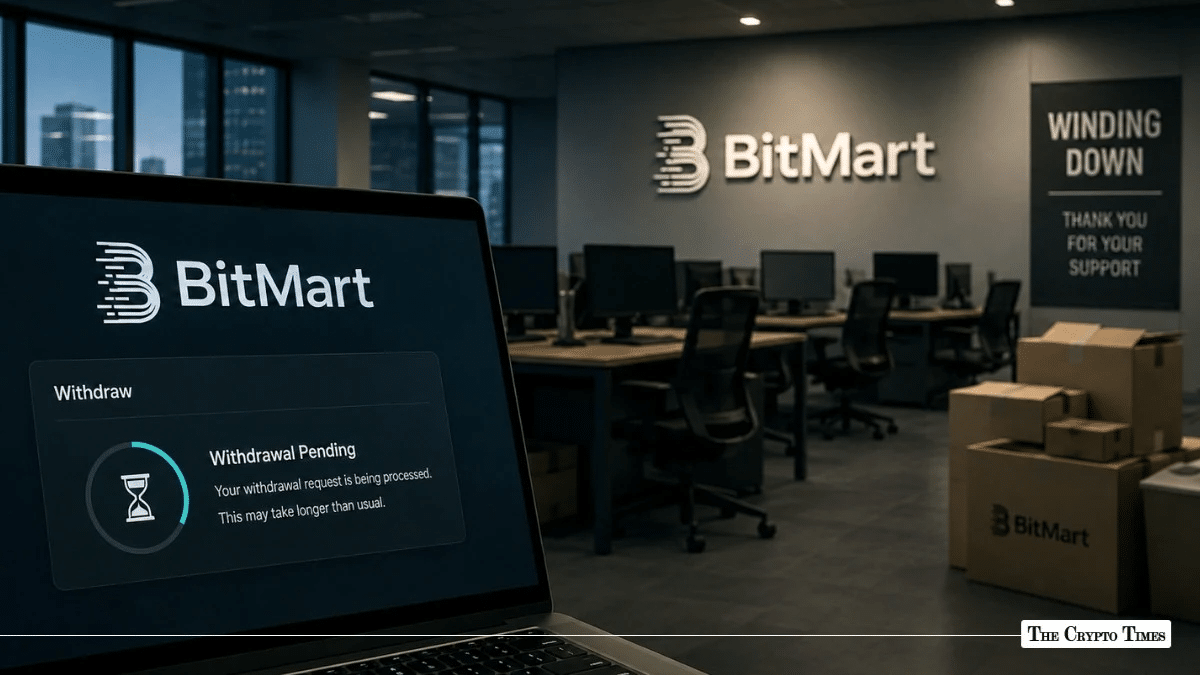
Crypto exchange BitMart is confronting a wave of user complaints over stalled withdrawals after announcing plans to shut down operations. While the July 26, 2026 notice outlined an orderly cessation, on-chain data and individual reports paint a picture of bottlenecks that have left many unable to move funds freely.
With trading set to end next month and full platform closure scheduled for early 2027, the episode has reignited concerns about liquidity and access during exchange exits.
BitMart confirmed it stopped accepting new user registrations and deposits around the announcement date. Trading services will halt at 15:59 UTC on August 26, 2026, while official operations cease on January 31, 2027. After that point, users retain limited login access to view records and submit withdrawal requests under procedures then in force.
The exchange insists the withdrawal channel remains open and strongly advises customers to finish identity verification, close all positions before 01:00 UTC on August 26, and file withdrawal requests before 05:00 UTC the same day.
Heightened Reviews and User Complaints
Processing, however, is far from automatic. BitMart states that certain requests undergo additional manual review under applicable laws, account security protocols, and risk controls.
These checks can include KYC and identity verification, examination of login devices and IP addresses, assessment of withdrawal address risks on the blockchain, review of fund sources, and trading history, Travel Rule compliance, sanctions screening, and, when needed, demands for extra documents such as proof of address, source of funds, or ownership of the receiving wallet. Times vary by asset, network conditions, and verification status. Requests are generally handled in order of submission, yet high volume can extend waits.
Users quickly reported friction. Many described “on-chain withdrawal freeze” messages, emails declaring a transaction complete while no blockchain transfer appeared, and even small test amounts remaining pending for extended periods.
Earlier risk-control actions against organized volume-farming schemes involving hundreds of linked accounts had already restricted some balances, though BitMart maintained that legitimate users were unaffected and appeals remained available.
On-Chain Evidence of Slow Outflows
Independent trackers reinforced the anecdotal evidence. Lookonchain observed only 58 wallets receiving approximately $805,000 over a 24-hour span after the announcement, including stretches of eight hours with zero processed withdrawals.
Other monitors noted an absence of large Bitcoin, stablecoin, or altcoin transfers above $25,000 in similar windows. Wallets attributed to BitMart held roughly $69 million in crypto assets by July 27, down from about $102 million earlier in the month. The exchange’s native token BMX tumbled more than 80% in a week, trading near $0.057.
These figures have fueled speculation about liquidity pressure, though BitMart attributes the slowdown primarily to compliance volume rather than insolvency. The firm has previously emphasized zero tolerance for malicious arbitrage and false information, reserving the right to pursue legal action.
Various users on X noted that the pattern echoes earlier exchange wind-downs, where technical availability of withdrawals collided with intensified screening and surge demand, creating effective delays that feel like refusals to many customers.
Scam risks have risen in parallel. Official notices and independent reports warn against third parties offering paid “priority” or “unfreeze” services. Users are urged to rely solely on verified support channels through the BitMart website or app.
As the August 26 deadline approaches, the central question is whether BitMart can clear the growing queue while completing its enhanced reviews. Submitting a request does not guarantee prompt blockchain settlement, and duplicate filings may only compound delays.
For remaining customers, the practical steps remain clear: complete verification promptly, close open positions, and file withdrawals early. The coming weeks will test whether the promised orderly exit can deliver timely access to user funds or whether bottlenecks persist into the final months of operation.
Also read: US Graham Russia Sanctions Bill Advances 86-12, Targets Crypto Evasion