Key Highlights
- Trump aide Gabriel Perez allegedly made over $100,000 betting on Trump’s speeches using private information from his job.
- The CFTC is investigating the trades, while a possible settlement could require Perez to return the money and stop making similar bets.
- The case comes as Kalshi faces growing regulatory disputes over prediction markets in states including Illinois and Michigan.
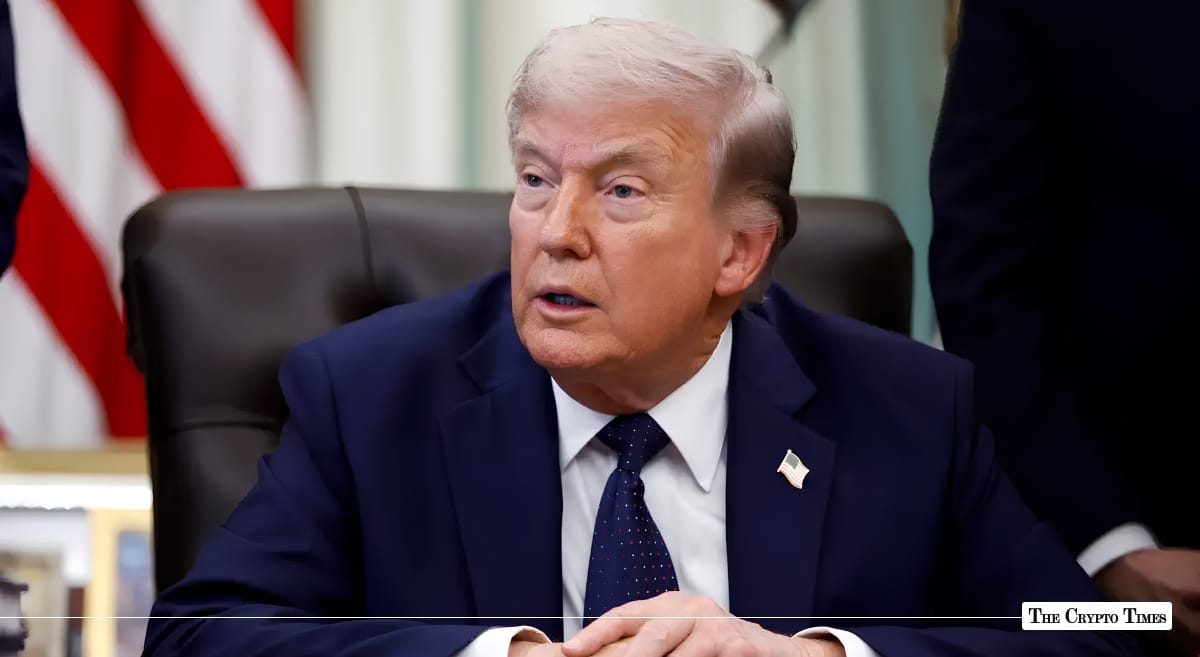
A longtime Trump aide is reportedly under investigation for allegedly using private knowledge of President Donald Trump’s speeches to make more than $100,000 from bets on the prediction markets platform Kalshi.
According to an ABC News report published on Thursday, Gabriel Perez, Trump’s teleprompter operator, allegedly used his access to the president’s prepared remarks to bet on words and topics Trump would mention in more than a dozen speeches.
How the alleged bets on Trump’s speech worked
According to a report, the Commodity Futures Trading Commission (CFTC) discovered that Perez placed the bets over three months. The speeches reportedly included Trump’s State of the Union address in February, a December primetime speech, a January speech at the World Economic Forum in Davos, Switzerland, and remarks at a Medal of Honor ceremony in March.
The bets were placed on Kalshi’s “Mentions” market, where users can bet on whether a specific word, phrase, or topic will be mentioned during a public speech. For example, a user could bet on whether a president would mention a particular country, policy, or issue.
Kalshi flagged the suspicious trading activity
The case became known after Kalshi’s surveillance team reportedly noticed unusual trading activity and referred it to the CFTC.
“Our surveillance team promptly flagged and referred these trades to the CFTC, and we are cooperating and assisting regulators,” Kalshi’s lead lawyer, Bobby DeNault, said in a statement.
What regulators are looking into
Perez has been working as one of Trump’s teleprompter operators since 2016, including during Trump’s first presidential campaign, and is reportedly among the people with the closest access to the president’s prepared remarks. According to the report, he often has the final look at Trump’s speeches and can see last-minute changes made by the president before he speaks.
That access is now at the center of the investigation. Sources said investigators identified instances in which Perez exited bets during a speech after Trump skipped portions of his prepared remarks that contained words Perez had allegedly bet would be mentioned.
Trump is known for moving away from prepared speeches and speaking off the teleprompter, a habit he has acknowledged publicly.
“You know, when you go up here, you take a big chance, especially me because I go off teleprompter about 80% of the time,” Trump said in a statement in January.
CFTC discusses possible settlement with Perez
According to sources familiar with the investigation, Perez reportedly met with regulators in recent months and acknowledged some of the trades. The CFTC later alerted federal prosecutors in Manhattan, but prosecutors reportedly decided not to open a criminal investigation.
CFTC officials have reportedly discussed a possible settlement that could require him to return the money he allegedly made from the trades and agree not to make similar bets in the future.
The White House said Perez is cooperating with the CFTC and stressed that staff members are expected to follow strict ethics rules. In March, the White House also issued an internal memo warning staff against using private information obtained through their jobs to bet on prediction markets.
Kalshi faces broader scrutiny over prediction markets
Kalshi prohibits users from placing bets based on nonpublic information obtained through their employment. The company recently updated its rules to require users to disclose their employer.
The investigation also comes as prediction markets continue to grow. Platforms such as Kalshi and Polymarket allow users to bet on the outcome of events, including politics and other public developments. However, some states in the United States have made their concerns known about prediction markets. For instance, Kalshi recently filed a federal lawsuit against Illinois after the state passed Senate Bill 3019, known as SB 3019.
In its complaint, Kalshi argued that the new law wrongly attempts to regulate event contracts that fall under the authority of the CFTC. The company said federal law gives the CFTC exclusive power over certain contracts traded on federally regulated platforms.
Kalshi has also faced a separate dispute in Michigan. After a state court ordered the company to cancel and refund certain event contracts involving Michigan residents, the CFTC stepped in and ordered Kalshi to honor the trades instead.
The regulator said canceling contracts that had already been executed could weaken confidence in regulated markets and conflict with federal rules. On July 14, the CFTC directed Kalshi to continue settling the affected contracts while it reviews the exchange’s proposed emergency rule.
Also Read: Durbin Puts Blanche on the Spot Over Crypto Enforcement Cuts to Trump’s Gains