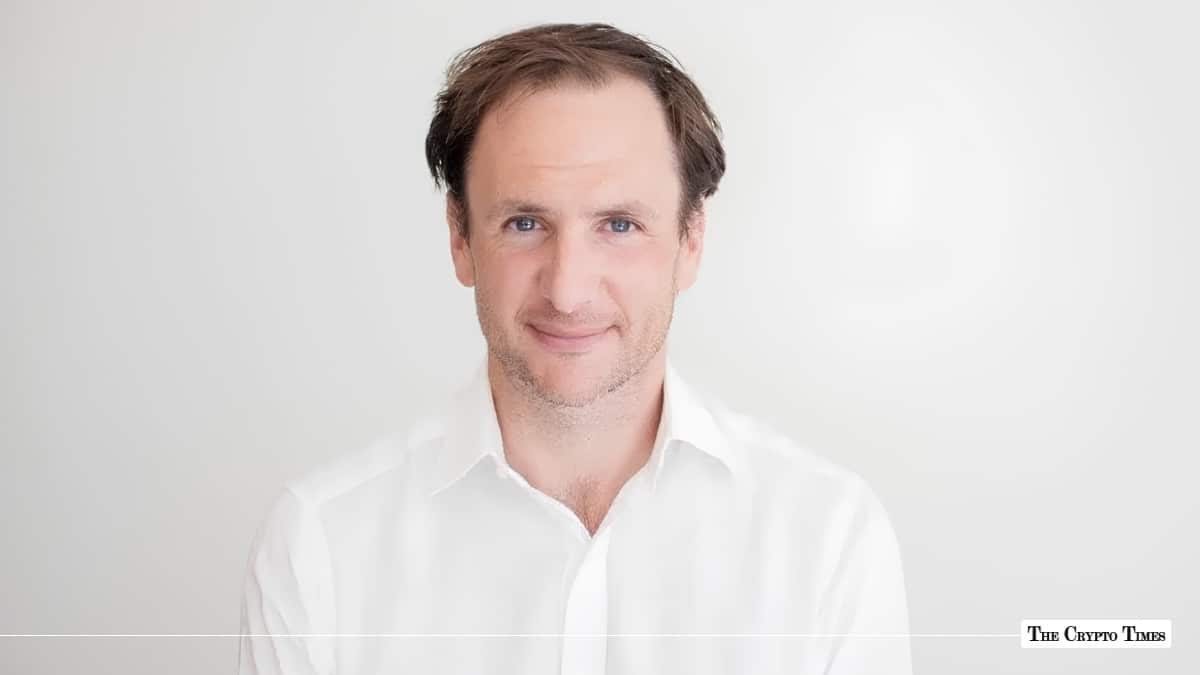
Richard Heathcote, who until earlier this year oversaw Tether’s sprawling investment portfolio, is seeking to sell part of his stake in the company; a move that, however small in size, cracks open a rare view into the ownership of the most secretive giant in crypto.
A rare window into who owns Tether
Heathcote is working with the investment bank PJT Partners to sell part of his 1.26% holding in Tether, Bloomberg reported, citing people familiar with the matter who were not authorized to speak publicly. Discussions with potential buyers are said to be ongoing, and no valuation has been disclosed.
Notably, the sale has received Tether’s approval — a detail that stands in contrast to late last year, when the company intervened to block some existing shareholders from running their own secondary sale, reportedly out of concern it would undermine a primary fundraising effort.
That contrast underscores how tightly Tether controls information about itself. The company issues USDT, the world’s largest stablecoin, with roughly $184 billion in circulation and around 59% of the entire stablecoin market — yet it remains privately held and famously opaque about its ownership and internal finances.
Its largest shareholder is Chairman Giancarlo Devasini, whose net worth stands at about $64 billion, according to the Bloomberg Billionaires Index. Against that backdrop, even a partial sale of a 1.26% stake is significant less for its size than for what it represents: a sanctioned, third-party transaction that could put an outside price on a slice of one of the most profitable and least transparent companies in the industry.
A sale that lands amid a transparency reckoning
The timing gives the story its weight. Earlier this year, Tether paused plans to raise money at a valuation reported to be as high as $500 billion as the company awaited the results of its first full financial audit—having hired one of the Big Four accounting firms to conduct it. According to Bloomberg’s earlier reporting, the decision to put the raise on hold came as potential investors and bankers pushed Tether for greater transparency around its finances.
That pressure is the through-line. For years, Tether has operated with periodic attestations rather than a full audit, a practice long criticized by skeptics who questioned the composition and sufficiency of the reserves backing USDT.
The company has consistently maintained that USDT is fully backed and points to an unblemished redemption record, and it detailed a profit of more than $10 billion last year in its periodic attestation. That profitability flows from a straightforward but immensely lucrative model: Tether holds a vast reserve of U.S. Treasury bills to back USDT’s dollar peg and pockets the interest those securities generate — a business that has ballooned as the number of tokens in circulation swelled.
A completed audit, still pending, would mark the most consequential test yet of the claims Tether has made about the reserves underpinning that machine. The company is also navigating regulatory pressure in Europe, where its decision not to seek authorization under the MiCA regime has seen USDT progressively dropped by compliant platforms across the bloc.
The man who built Tether’s investment empire
Heathcote’s role in Tether’s rise is central to why his stake exists in the first place. A competitive fisherman and former broker at Cantor Fitzgerald’s BGC Group, he joined Tether in January 2023, just as the company’s earnings from its Treasury holdings were exploding.
As Chief Investment Officer (CIO), he oversaw the effort to channel that cash into an expanding portfolio of investments, helping build a venture arm that has taken stakes in more than 120 companies across sectors as varied as soccer, robotics, and agriculture — from a stake in the Italian football club Juventus to a lead role in a raise of up to $1.4 billion for the humanoid-robotics firm NEURA Robotics.
Tether announced in March that Heathcote was stepping down as CIO to take an advisory role, with Zachary Lyons succeeding him. In its statement at the time, the company credited Heathcote with helping institutionalize Tether’s reserve management and build partnerships with major American financial institutions, positioning it among the largest private holders of U.S. Treasury bills globally. His planned share sale, coming months after that transition, is the natural corollary of an executive monetizing equity accumulated during a period of extraordinary growth.
The broader significance sits in what the sale might expose. Because Tether is private and its shares rarely change hands in public view, a completed transaction — even for a fraction of a single percent — could offer one of the few external reference points on what the market believes the company is actually worth, distinct from the headline figures floated during its paused raise.
For a company that has built a $184 billion stablecoin and a multibillion-dollar profit engine while revealing remarkably little about itself, that glimpse is the real story. Whether it arrives with a disclosed price, and how it squares with the valuation Tether was reportedly targeting before it hit pause, will say more about the company than the size of Heathcote’s stake ever could.
Also Read: AVAX One Changes CEO as Crypto Treasury Stocks Struggle