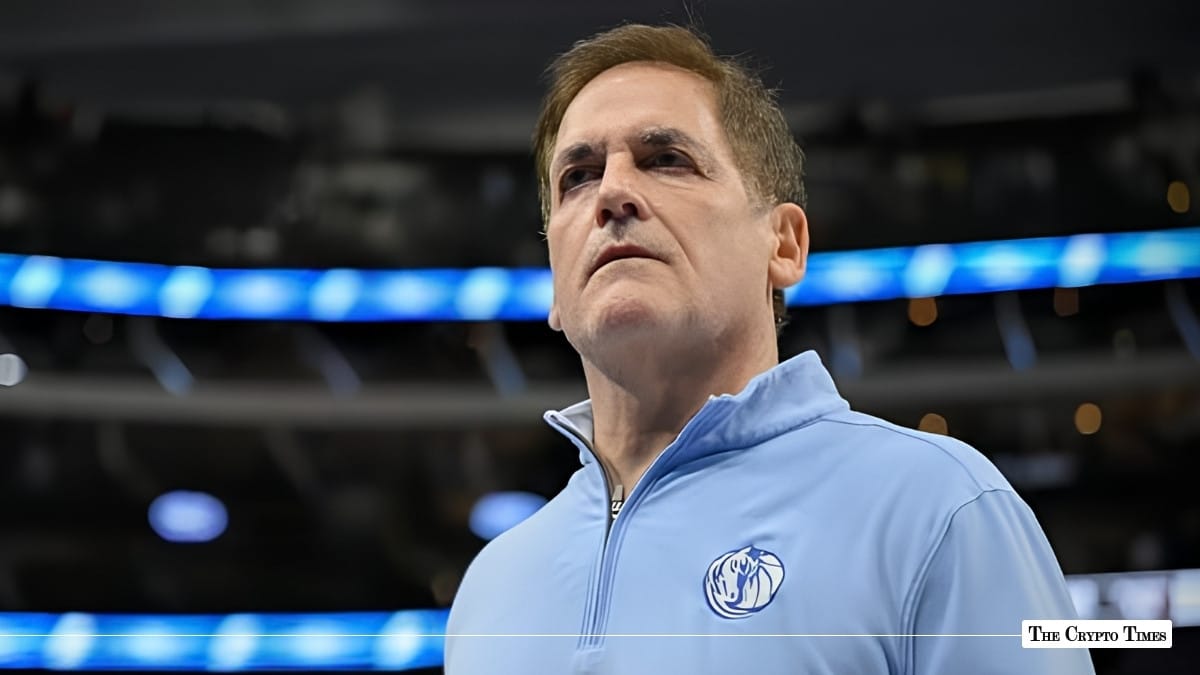
The long-running class action accusing Mark Cuban and the Dallas Mavericks of misleadingly promoting Voyager Digital is not over. On June 23, the plaintiffs filed a notice of appeal to the U.S. Court of Appeals for the Eleventh Circuit, seeking to revive a case dismissed late last year.
The notice, filed in the Southern District of Florida, asks the appeals court to review three rulings: the December 30, 2025 order dismissing the suit, any judgment flowing from it, and a May 27, 2026 order that denied the plaintiffs’ motions to reopen the case and reconsider the dismissal. The appeal also sweeps in the prior rulings that merged into those decisions.
The plaintiffs are represented by a notable legal team, including Adam Moskowitz of The Moskowitz Law Firm and David Boies of Boies Schiller Flexner, one of the country’s best-known trial lawyers. Their decision to appeal rather than walk away signals an intent to keep pressing claims that, until now, no court has actually ruled on.
The filing revives a dispute that traces back to the Mavericks’ 2021 partnership with Voyager, a five-year deal that made the crypto lender the team’s brokerage partner before the platform’s collapse.
Dismissed on jurisdiction, not on the merits
The crucial point about the December dismissal is what it did not decide. U.S. District Judge Roy K. Altman threw out the case for lack of personal jurisdiction, finding that the plaintiffs had not shown a Florida court could hear claims against a Texas-based billionaire and a Texas-based NBA franchise. He never reached the substance of the allegations.
That distinction matters. The court did not rule on whether the Voyager promotion was misleading, whether Cuban knew the platform was risky, or whether investors were harmed by the endorsements. Altman found that the defendants’ nationwide marketing, including a widely cited offer of $100 in Bitcoin for new deposits, was not specifically aimed at Florida residents and that Cuban’s property and visits in the state were not enough to establish that he conducted Voyager-related business there.
An alternative theory, that Cuban and the Mavericks were part of a conspiracy with the other promoters, failed because the plaintiffs did not allege any agreement directly linking Cuban to those co-defendants.
The dismissal was without prejudice but without leave to amend, and the plaintiffs were barred from refiling in that district. The appeal contests both that outcome and Altman’s later refusal to reopen the case or send it to Texas, where the jurisdictional hurdle would not exist. The underlying claims, that the promotion of Voyager amounted to marketing unregistered securities and that investors were misled into believing the platform was safe, remain allegations — untested and unproven.
Cuban fought while the athletes paid
Cuban’s path through the litigation stands apart from his fellow defendants. The other named promoters—retired NFL star Rob Gronkowski, NBA player Victor Oladipo, and NASCAR driver Landon Cassill—settled with the plaintiffs for a combined $2.4 million in 2024 and exited the case. A settlement is not an admission of liability, but their departure left Cuban and the Mavericks as the sole remaining defendants and the only ones who chose to fight rather than pay.
That choice produced the dismissal Cuban’s side has hailed as vindication, and now the appeal tests it. The stakes extend beyond one billionaire. Voyager, which had drawn more than 3.5 million users and over $5 billion in assets at its peak, filed for bankruptcy in July 2022 after Three Arrows Capital defaulted on a roughly $650 million loan, freezing about $1.3 billion in customer funds.
The case is one of the few from that wreckage that could still produce a clear ruling on how much legal responsibility public figures bear for the crypto platforms they endorse, a question most celebrity-promotion suits have settled or sidestepped before reaching an answer.
One detail has shifted over the years of litigation: Cuban sold his majority stake in the Mavericks to Miriam Adelson in 2023, retaining a minority interest and control of basketball operations, so the franchise’s ownership today differs from when the promotion ran. If the Eleventh Circuit reverses, the case returns to the district court to be argued on its merits at last. If it affirms, the dismissal stands and the questions at the heart of the suit stay unanswered. For now, nothing is settled but the venue of the next fight.
Also Read: Cardano Contributor Exits After Bankruptcy, Criticizes Governance