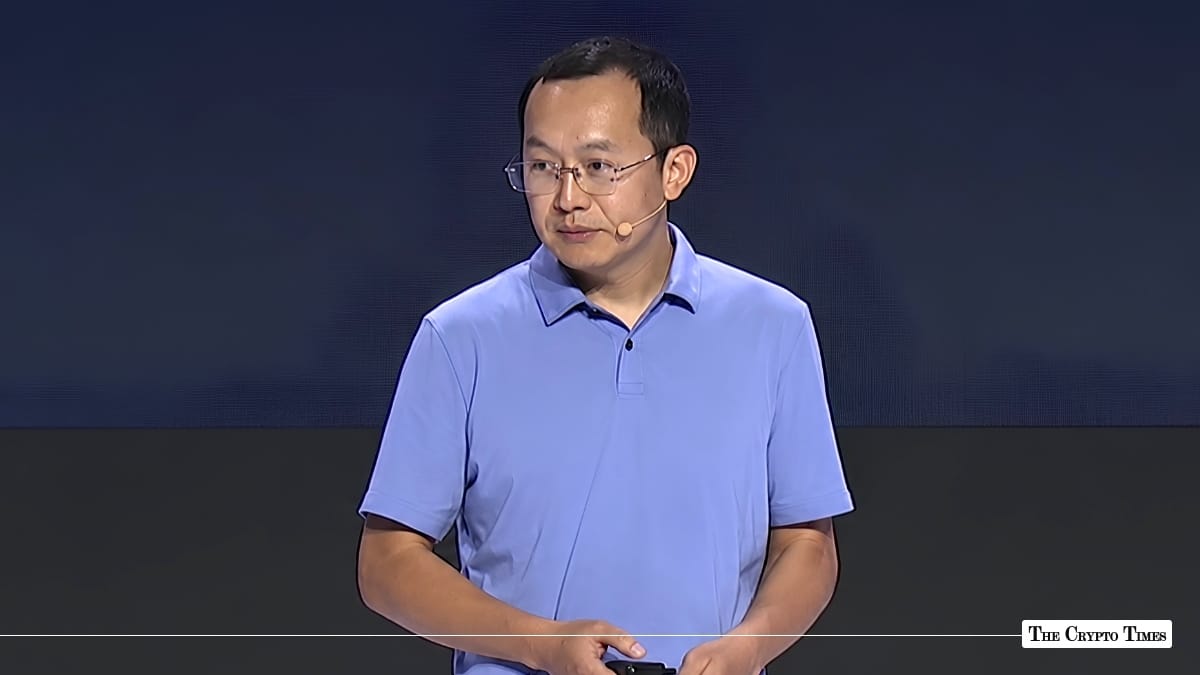
The long-simmering rivalry between major cryptocurrency exchanges has intensified over compliance and regulatory strategy in Europe. OKX Founder and CEO Star Xu has publicly critiqued Binance’s handling of its European operations, pointing to what he describes as a “regulatory arbitrage game.”
His comments came amid reports that Binance withdrew its Markets in Crypto-Assets (MiCA) application in Greece, its main attempted route for an EU-wide license, just weeks before the July 1, 2026 deadline.
The Critique: ‘Outcomes, Not Organizational Charts’
In his post on X, Xu referenced Binance’s past regulatory challenges, including issues with the UK’s Financial Conduct Authority (FCA) in 2022. He argued that the core problem is not securing licenses or scaling compliance teams, but whether compliance is truly embedded in an organization’s culture and decision-making processes.
Xu wrote: “Real compliance effectiveness comes from governance, transparency, accountability, and a willingness to operate within both the letter and the spirit of regulation—not from headcount alone. Regulators are ultimately evaluating outcomes, not organizational charts.”
He framed genuine compliance as a matter of outcomes and structural integrity rather than headcount or procedural checkboxes.
The Binance Europe Situation
The backdrop is one of the most consequential deadlines in European crypto history. When MiCA’s transition period ends on July 1, 2026, any exchange without a Crypto-Asset Service Provider (CASP) licence will be barred from legally serving EU clients, and a single licence from one member state passports across all 27. Binance applied through Greece in January 2026, naming the country as its preferred European base. But on June 16, Reuters reported, citing two sources, that Greece’s Hellenic Capital Market Commission was likely to reject the application, a decision that would slam the door across the entire bloc.
Binance has pushed back hard, insisting it has worked constructively with regulators for some 18 months, that the Greek regulator completed its review and found the application MiCA-compliant, and that it expects to provide users a further update before June 30.
With more than 300 million registered users globally and legacy national registrations in countries like France and Italy set to lose all legal effect under MiCA, the stakes for Binance’s European business are enormous. As things stand, the outcome is genuinely contested.
Regulatory Records in Context
Xu’s intervention is not disinterested, and it is worth reading in competitive context. OKX secured its MiCA licence through the Malta Financial Services Authority, giving it passporting rights across the European Economic Area while Binance scrambles. A Binance stumble would hand licensed rivals like OKX, Coinbase and Kraken more room to compete for euro liquidity and institutional clients. OKX’s own Europe chief, Erald Ghoos, has predicted that around 80% of crypto exchanges will not survive MiCA, a framing that positions already-licensed players as the winners of the shakeout.
For all the force of Xu’s compliance sermon, OKX’s own record complicates the high ground. In February 2025, an OKX affiliate pleaded guilty in the United States and agreed to pay roughly $504 million for operating an unlicensed money-transmitting business and related anti-money-laundering failures, having served US customers in violation of its own stated policies.
Binance, for its part, settled with US authorities for $4.3 billion in 2023, with founder Changpeng “CZ” Zhao pleading guilty to a Bank Secrecy Act violation and later receiving a presidential pardon, the very kind of “political protection” Xu’s thread appears to allude to. In other words, both giants are lecturing and being lectured from inside glass houses, and observers are right to weigh Xu’s argument on its merits rather than on the messenger’s spotless record, which neither exchange can claim.
What’s At Stake
Beyond the personalities, the Greek decision is shaping up as a defining test of whether Europe’s unified rulebook can actually end the jurisdiction-shopping that let global exchanges scale faster than national regulators could keep up. If Binance fails to secure a route before July 1, it will have to migrate affected users into another authorized structure or begin restricting EU services, an outcome that would ripple through European liquidity and competition.
For Xu, that result would validate his thesis. For Binance, it would be a costly reminder that, in the MiCA era, a licence cannot be willed into existence by headcount or defiance alone.
Also Read: Voyager Class Action Against Mark Cuban Heads to Federal Appeals Court