The intersection of crypto and political power is once again under the microscope in Washington. On June 23, five Senate Democratic leaders called for immediate hearings into what they describe as the Trump family’s and senior administration officials’ “cashing in on foreign crypto deals,” centering on the Trump-affiliated venture World Liberty Financial (WLF) and its financial entanglement with a foreign government.
The letter was signed by Senators Elizabeth Warren, Ranking Member of the Banking Committee; Richard Blumenthal of the Permanent Subcommittee on Investigations; Gary C. Peters of Homeland Security and Governmental Affairs; Richard J. Durbin of the Judiciary Committee; and Ron Wyden of the Finance Committee. Each wrote to the Republican chair of their respective committee.
The timeline the senators are questioning
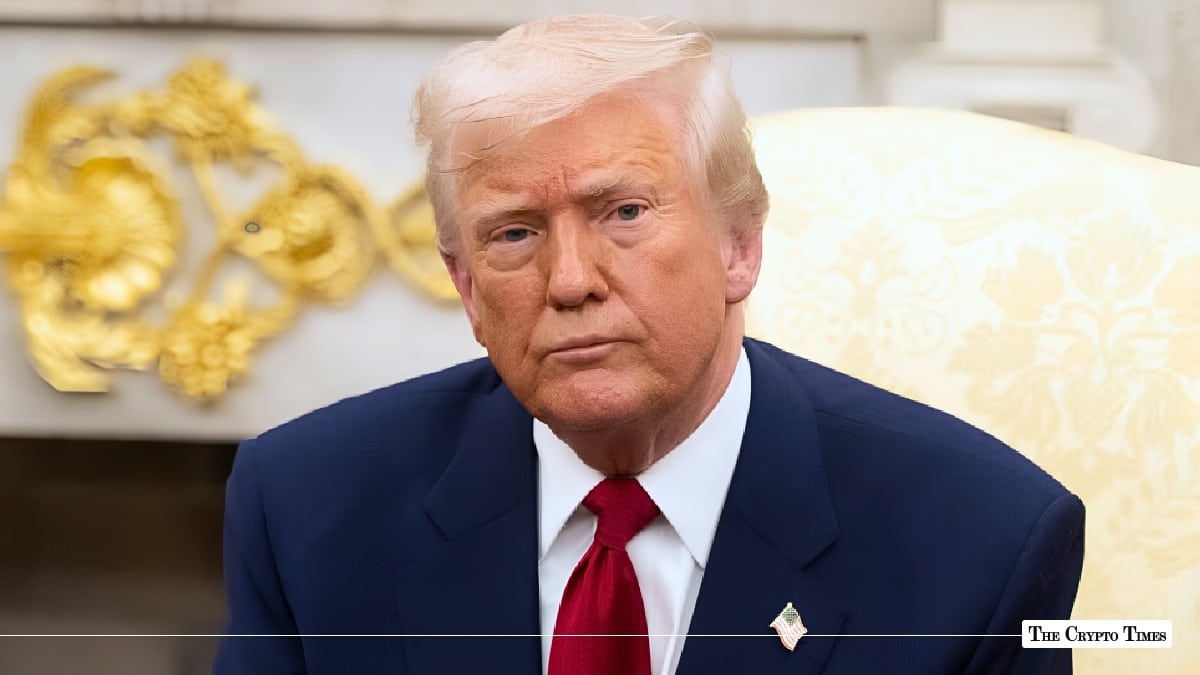
At the heart of the request is a sequence of events the lawmakers argue demands scrutiny. Citing public reporting, the senators state that four days before Donald Trump’s inauguration, lieutenants to an Abu Dhabi royal secretly purchased a 49% stake in World Liberty Financial for approximately $500 million, with $218 million paid up front to entities tied to the families of President Trump and Middle East envoy Steve Witkoff. They characterize the arrangement as “something unprecedented in American politics: a foreign government official taking a major ownership stake in an incoming U.S. president’s company.”
What followed, the senators note, is the crux of their concern. Within months of the deal, the Trump Administration approved several major geopolitical and regulatory shifts:
- $1.4 Billion Arms Sales: The administrative clearance and formal greenlighting of $1.4 billion in advanced weaponry sales to the UAE military.
- 35,000 Advanced AI Chips (The China Risk): The authorized export of 35,000 high-performance Nvidia AI chips to the UAE’s state-backed firm, G42. This approval came despite explicit national security objections from intelligence officials who warned that G42’s deep operational ties to blacklisted firms like Huawei make it a prime conduit for funneling restricted U.S. technology directly to China.
- Crypto Enforcement Rollback: A broader executive move to loosen digital asset oversight, headlined by permanently disbanding the Justice Department’s specialized National Cryptocurrency Enforcement Team (NCET).
- TikTok Ownership Shift: Allowing UAE-backed sovereign wealth fund MGX to acquire a major stake in TikTok, directly challenging Trump’s public pledge that the application would remain exclusively under American ownership.
What the lawmakers want
The Democrats are demanding that administration officials testify under oath about what they knew, and when, regarding payments to the families of the president and his lead diplomat for the region.
They want officials to explain, as they put it, how they will “restore faith that the Administration is representing the best interests of the American people rather than the personal interests of the President and his close associates.”
The crypto backdrop: World Liberty Financial
World Liberty Financial is a Trump-family DeFi project whose disclosures show 75% of token-sale proceeds flowing to a Trump-controlled entity, and whose USD1 stablecoin has become central to the scrutiny. The UAE investor, an entity backed by national security adviser Sheikh Tahnoon bin Zayed Al Nahyan, who also chairs the AI-focused firms MGX and G42, acquired its stake without initial public disclosure, and a separate Tahnoon-linked firm, MGX, used USD1 to settle a $2 billion investment in Binance.
The financial stakes are vast. The Trump family has earned at least $2.3 billion in profit across its main crypto ventures since the start of Trump’s second term, with World Liberty accounting for the largest share, even as more than a million outside investors recorded collective net losses. The venture has drawn sustained pressure from Warren, who earlier this year called on the SEC to investigate WLFI, a request that sent the WLFI token down more than 6% in a day.
The other side
The White House has consistently rejected allegations of impropriety. It has stated that the president’s assets are held in a trust managed by his children and that no conflict of interest exists, while World Liberty has described the UAE investment as a routine private transaction. WLF and the administration have not released full transaction details, but maintain the dealings are lawful and above board. No findings of wrongdoing have been established, and the senators’ letter frames the matter as a series of events warranting investigation rather than proven misconduct.
Why the hearings may not happen, and why it still matters
There is a significant political catch: Republicans control the Senate, and therefore the committees. Because the Democrats are ranking members writing to GOP chairs, whether any hearing actually occurs rests entirely with the majority, making the letter as much a public-pressure tactic as a procedural step. A separate House probe into the $500 million UAE stake, led by Democrats, has similarly struggled to compel full disclosure.
Yet the episode underscores how deeply Trump-family crypto interests have become entangled with US policy debates. The same conflict-of-interest questions have repeatedly stalled the CLARITY Act, the crypto market-structure bill, as lawmakers from both parties spar over provisions that would limit officials and their families from profiting from digital assets while in office. For an industry that craved political legitimacy, the WLF saga has become a double-edged sword, proof of crypto’s arrival at the highest levels of power, and the source of its most damaging conflict-of-interest controversy.
Also Read: Law Enforcement Groups Warn Clarity Act Could Weaken Crypto Oversight