Key Highlights
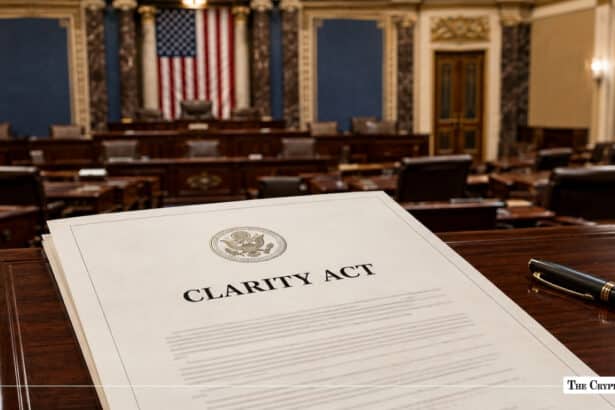
- Ripple CEO Brad Garlinghouse criticized JPMorgan CEO Jamie Dimon, accusing him of misrepresenting the proposed CLARITY Act and its impact on crypto regulation.
- Garlinghouse welcomed support from Michael Selig, who described Dimon’s interpretation of the bill as a misreading.
- With only 16 legislative days remaining before the August recess, industry leaders are pushing Congress to advance the CLARITY Act.
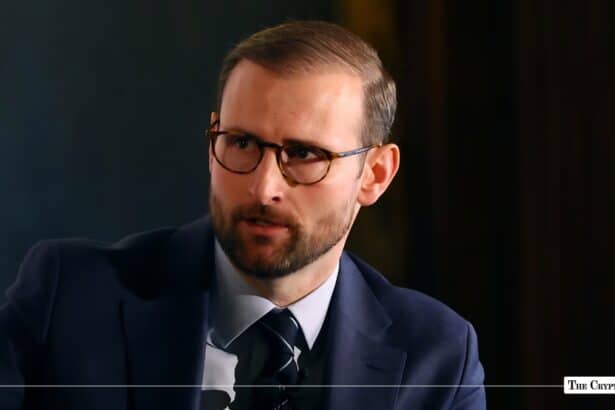
Ripple CEO Brad Garlinghouse criticized JPMorgan Chase CEO Jamie Dimon, seemingly accusing him of misrepresenting the proposed CLARITY Act for digital assets. The remarks came as Congress faces pressure to advance the legislation before the August recess, with only 16 legislative days remaining.
In an interview with Fox Business today, Garlinghouse pushed back against Dimon’s recent comments opposing the bill. Dimon had expressed concerns that the CLARITY Act could weaken compliance standards and allow bad actors to thrive.
In response, Garlinghouse stated that such claims were either an “intentional misrepresentation” or negligent, arguing that the bill is intended to strengthen regulatory clarity rather than weaken it.
Garlinghouse highlighted Dimon’s long-standing skepticism toward the crypto industry, noting that the JPMorgan chief has previously called Bitcoin a “pet rock” and labeled the entire sector a Ponzi scheme. He suggested Dimon’s opposition stems from business interests, pointing out that JPMorgan generates roughly $20 billion in revenue and over $5 billion in profit from its traditional payments business. “They want to maintain the status quo,” Garlinghouse said.
Garlinghouse responds to Dimon’s criticism of Armstrong
The Ripple executive also addressed Dimon’s criticism of Coinbase CEO Brian Armstrong, clarifying that while industry leaders may prioritize their own companies, the CLARITY Act serves the broader ecosystem.
He also welcomed the support from CFTC Chairman Michael Selig, who earlier described Dimon’s interpretation of the bill as a “misreading,” particularly regarding AML/KYC requirements for registered digital commodity exchanges.
CEO discusses Ripple’s growth trajectory
Beyond the legislative debate, Garlinghouse discussed Ripple’s business outlook. The company expects to reach a $1 billion revenue run rate by the end of 2026, excluding XRP holdings on its balance sheet.
He noted that much of Ripple’s growth has occurred internationally due to regulatory uncertainty in the U.S. Garlinghouse said he believes the CLARITY Act could encourage greater domestic adoption, giving CFOs, treasurers, and banks the certainty needed to engage more deeply with crypto solutions.
Ripple recently launched an AI starter kit for the XRP Ledger, providing developers with tools to build agent-powered applications and facilitate payments.
Garlinghouse also pointed to growing experimentation with AI agents in payments infrastructure and highlighted Ripple’s participation in Mastercard’s recent industry partnership. The company is also seeing strong demand for its Ripple Treasury platform and RLUSD stablecoin, which has already climbed into the top five stablecoins.
Optimism around the CLARITY Act
As Bitcoin traded around $62,727 today, showing modest gains, the broader market continued to navigate geopolitical tensions and shifting risk appetite.
Garlinghouse said he remains optimistic that regulatory clarity will position the United States as a leader in digital assets and innovation.
The fate of the CLARITY Act remains uncertain. Galaxy Digital has estimated a 60% probability of passage before the August recess. Nevertheless, Garlinghouse’s comments highlight the industry’s continued push for a more defined regulatory framework after years of uncertainty.
Also Read: Investors Pull Back From BTC Treasury Stocks as Volume Drops 49%