Key Highlights
- Tether Investments has led NEURA Robotics’ Series C funding round, contributing to a deal worth up to $1.4 billion.
- The partnership will integrate Tether’s Wallet Development Kit into NEURA’s platforms, enabling robots to conduct payments and transactions autonomously.
- NEURA will also collaborate with Tether to test and deploy QVAC, an edge-first AI runtime designed to run AI models directly on robotic devices.
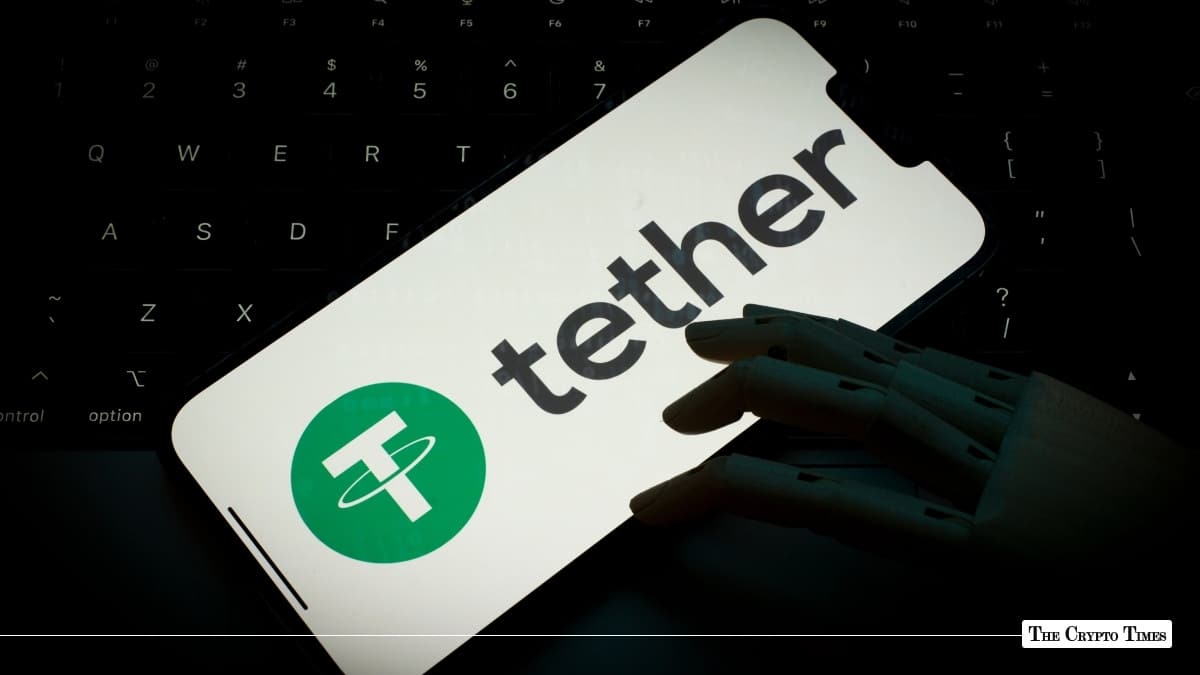
Tether Investments, the strategic investment arm of Tether, has taken a lead role in a major Series C funding round for NEURA Robotics, with the total round reaching up to $1.4 billion. The investment brings together a group of strategic and financial backers and signals growing interest in the convergence of robotics, artificial intelligence, and financial infrastructure.
According to the official announcement, a central element to the partnership is the integration of Tether’s technologies into NEURA’s Neuraverse platform, a unified software ecosystem designed to connect robots, AI models, data, compute resources, and services. This includes a marketplace for components, intelligence, and simulation tools.
Focus on WDK and QVAC
Tether will deploy its Wallet Development Kit (WDK), enabling self-custodial wallet functionality directly within NEURA’s robotic platforms. This is intended to allow robots to receive payments for completed tasks, execute transactions, and participate in economic activities autonomously within set parameters.
Additionally, NEURA will collaborate with Tether on testing and implementing QVAC, an edge-first AI runtime. This technology is intended to enable AI models to run locally on robotic devices, reducing latency, improving resilience, and decreasing dependence on cloud infrastructure.
Leaders highlight future of autonomous machines
The funding round was advised by several firms, including Skadden, Arps, Slate, Meagher & Flom LLP for legal matters, Porsche Consulting for commercial and operational due diligence, and Deloitte for financial and tax due diligence.
Paolo Ardoino, CEO of Tether, commented on the development, stating, “As robotics moves beyond scripted automation and into true autonomy, the infrastructure behind it must evolve as well. Autonomous machines need the ability to process information locally, make decisions, and transact without relying on centralized intermediaries.”
David Reger, founder and CEO of NEURA Robotics, added, “AI is moving from the digital world into the physical world. Together with Tether, we see a future where intelligent machines can not only learn and act autonomously but also coordinate, transact, and create value in a trusted global ecosystem.”
Expansion into tokenized gold
In a separate development, Tether and digital banking platform Fasset recently introduced a new Visa card that enables users to spend tokenized gold in everyday transactions worldwide. The card allows holders to convert Tether Gold (XAU₮) into USD₮ and then into local currency wherever Visa is accepted.
It offers up to 6% cashback in XAU₮ on eligible purchases and features an automatic round-up system that invests spare change into Tether Gold, helping users gradually build gold holdings through normal spending. The initiative aims to bridge digital assets with real-world payments, targeting users in regions with limited access to traditional financial tools.
What it could mean for the crypto industry
Tether’s participation in NEURA Robotics’s funding round represents a step in bridging cryptocurrency infrastructure with the physical world. By integrating Tether’s Wallet Development Kit, robots could gain native self-custodial payment capabilities, enabling them to autonomously earn, receive, and spend money for tasks. The addition of edge AI technology further supports real-time, decentralized decision-making.
For the crypto sector, the partnership highlights a potential expansion of digital asset use cases beyond trading and payments into emerging machine-to-machine economic systems. If adopted at scale, such systems could create additional demand for stablecoins and tokenized assets while broadening the role of blockchain-based infrastructure in automated environments.
Also Read: Coinbase Traders Face Forced Settlement as Six Perps Exit