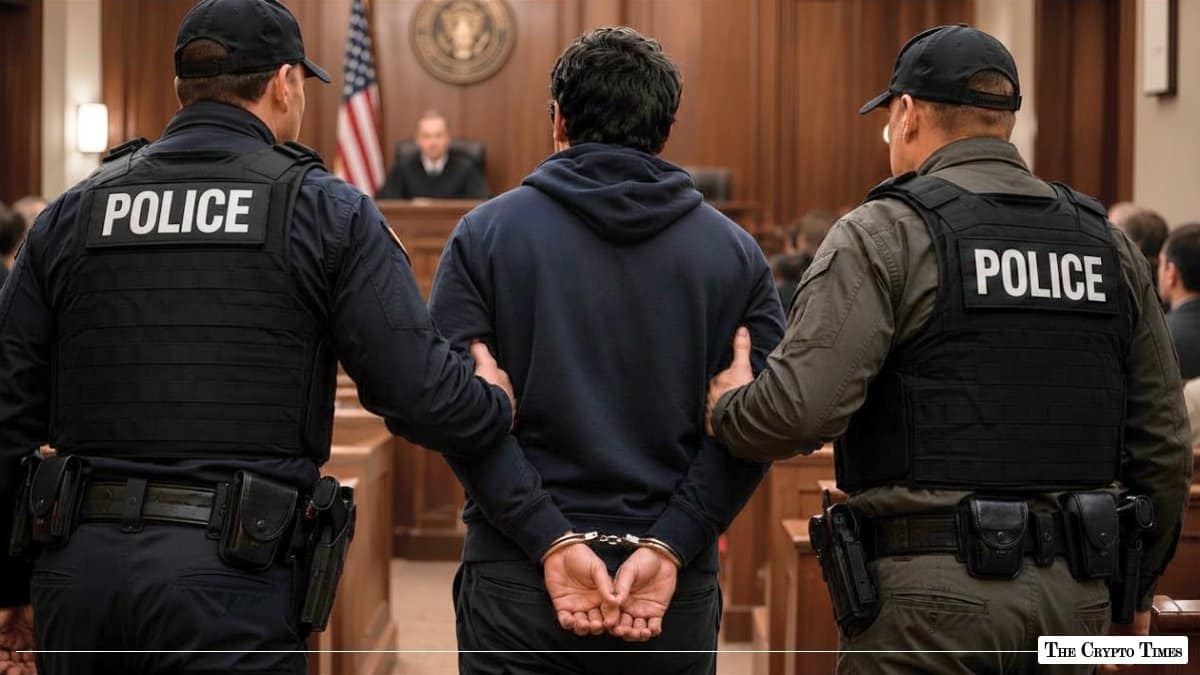
A Washington man was sentenced to five years in prison for helping launder nearly $100 million taken from investment fraud victims through banks and cryptocurrency platforms, U.S. prosecutors said.
Geoffrey K. Auyeung, 47, of Newcastle, Washington, played a key role in a money laundering network that moved funds for overseas fraudsters, according to the U.S. Department of Justice. Authorities said he received money from victims, converted much of it into cryptocurrency, and sent the assets to co-conspirators linked to Nigeria and Russia.
The case underscores how digital assets continue to feature in major financial crime investigations. U.S. District Judge John C. Coughenour said the five-year sentence reflected the “scope and magnitude” of the scheme, adding that Auyeung continued accepting funds even after he had been indicted.
Fraud network used fake oil investments
Court records show that Auyeung set up at least nine companies that appeared to be linked to oil and gas investments, giving fraudsters a credible-looking front to attract victims. Investors were told their money would be placed in escrow accounts and used to generate returns from oil storage projects in Rotterdam and Houston.
Prosecutors said the promised profits never materialized. Instead, the funds were funneled through a web of bank accounts and cryptocurrency transactions designed to obscure their origin and destination.
Authorities said Auyeung controlled at least 81 bank accounts at 24 financial institutions, as well as 19 accounts across eight cryptocurrency exchanges. Between June 2022 and July 2024, those accounts received roughly $97.1 million from victims, according to court documents.
Crypto played a central role
Investigators said Auyeung quickly converted victim funds into cryptocurrencies including Bitcoin, Ethereum, Tether, and USD Coin. Authorities said he used exchanges such as Coinbase, Gemini, and BitStamp before transferring much of the digital assets to Binance accounts allegedly controlled by his co-conspirators.
Prosecutors said the transactions were structured to make the money difficult to trace. According to court filings, Auyeung used misleading transaction descriptions, created false supporting documents, and moved funds through multiple companies and accounts to reduce scrutiny from banks and regulators.
First Assistant U.S. Attorney Charles Neil Floyd said, “Auyeung facilitated a fraud, developed by others, that stole investor money while lulling them with promises of a legitimate escrow account.”
Continued activity after arrest
Authorities arrested Auyeung in August 2024, but prosecutors said he continued communicating with his co-conspirators after his arrest. Court filings also allege that he received an additional $400,000 in commissions through bank accounts held in his wife’s name.
According to prosecutors, Auyeung earned more than $4 million for his role in the scheme. As part of the sentence, the court ordered him to forfeit roughly $2.3 million in seized funds, an Audi SQ8, and drop his claims to $7.1 million in seized cryptocurrency assets.
The case comes as regulators and law enforcement agencies increase their focus on the use of digital assets in fraud and money laundering investigations. It also adds to pressure on cryptocurrency exchanges and financial institutions to strengthen compliance measures and detect suspicious transactions more effectively.
Also Read: Congress Debates Major Crypto Tax Overhaul in House Hearing