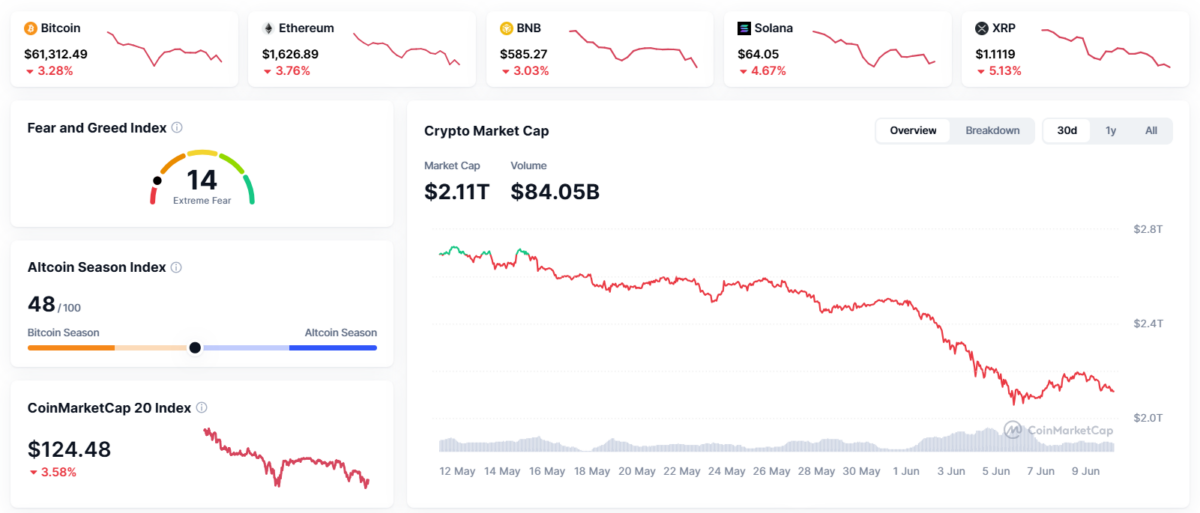
Bitcoin is trading near $61,200–$61,500 as of early June 10, 2026, reflecting a roughly 2–3.5% decline over the past 24 hours. This comes after a turbulent period where the leading cryptocurrency dipped below $60,000 earlier in the week before staging a partial recovery.
The broader crypto market mirrors this caution, with total capitalization hovering around $2.11 trillion, down approximately 2.8% in the last 24 hours.
Bitcoin dominance remains steady near 58%, underscoring its role as the market anchor even as altcoins experience mixed performance. Ethereum trades around $1,624, down 2–4%, while major assets like BNB (~$585–$593), XRP (~$1.11–$1.14), and Solana show similar downward pressure amid risk-off sentiment.
The Crypto Fear & Greed Index readings lingered in “Extreme Fear” territory at 14, a level historically associated with capitulation and potential reversal setups.
ETF Flows: Persistent Outflows Weigh on Sentiment
A key driver of recent Bitcoin weakness has been sustained outflows from U.S. spot Bitcoin ETFs. On the most recent trading day (June 9 data), these funds recorded a net outflow of approximately $77.44 million.
Cumulatively, Bitcoin ETFs have seen significant pressure. Over the past four weeks, net outflows reached roughly $5.4 billion, with one week alone posting a record $1.72 billion exit—the largest since early 2025. BlackRock’s IBIT bore a heavy share, losing about $1.34 billion in that period.
Total assets under management (AUM) for Bitcoin spot ETFs now stand around $77.58 billion, with cumulative net inflows since inception still positive at $53.571 billion (holding ~680K BTC), but recent momentum has clearly reversed.
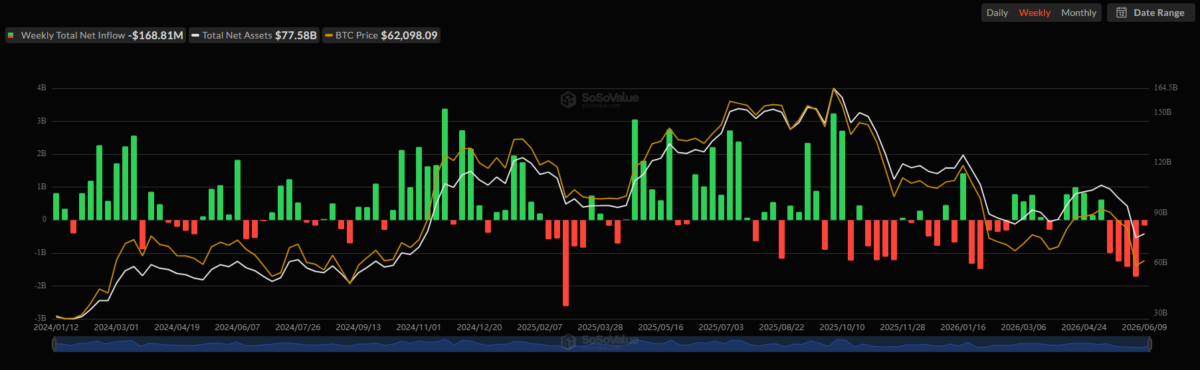
This outflow streak follows a brief respite earlier in June, where ETFs briefly turned positive after a 13-day losing run totaling over $4.4 billion. Analysts point to multiple factors: profit-taking after Bitcoin’s earlier 2025–2026 rally peaks near $80,000–$100,000+, market uncertainty, and competition from traditional assets.
Despite the redemptions, long-term holders and institutions like Strategy Inc. and Strive continue accumulating, with recent purchases signaling conviction in Bitcoin as a treasury asset.
ETF activity remains a critical barometer. When inflows dominated in prior cycles, they fueled rapid price appreciation. The current reversal highlights thinner liquidity and reduced institutional buying power in the short term, contributing to heightened volatility.
Broader Market Moves
The total crypto market cap dipped but stabilized. Altcoins underperformed slightly relative to Bitcoin in some cases, with XRP dropping notably on heavy selling. Meme coins and smaller tokens showed extreme volatility, with some gainers like niche projects posting double-digit moves amid low liquidity.
In a key regulatory highlights, over 200 crypto firms urged the U.S. Senate for an immediate vote on the CLARITY Act to provide regulatory clarity. On the other hand, discussions around crypto tax bills advanced in Congress but faced scrutiny.
Other market updates include Securitize announcing plans for a public listing, Former FTX CEO Sam Bankman-Fried formally applying for a presidential pardon, and Kraken securing a major partnership as the official crypto exchange for the FIFA World Cup 2026.
Market Sentiment and Technical Outlook
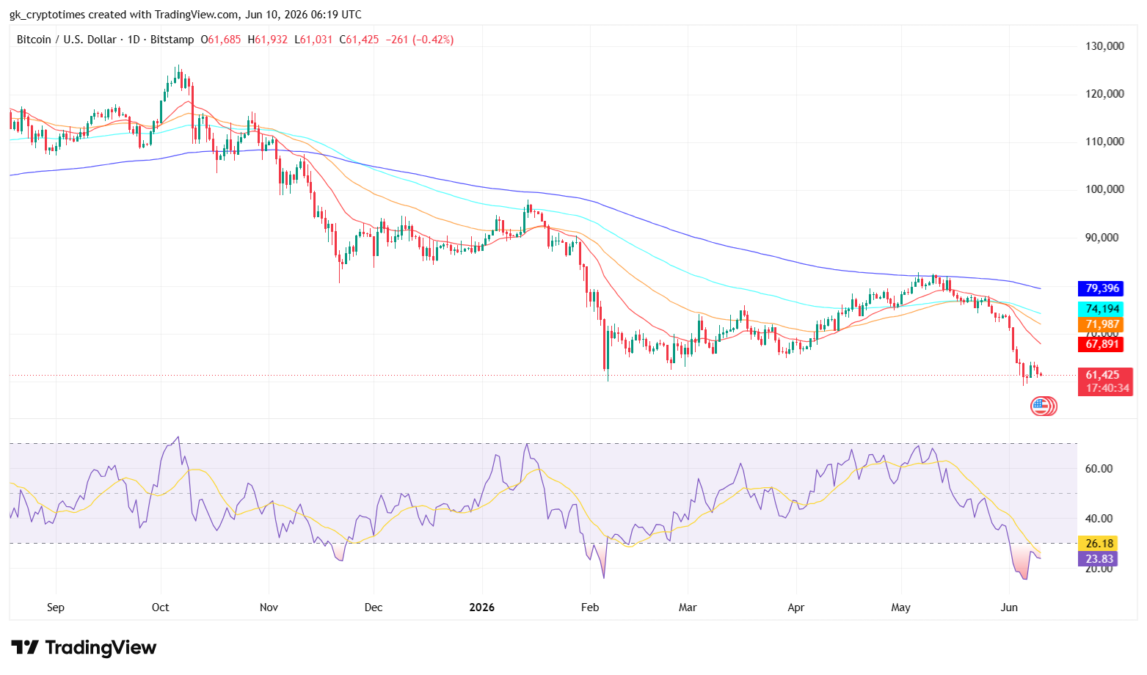
The overall market sentiment remains cautious. Bitcoin has corrected sharply from May highs above $80,000, with the recent breach below $60,000 marking the lowest levels since late 2024 in some reports.
Technical analysts note broken key moving averages (e.g., 50-month EMA discussions) and support tests. Bulls eye potential recovery toward $63,000–$65,000 if ETF flows stabilize and macroeconomic data (upcoming CPI and Fed signals) proves supportive. Bears warn of further downside to $54,000 or lower if supports fail.
Broader factors include correlation with equities and gold, both under pressure from rate-hike expectations and geopolitical tensions. Stablecoins maintain dominance in trading volume, providing liquidity but also highlighting capital flight to safety within crypto.
Looking Ahead
The crypto market in mid-2026 finds itself at a crossroads. Persistent ETF outflows signal short-term headwinds, yet underlying adoption metrics—corporate treasuries, regulatory progress, and infrastructure builds—suggest long-term resilience.
Bitcoin’s halving cycle effects from prior years continue to play out, though diminishing block rewards shift emphasis to demand-side drivers.Investors should monitor upcoming U.S. inflation data, Federal Reserve communications, and ETF flow trends closely.
While volatility defines the asset class, periods of “extreme fear” have often preceded significant rebounds historically. Diversification, risk management, and a focus on fundamentals remain essential at this time.
As the market digests recent corrections, the interplay between institutional flows, regulatory clarity, and macroeconomic conditions will likely dictate the next leg. Bitcoin holds above key psychological levels for now, but conviction will be tested in the days ahead.
Also read: Coinbase Calls for Simpler Crypto Tax Rules at House Hearing