Key Highlights
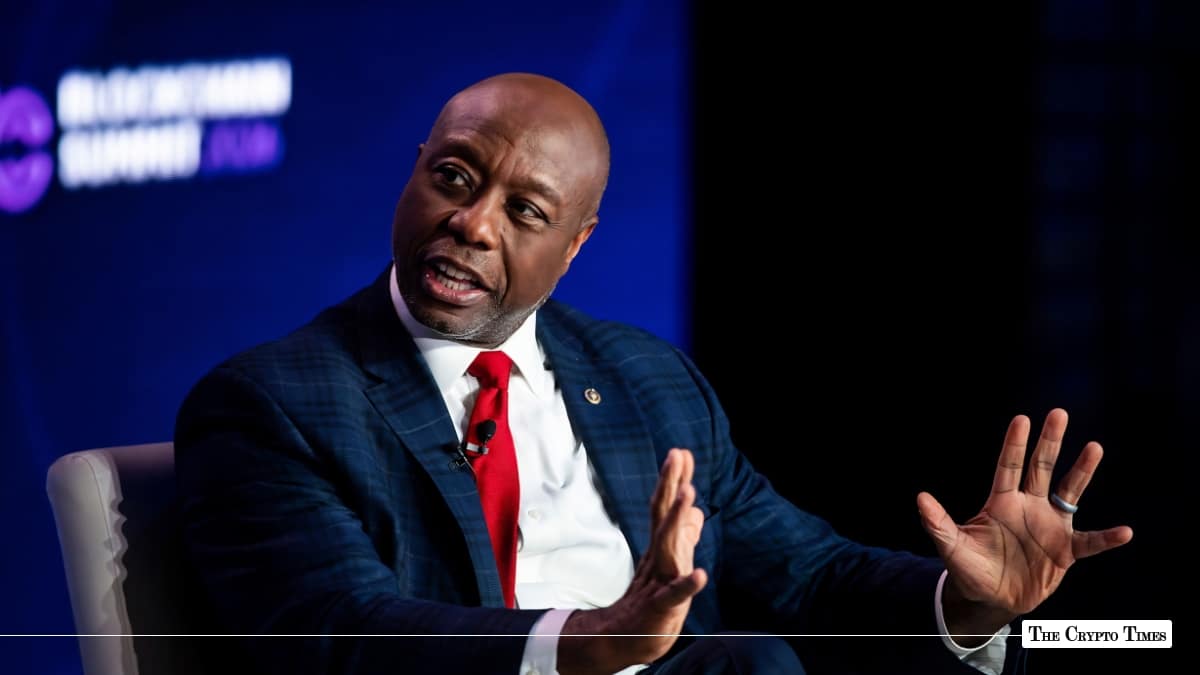
- Sen. Tim Scott voiced strong support for the CLARITY Act, calling it essential for U.S. crypto leadership.
- Scott said the legislation would create clear rules for digital assets and encourage innovation.
- Meanwhile, JPMorgan CEO Jamie Dimon criticized the bill, arguing it lacks adequate AML and banking protections.
Senator Tim Scott has voiced strong support for the CLARITY Act, legislation that seeks to put in place a regulation for digital assets in the US.
In an X post on Monday, Scott referred to the bill as “the future of finance,” arguing that it would lay clear rules for the industry and position America as “the crypto capital of the world.”
According to Scott, the future of finance is crypto and banks working together, not competing, and developing the sector according to US law and values. He mentioned, “We are threading the needle between cryptocurrency, the future of finance, and the traditional finance that we call fiat finance.”
Scott also stated that “America has the greatest banking system in all over the world. And we are seeing Banks get into the crypto business.” His remarks come as the CLARITY Act continues to face significant pushback from key individuals within traditional banking circles.
Dimon says banks will not accept the bill
Jamie Dimon, chairman and CEO of JPMorgan Chase, strongly criticized the proposed bill while appearing on Fox Business’ Mornings with Maria last Friday. Dimon said he was not satisfied with the current form of the bill and declared that the big banks, including JPMorgan, would vigorously oppose this bill.
He expressed his worries regarding the possibility that cryptocurrency companies could impose interest on payments through deposits or stablecoins under the provisions of the CLARITY Act. According to him, the current bill lacks a few essentials, such as AML regulations and the Bank Secrecy Act (BSA).
“It has almost no legal protections… so the banks will not accept it that way,” Dimon said, adding that banks “will fight it.” He said that it would have been dangerous if such an approach were not regulated carefully.
As much as he saw the advantages associated with blockchain technology and stablecoins in certain sectors like cross-border transactions, Dimon emphasized that proper regulation was necessary in regard to fiat-backed stablecoins.
Dimon also criticized Coinbase CEO Brian Armstrong over reported lobbying efforts. He remarked that “no one is going to bow down to this guy” and used strong language, stating that Armstrong was “full of sh–.”
Industry remains divided on the bill
The CLARITY Act aims to create an elaborate market structure for digital assets by addressing concerns such as investor protection and innovation. The proponents claim that the act will provide much-needed regulatory clarity within the industry, although critics such as Dimon claim that the bill fails to offer adequate protections against illegal finance and other risks.
The debate comes as Congress continues to consider broader crypto legislation. Supporters of the bill, including Senator Scott, argue that regulatory clarity is necessary to support innovation and prevent companies from relocating to jurisdictions with more favorable crypto regulations. By contrast, some banking industry leaders view the proposal as incomplete and potentially risky for the broader financial system.
The result of this conflict can only be reached after deliberations of Congress and consultations with all concerned parties, which include regulatory bodies, banks, and the cryptocurrency business itself. Meanwhile, it serves as a demonstration of how differently some politicians and executives approach digital assets in the context of the U.S. financial market.
Also Read: July 4 Deadline Looms as CLARITY Act Faces Senate Challenges