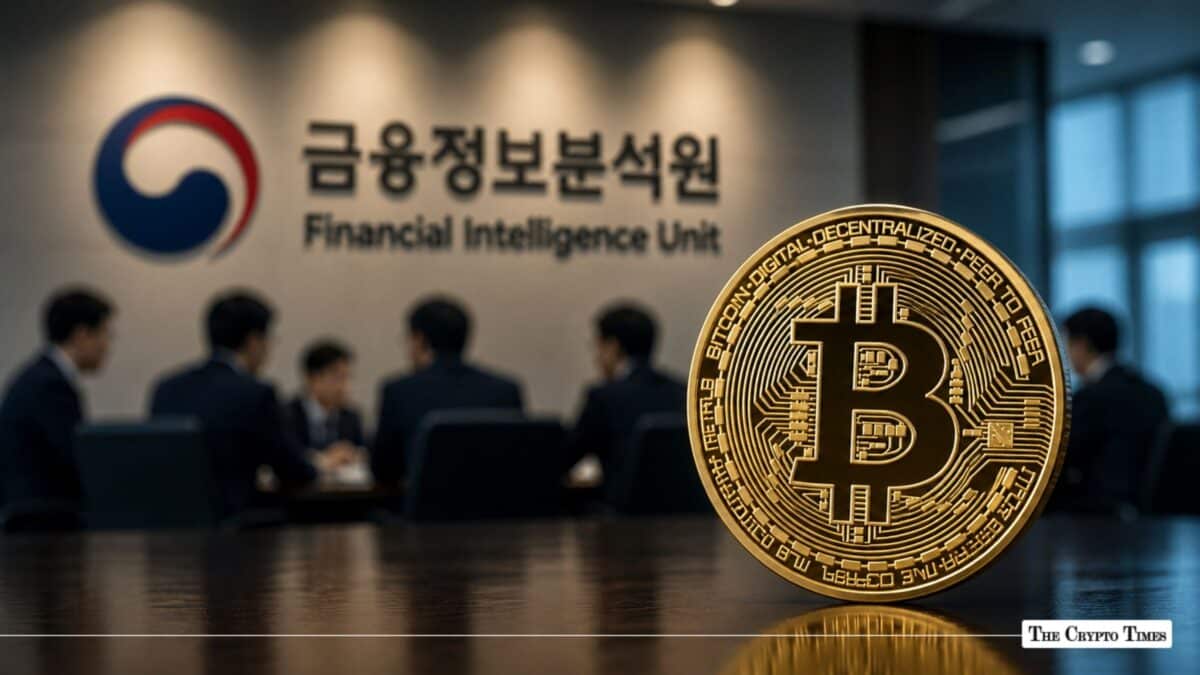
South Korea’s top financial guard is moving to address rising concerns from the crypto industry. The Financial Intelligence Unit (FIU), under the Financial Services Commission, has confirmed plans to meet with domestic virtual asset exchanges immediately after the legislative notice period ends on May 11, 2026.
According to local reports, the goal of the meeting is to clarify proposed amendments to the Act on Reporting and Use of Specific Financial Transaction Information and gather industry feedback before finalizing new rules.
FIU alignment on new rules
The planned meeting comes in response to mounting criticism from exchanges, which argue that certain provisions in the revised enforcement decree of the Act on Reporting and Use of Specific Financial Transaction Information could impose excessive compliance burdens.
“We will meet directly with exchanges to resolve misunderstandings, incorporate necessary changes, and persuade them where needed,” an FIU official said. The regulator emphasized that it aims to introduce rules “that the industry can comply with and accept.”
Notably, the current proposals stem from earlier regulatory action. Previously, on March 30, the FIU issued a legislative notice for amendments to the Enforcement Decree of the Act on Reporting and Use of Specific Financial Transaction Information, along with proposed changes to the Supervisory Regulations, setting the stage for the ongoing debate.
10 million won controversy
At the center of the debate is a proposal requiring exchanges to report all cross-border crypto transactions exceeding 10 million won (around $7,000) as suspicious transactions.
Industry participants, including the Digital Asset eXchange Alliance (DAXA), have pushed back strongly, warning that the rule could overwhelm compliance systems and drive investors offshore.
DAXA estimates that suspicious transaction reports could surge more than 85-fold—from roughly 63,408 cases last year to over 5.4 million annually if implemented.
FIU signals and market concerns
In response, the FIU acknowledged concerns and indicated it is reviewing “more lenient” reporting methods compared to the current suspicious transaction reporting (STR) standards.
“We are considering ways to reduce the burden by adjusting how reports are submitted,” the official noted, suggesting that the final framework may differ from the initial proposal.
Exchanges have also raised alarms about potential market disruption, arguing that stricter rules could restrict trading in high-risk asset categories, force reimplementation of Know Your Customer (KYC) procedures, and limit cross-border liquidity flows.
There are growing fears that overly strict regulations could isolate South Korea’s crypto market from global platforms—turning it into a so-called “Galapagos island”—a market so unique and restricted that it cannot integrate with the global ecosystem.
Next steps for regulation
Despite signaling flexibility, the FIU maintains that stronger oversight is necessary, particularly as global regulators tighten rules around crypto-related anti-money laundering (AML) risks.
The revised enforcement decree is expected to undergo further review by regulatory authorities and could be finalized by July, with phased implementation beginning later this year and extending into 2027.
Also read: South Korean Court Halts FIU Sanctions on Bithumb Amid Crypto Crackdown