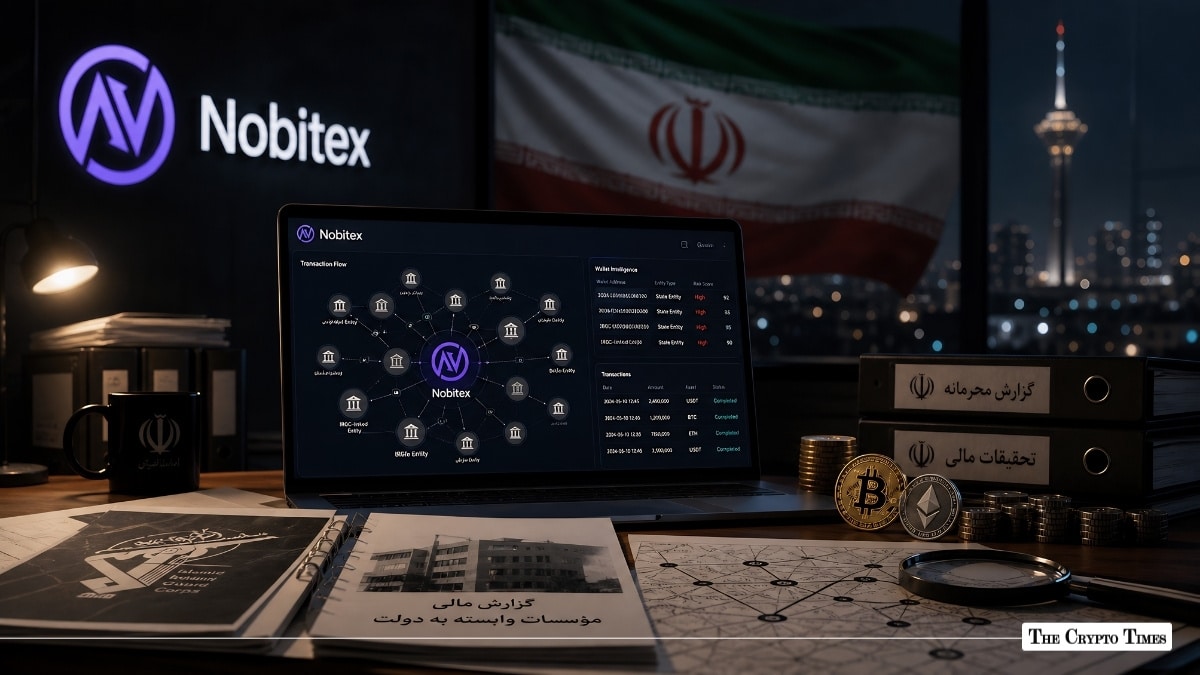
Iran’s largest crypto exchange, Nobitex, has been used to route funds connected to sanctioned state entities, according to an investigation that traces transactions involving the country’s central bank and the Islamic Revolutionary Guard Corps.
According to a Reuters report dated May 1, the platform acted as a key conduit in a parallel financial system that allows money to move outside traditional banking channels, even under heavy international sanctions. Blockchain analysis cited in the findings points to transfers ranging from tens of millions to potentially hundreds of millions of dollars linked to restricted actors.
Nobitex denied the allegations, stating it operates as an independent private business and has no formal relationship with government agencies. It said any illicit flows would have occurred without its knowledge or approval.
Blockchain data points to sanctioned entities
Investigators from firms including Elliptic and Chainalysis identified wallet activity tied to sanctioned organizations interacting with Nobitex.
One analysis estimates that Iran’s central bank moved hundreds of millions of dollars into crypto markets over several months, with a portion of those funds passing through the exchange. Another set of findings links transactions involving wallets associated with the IRGC. The figures vary widely depending on methodology, but even conservative estimates suggest tens of millions of dollars in direct exposure.
Methods used to obscure transaction trails
The report outlines several techniques used to reduce traceability, including frequent changes in wallet addresses and layered transactions across multiple accounts. Nobitex has also guided users on navigating restrictions tied to international sanctions. Such practices, while not illegal in themselves, can complicate efforts by regulators and investigators to track the origin and destination of funds.
Routing assets through multiple steps before reaching an exchange can blur links between sanctioned sources and eventual recipients.
Founders’ background draws scrutiny
The exchange was founded by two brothers linked to the influential Kharrazi family, which has longstanding ties to Iran’s political and religious establishment. The founders reportedly used an alternative surname in company records and public-facing materials.
The investigation notes that members of the broader family have held senior roles across government, diplomacy, and religious institutions. Nobitex did not address detailed questions about these connections, but said its founders have not held official government positions.
Nobitex rejects allegations of state ties
In its response, Nobitex said it has “never been an arm of the government” and has no agreements with the central bank, the IRGC, or other state bodies.
The company also pointed to operational pressures it has faced domestically, including regulatory restrictions and enforcement actions, arguing these are inconsistent with claims of state backing. It added that suspicious activity, when identified, results in account closures, though it did not specify how such determinations are made.
Sanctions enforcement meets crypto infrastructure
The findings add to broader concerns among policymakers about the use of digital assets to bypass financial controls.
U.S. officials have warned that gaps in oversight across parts of the crypto ecosystem can enable money laundering and sanctions evasion. At the same time, the transparency of blockchain transactions has allowed investigators to trace flows that might otherwise remain hidden.
The case highlights a persistent tension: crypto platforms can provide financial access in restricted environments, but they can also be used by state actors seeking alternatives to the global banking system.
Also Read: Bitcoin Surges Following Iran’s Proposal to End War Against US