Bitcoin miners are easing off the sell button, sending a cautious signal of relief to a market that has spent much of 2026 clawing its way back from heavy losses.
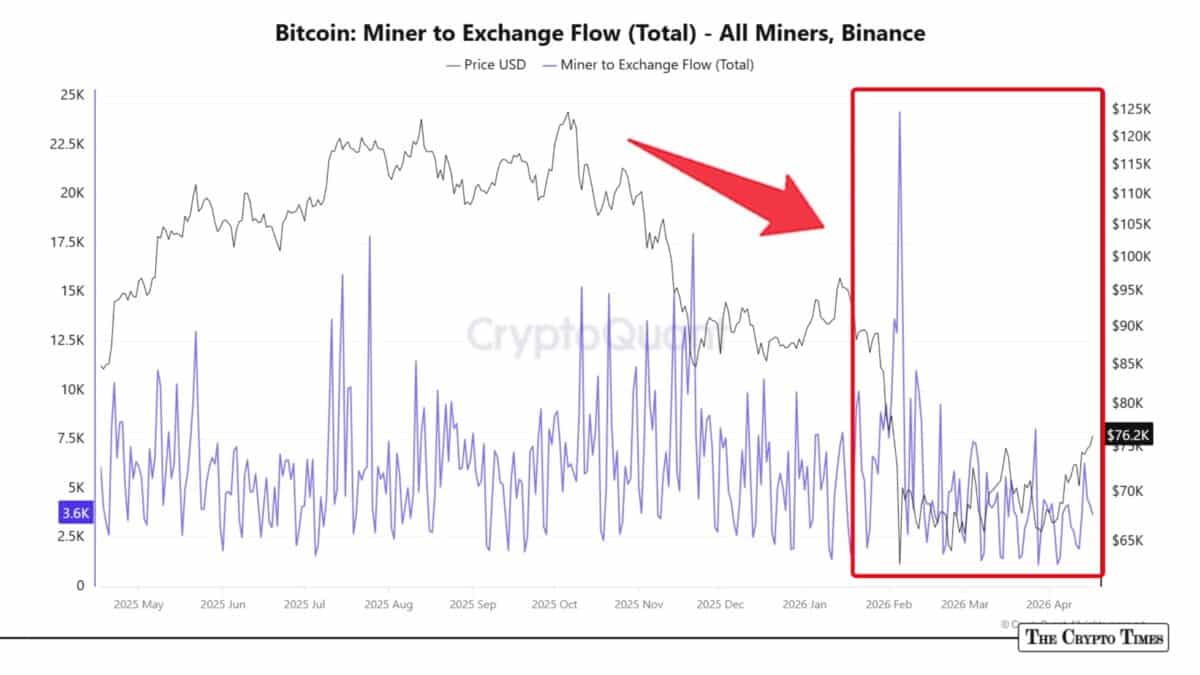
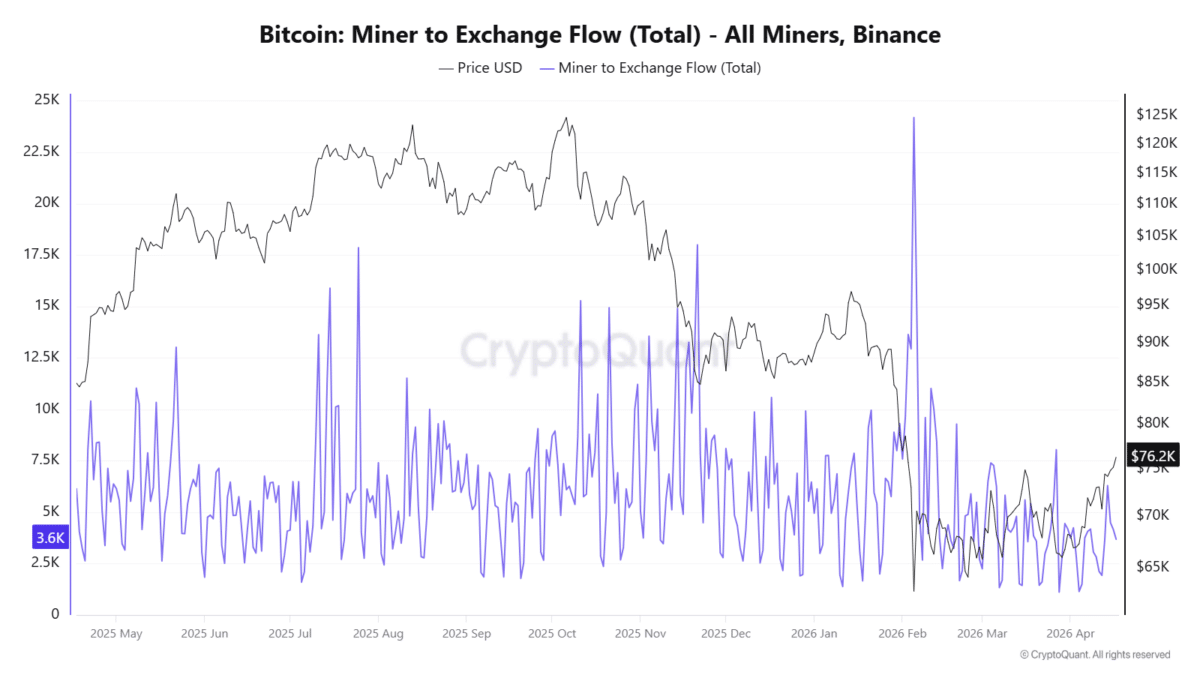
On-chain data from CryptoQuant shows miner inflows of Bitcoin to Binance have dropped noticeably below the sharp spikes recorded in February and March. Those earlier surges—sometimes exceeding 23,000 BTC in short windows—coincided with periods of price weakness and heightened operational stress for mining operations.
The latest readings point to reduced urgency to offload holdings on the exchange, a development that could hint at stabilizing conditions for an industry battered by lower prices and rising costs.
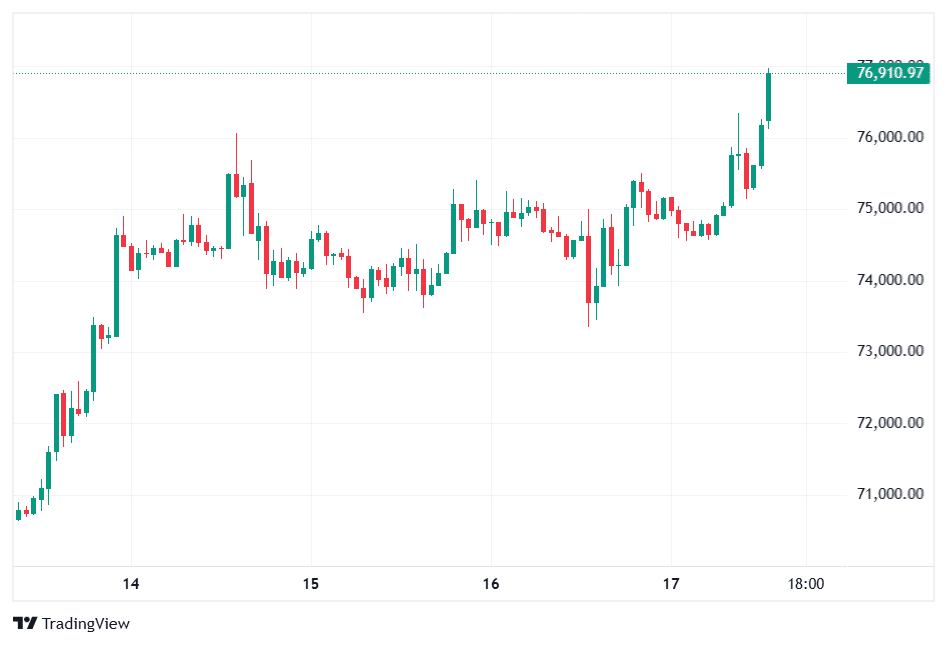
Bitcoin’s price trajectory tells a story of resilience amid volatility. After a bruising first quarter that saw the cryptocurrency shed roughly 23% from January highs near $87,500, BTC has staged a modest recovery in April.
In the past 24 hours, it climbed 2.5% to trade at $76,800, levels not seen in past early February—as of CoinMarketCap data.
The connection between miner behavior and price action is straightforward: when BTC dipped into the $65,000–$70,000 zone earlier this year, many operators faced negative margins as production costs hovered near or above $90,000 per coin in some cases.
Publicly listed miners responded aggressively, offloading more than 32,000 BTC in Q1 2026 alone—surpassing their total sales for all of 2025 and setting a new quarterly record. That wave of selling added measurable supply pressure at a time when the network’s hashrate also contracted, falling about 4–6% quarter-over-quarter as less efficient rigs were taken offline.
Now, with prices stabilizing above key support levels and some miners apparently holding more of their production, the reduced Binance inflows suggest a measure of capitulation may be easing.
However, not all miners are behaving the same—some larger public players continued trimming treasuries while others, like certain North American operators, have focused on debt management and efficiency upgrades.
Broader exchange reserves have shown signs of tightening in spots, and institutional demand via spot Bitcoin ETFs has provided a counterweight to miner distribution.
Still, this is no all-clear signal. Hashrate remains elevated historically despite the recent dip, competition is fierce, and many operators continue shifting capital toward AI-related opportunities to diversify revenue. If Bitcoin fails to push convincingly toward $80,000 in the coming weeks, renewed selling could reemerge.
For now, the cooling in miner-to-exchange flows offers a tentative bright spot. It aligns with Bitcoin’s April rebound, suggesting the worst of the distress liquidation phase may be behind the sector—at least temporarily.
Whether that translates into sustained upside will depend on broader risk sentiment, ETF inflows, and the network’s ability to absorb any lingering supply.
Also read: STRC — The $100 “Stable Stock” Fueling Strategy’s BTC Treasury