Key Highlights
- The U.S. Labor Department proposed rules allowing 401(k) plans to consider crypto and other alternative assets.
- The framework focuses on fiduciary evaluation standards rather than approving specific asset classes.
- The move could expand retirement investment options, though final decisions remain with plan managers.
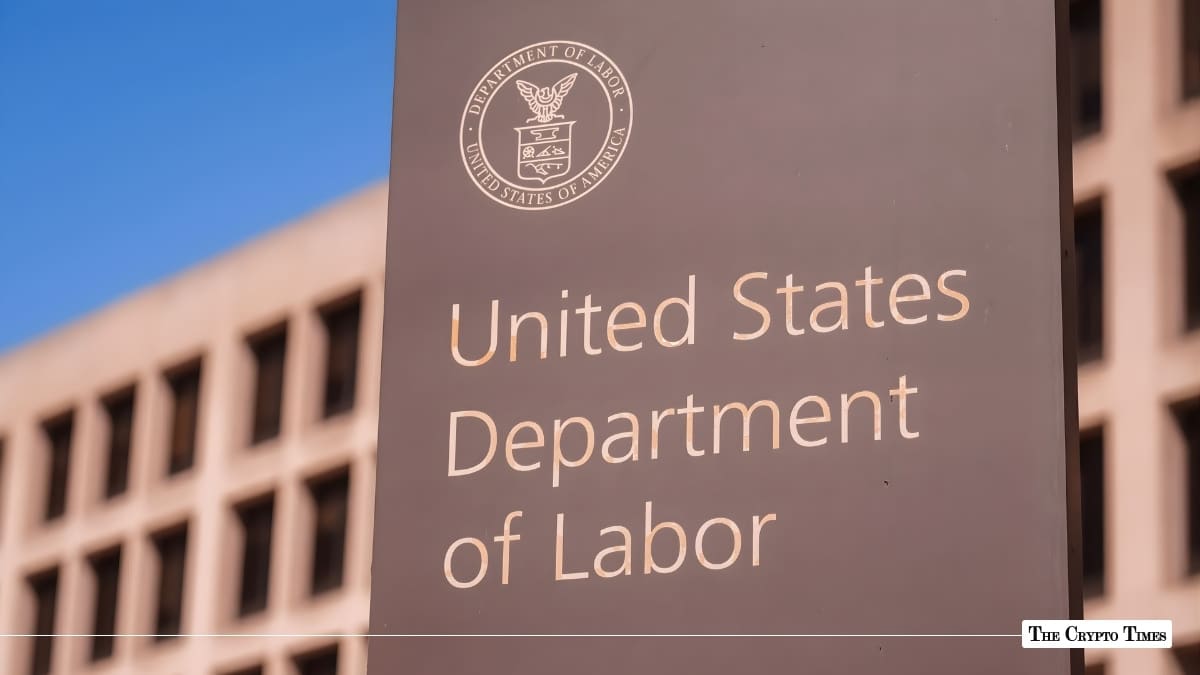
The U.S. Department of Labor (DOL) has introduced a proposal that could widen the range of assets available in 401(k) retirement plans, including cryptocurrencies.
According to the official release, the draft rule, issued through the Employee Benefits Security Administration, does not explicitly endorse crypto. Instead, it outlines how plan managers can evaluate alternative assets within existing fiduciary standards.
From restrictions to process-based oversight
The proposal follows a policy shift after earlier cautionary guidance, issued during the Biden Administration, discouraged crypto exposure in retirement accounts.
Under the new framework, regulators move away from asset-specific warnings and toward a process-driven approach. Plan fiduciaries would be expected to apply consistent evaluation standards across all investment options, including digital assets.
What the proposal requires
Rather than approving specific asset classes, the rule focuses on how decisions are made.
Fiduciaries must assess investments based on:
- Performance history and benchmarks
- Fee structures and cost transparency
- Liquidity and valuation methods
- Risk profile and complexity
This structure is designed to ensure that any inclusion, crypto or otherwise, meets the same scrutiny applied to traditional investments.
Crypto as part of a broader expansion
The proposal stems from an executive order under U.S. President Donald Trump aimed at expanding access to alternative assets in retirement plans. While cryptocurrencies are not singled out, they fall within the broader category of alternatives that could now be considered alongside private equity, commodities, and other non-traditional assets.
U.S. Secretary of the Treasury Scott Bessent shared his insights on the development, stating, “This proposed rule is an initial step in implementing the President’s Executive Order in a safe and smart manner, broadening access to additional retirement plan options for millions of Americans while being mindful of the importance of protecting retirement assets.”
Industry implications
Historically, most 401(k) plans have avoided alternative assets despite having the legal ability to include them. Regulatory uncertainty and fiduciary risk concerns have limited adoption.
By clarifying expectations, the proposal may reduce hesitation among plan sponsors. Still, it leaves final decisions to fiduciaries, who remain responsible for balancing innovation with investor protection.
What’s next
The scope of potential impact is significant. The Employee Benefits Security Administration oversees a system covering more than 150 million Americans and trillions of dollars in retirement assets.
Any shift in how these funds are allocated, especially toward emerging asset classes like crypto, would likely unfold gradually, shaped by regulatory clarity, market conditions, and risk tolerance among plan providers.
Also Read: 3-Week Countdown Begins For CLARITY Act: Coinbase Research Head