Key Highlights
- Vitalik Buterin addressed the intersection of artificial intelligence and decentralized systems during a talk at ETH Denver.
- He revisited the idea of “perfect markets,” describing them as systems where information flows freely.
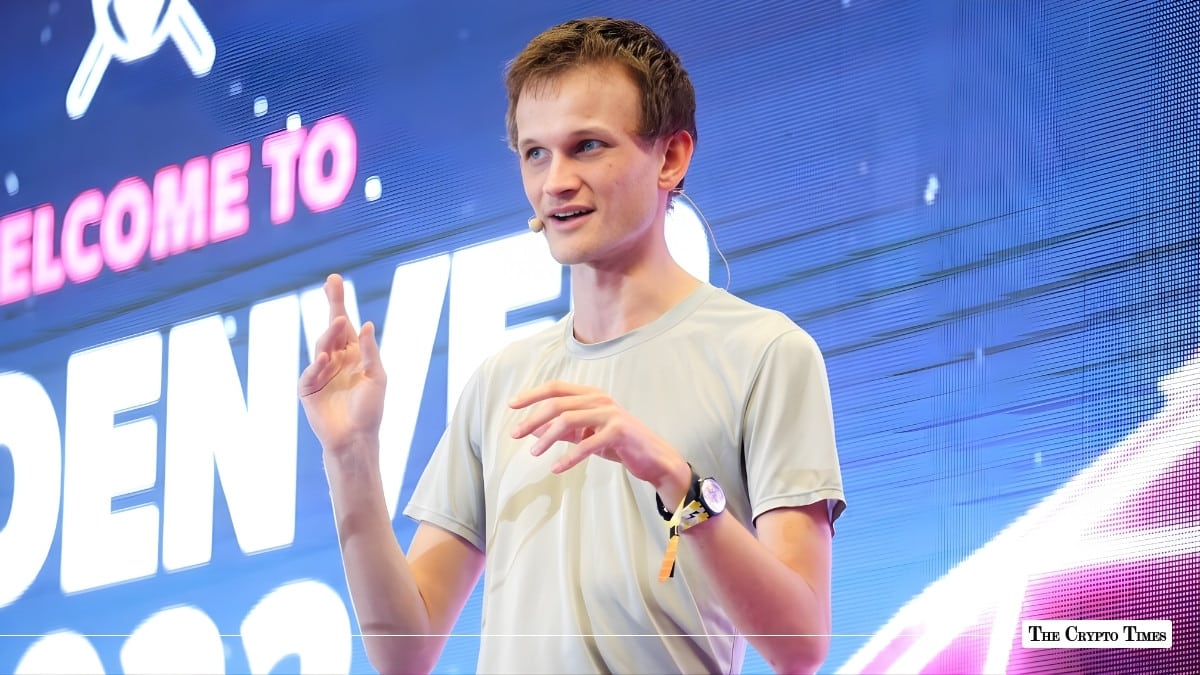
At ETHDenver 2026 on Wednesday, Vitalik Buterin talked about perfect markets, direct democracy, disintermediation, and trust minimization, and asked whether artificial intelligence could make them workable.
Rather than framing AI as a competitor to blockchain networks, Buterin described it as a tool that could revive ambitions that previously stalled.
Revisiting “perfect markets”
Buterin began with a concept that circulated widely in early internet discussions: frictionless markets where everything could be priced precisely and resources allocated efficiently.
In theory, micropricing and real-time allocation could reduce waste and expand opportunities for small businesses. In practice, he argued, these systems faltered because people lack the time and attention to make hundreds of fine-grained decisions each day.
He suggested that AI agents could change that dynamic. If users delegate budgeting, forecasting, and market participation to software trained on their preferences, more granular pricing models, including pay-per-use systems, become easier to manage.
AI as a delegate in governance
Vitalik Buterin then talked about governance. Direct democracy and DAO-based models promised broader participation but often ran into the same constraint: voters cannot realistically evaluate every proposal in depth.
Delegation solved part of the problem, but it concentrated influence in a small group of representatives. He said AI could act as a personalized delegate, interpreting a user’s goals and voting accordingly, while knowing when to request direct input.
Disintermediation beyond platforms
Another idea was disintermediation, removing corporate middlemen from transactions. Many internet platforms marketed themselves as eliminating intermediaries but ultimately became dominant gatekeepers.
Buterin described a model in which users express intent, for example, requesting a service, and AI systems negotiate on their behalf. Instead of relying on centralized apps for each category of trade, agents could match supply and demand directly.
Trust minimization meets AI
Trust minimization has long been central to Ethereum’s design. Buterin argued that AI could both strengthen and weaken that principle.
On one hand, AI tools might audit smart contracts, interpret wallet transactions, and flag suspicious activity before users approve it. They could also detect manipulative design patterns in user interfaces or social engineering attempts.
On the other hand, large language models themselves are not inherently trustworthy. Remote AI services introduce third-party risk. Even locally run models can contain hidden vulnerabilities or be manipulated through adversarial prompts.
Broader context
Buterin compared AI’s potential impact on Ethereum’s user layer to the effect zero-knowledge cryptography has had on protocol design. Just as new cryptographic tools enabled previously impractical constructions, AI could reshape wallets, governance systems, and applications.
At the same time, he cautioned against treating AI as opaque magic. Security-first design, he said, remains essential. Systems that give AI unrestricted control over funds or communications introduce new risks rather than eliminating old ones.