Key Highlights
- Brian Armstrong says Coinbase is caught in a classic innovator’s dilemma as crypto directly challenges Wall Street’s legacy business models.
- Armstrong reveals that around half of major financial institutions are now embracing crypto, with multiple GSIB banks already working with Coinbase.
- The Coinbase CEO argues the company remains underestimated by analysts, noting profitability even in a down market and warning that GAAP figures can mislead.
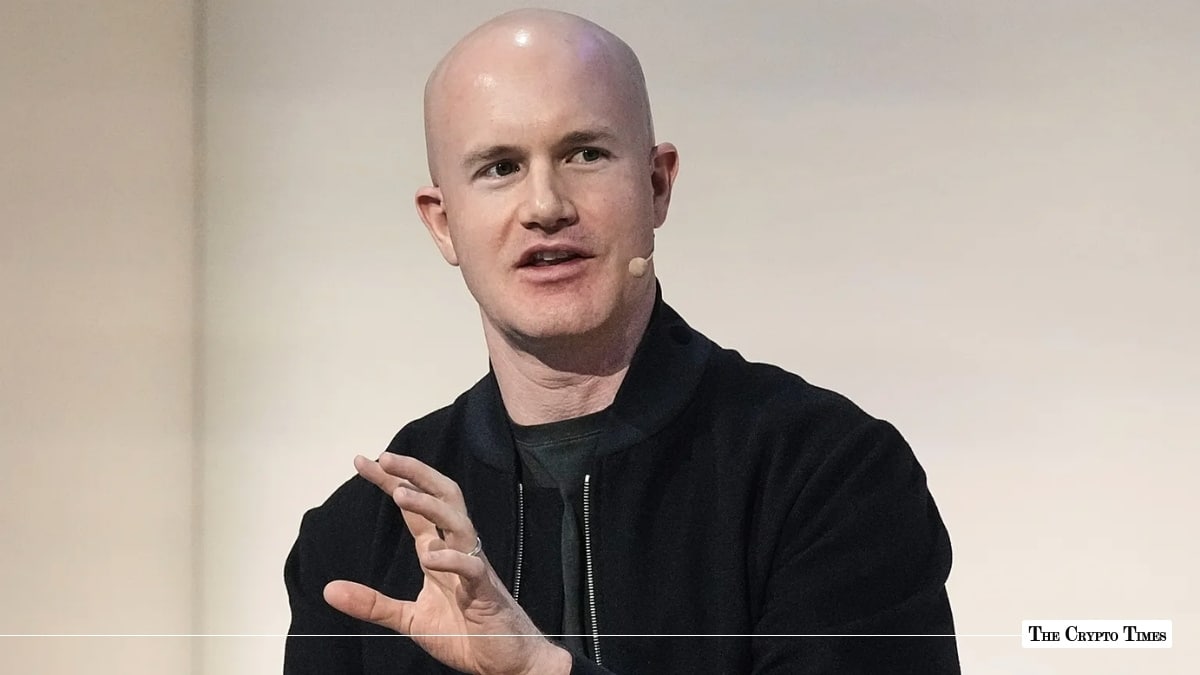
Brian Armstrong, Chief Executive Officer (CEO) of Coinbase, said Wall Street’s skepticism toward crypto reflects a broader pattern seen during every major technological disruption, arguing that the traditional financial system is struggling to fully grasp the scale and implications of the change underway.
Armstrong made the remarks after being asked during an analyst AMA why Coinbase continues to be “misunderstood or under-appreciated” by Wall Street. He later shared his full response publicly, describing the company’s position as a textbook case of the innovator’s dilemma.
“I do think Coinbase is a bit of a misunderstood company,” Armstrong said. “It’s a classic innovator’s dilemma.”
A growing institutional divide
According to Armstrong, the global financial sector is increasingly divided between institutions that are actively embracing crypto and those that remain resistant, largely due to entrenched incentives within the legacy financial system. He said that as regulatory clarity improves, a growing number of traditional finance firms are leaning into digital assets.
“On the one hand, the smartest traditional finance firms are all leaning in and embracing crypto,” Armstrong said. “5 of the GSIB banks are starting to work with Coinbase. Many of the largest financial institutions are actually hiring crypto people. As regulatory clarity is emerging, we’re seeing ~50% of the big financial institutions really leaning in and embracing it.”
At the same time, Armstrong said a significant portion of Wall Street continues to resist crypto, not necessarily because of its underlying economics or technology, but because it challenges the systems on which their careers and business models were built.
“They’re skeptical because it feels like a threat; it’s human nature,” he said.
To illustrate the point, Armstrong compared crypto’s reception to past technological disruptions that were initially dismissed by incumbents. He said the pattern is consistent across industries where transformative innovation threatens established power structures.
“You don’t go to the cab companies and ask them what they think about Uber. You don’t go to the horse and buggy makers and ask them what they think about the automobile.”
He placed crypto alongside other major disruptions such as ride-sharing platforms, short-term rental marketplaces, artificial intelligence, autonomous vehicles, and private space exploration, arguing that resistance from incumbents is not a sign of weakness but a predictable response to change.
“Crypto is directly disrupting Wall Street, so it makes sense that some on Wall Street would misunderstand crypto/Coinbase,” Armstrong said. “The smartest ones are going to embrace it. The laggards are going to be left behind.”
“Coinbase in its strongest position to date”
Armstrong also pushed back against the notion that Coinbase is struggling or losing relevance, stating that both the company and the broader crypto ecosystem are currently in their strongest position to date. He pointed to consistent execution over the past several years, expanding revenue streams, and growing adoption across institutions, governments, and retail users.
“Coinbase and crypto have never been in a stronger position,” he said. “We’ve been putting up great numbers the last 3 years, doing what we said we would do. We’ve diversified our revenue streams. Regulatory clarity is emerging. More and more financial institutions, governments and retail investors are jumping in.”
He added that the ongoing transformation of the financial system creates a structural opportunity that Coinbase is uniquely positioned to capture.
“The financial system is going through this massive transformation, and there is really no company in the world that is better positioned to help make that a reality and capitalize on it than Coinbase.”
Addressing investors, Armstrong said that market-beating returns come from identifying opportunities before they become consensus views. He argued that Coinbase remains underestimated by traditional analysts and warned against focusing too heavily on short-term earnings headlines.
“Investors must be early and right to generate alpha, and Coinbase is still underestimated,” he said.
He also clarified that Coinbase’s GAAP net income can be misleading due to unrealized gains and losses on crypto assets held on the company’s balance sheet, urging investors to consider adjusted figures when evaluating performance.
“Our GAAP Net Income includes unrealized gain/losses on crypto we hold, so it’s useful to look at Adj. Net Income as well,” Armstrong said. “Spoiler: we were profitable last quarter, even in a down market. Many headlines got this wrong.”
Armstrong closed by thanking analysts for raising the question and reiterated his view that misunderstanding from parts of Wall Street is a natural consequence of crypto’s growing impact on the traditional financial system.
“The smartest ones are going to embrace it,” he said. “The laggards are going to be left behind.”
Also Read: Kiyosaki Says Imminent Market Crash Is Opportunity to Invest in Bitcoin