Key Highlights
- Crypto Fear and Greed Index turned neutral at 42 for the first time since October, signaling easing investor fear after 2025’s market crash.
- Bitcoin and major altcoins stayed resilient despite geopolitical shock from the reported U.S. operation in Venezuela, with prices holding steady.
- Trading volumes jumped sharply as investors adopted a cautious wait-and-watch approach amid rising global uncertainty.
Crypto investor sentiment is showing early signs of recovery as the CoinMarketCap Crypto Fear and Greed Index flipped to “neutral” for the first time since October.
The index currently sits at 42, indicating that while investors are no longer driven by fear, they have yet to turn optimistic about the market’s direction. The shift comes after a turbulent end to 2025. Investor sentiment hit its lowest point of the year in November, when the index dropped to 10, signaling “extreme fear.”
Even though the index moving back to “neutral” looks positive at first glance, it doesn’t always mean a new rally is starting. In the past, when sentiment recovered after a major market top, it usually showed that selling pressure had eased, not that confidence had fully returned. The same thing happened after the 2018 and 2022 peaks, when the market calmed down first and then moved sideways for a long time before any real recovery.

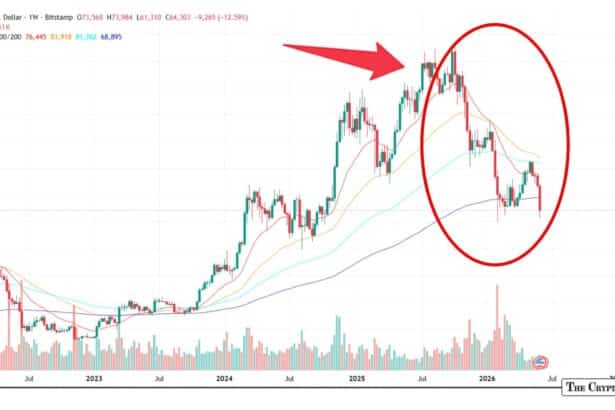
October sell-off ends 2025 crypto bull run
That fall came after a steep drop in the market in October that terminated the crypto bull run of the year. Bitcoin had hit an all-time high of more than $125,000 only days prior to the sell-off, and then dropped by almost 35% to approximately $80,000.
Altcoins were hit even harder, as most tokens lost most of their value within a single day. The overall market value of all altcoins, without Bitcoin and Ethereum, declined by approximately 33%.
The speed of the decline caught many investors off guard, especially those who entered near the peak. The sudden reversal marked a clear shift from speculative optimism to capital preservation, ending months of aggressive risk-taking.
Although sentiment has improved going into 2026, analysts report that there is uncertainty. The persistence of geopolitical tensions and the low retail involvement still restrain the positive momentum in the market.
Despite the improving sentiment, retail participation remains weak. Search interest and social media activity around Bitcoin and major altcoins are still far below the levels seen in October, suggesting that the current price stability is being supported mainly by experienced and institutional traders rather than a broad return of retail investors.
Crypto market tests geopolitical shock
The focus of the global community has moved to the United States (U.S.) because President Donald Trump declared that the U.S. troops conducted a massive military operation in Venezuela and arrested President Nicolas Maduro.
Trump said the operation was the result of weeks of escalating pressure, which included alleged strikes, oil seizures, and the amassing of U.S troops in the Caribbean.
Following the reports of explosions in Caracas and other parts, the government of Venezuela has refuted the allegation, declared a state of emergency, and accused the U.S. of military aggression. Trump will give additional information during a press conference.
Nevertheless, the crypto market has been quite stable up to now, despite the uncertainty. Bitcoin was trading at around $92,389 with a small 0.86% increase in the last 24 hours.

Ethereum was even more powerful, increasing approximately 0.06% to reach the level of $3,153, and XRP increased more than 2.82% to surpass $2.12. Stablecoins like USDT were stable and showed a hesitant yet well-organized reaction to the market.
Market resilience raises questions for analysts
This price action is unique since risk-on assets tend to experience drastic falls whenever there are unexpected geopolitical events. It is still uncertain to analysts whether the situation will have a long-term impact on crypto prices.
Some people think that the market has reached a mature stage to absorb geopolitical shocks, whilst others state that wider risk sentiment will be evident as soon as U.S. financial markets open.
Market sensitivity may be enhanced by thin liquidity that is characteristic of early January. The scenario reminds one of the past geopolitical tensions, including the Russia-Ukraine crisis and the Middle East tensions, in which crypto has been resilient at first and then responds to macroeconomic effects.
Market awaits clarity on the Venezuela situation
In the meantime, traders are keeping a close eye on whether the Venezuela scenario turns out to be a diplomatic battle or a sanctions, energy shocks, or broader regional instability that would trigger a repricing in financial markets.
As 2026 gets underway, the crypto market appears more settled than it was at the end of 2025, but confidence is still missing. Whether this calmer mood turns into a real recovery or fades back into fear will depend on how global markets react to the Venezuela situation, moves in energy prices, and overall risk appetite once U.S. markets are back in full swing.
Also Read: Bitcoin Nears $90K as CME Gap Sparks Future Price Dip