Key Highlights
- SEC charges Shima Capital’s Founder Yida Gao for misleading investors, raising $169.9M through false claims while winding down the fund.
- Gao allegedly exaggerated returns and hid $1.9M profits, highlighting the risks of undisclosed deals in crypto investments.
- The case signals growing SEC scrutiny on crypto, following high-profile actions like Terraform Labs’ Do Kwon and ongoing stablecoin oversight.
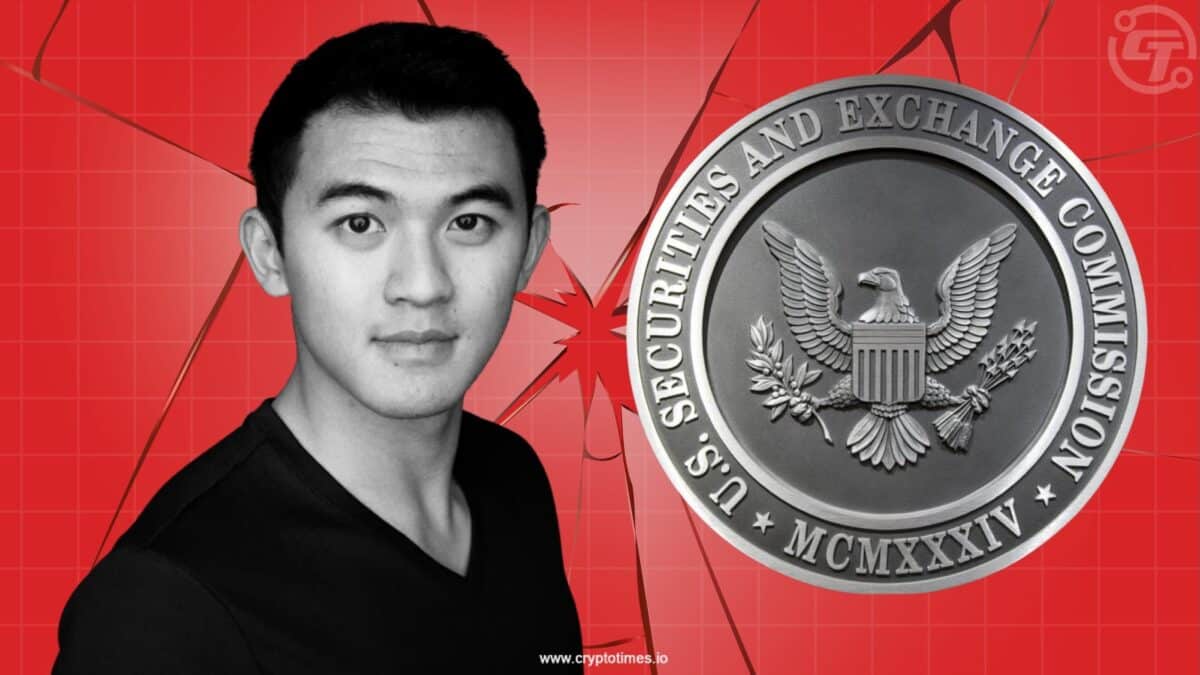
The U.S. Securities and Exchange Commission (SEC) has charged Shima Capital and its Founder, Yida Gao, with defrauding investors. The agency claims Gao misled people to raise over $169.9 million through false or exaggerated claims.
Shima Capital, based in Puerto Rico and started in 2021, managed about $200 million. The firm invested in well-known crypto projects like Berachain, Monad, Pudgy Penguins, Sleepagotchi, and Gunzilla. Gao, who studied at MIT and briefly attended Stanford’s MBA program, previously worked at Morgan Stanley. He also made Forbes 30 Under 30 in Venture Capital in 2020.
Internal emails shared with journalist Kate Irwin show Gao has begun stepping down from Shima Capital while winding down operations. In one email, he wrote, “I deeply regret my misguided decisions and apologize for letting you down.” Gao had claimed in a 2023 media interview that his firm was “work[ing] daily to maintain SEC compliance.”
However, a 2024 Fortune report alleged that he secretly funneled investments into an offshore entity he wholly owned without disclosing it to investors.
Misleading investment claims
The complaint filed by the SEC describes how Gao made false claims about his investment experience using a marketing pitch deck. For example, one claim was that a previous investment had yielded 90 times the return on investment, whereas Gao had actually gained only 2.8 times.
Furthermore, when a news outlet was set to publish a story about discrepancies, he allegedly contacted investors about mistakes made in the claims, because they had resulted from mere errors made by clerical staff.
Moreover, Gao also conducted a BitClout SPV in 2021, raising approximately 11.9 million US dollars. He promised to acquire tokens at a discount of 20-40%. However, the truth is that he resold these tokens at a higher rate, reaping an undisclosed profit of 1.9 million US dollars.
Gao and Shima Capital are charged with wilful violations of several securities laws in the United States, including Sect. 17(a) of the Securities Act and Sect. 10(b) of the Securities Exchange Act. Gao settled in a bifurcated settlement, disgorging around 4.2 million dollars in disgorgement and prejudgment interest. Shima Capital agreed to settlements mandating future compliance with SEC rules. These are pending court approval.
Broader regulatory context
This incident is part of a wider clampdown on crypto ventures. In September, the SEC allegedly issued a Wells notice regarding Paxos Trust Co. for possible infringement regarding its stablecoin, the BUSD. The agency claimed that Paxos had sold unregistered securities, although it is difficult to distinguish issuance from listing. Binance, a platform having the licensing rights for the BUSD, stated:
The Shima Capital case also comes amid other major crypto enforcement actions, like the charges against Terraform Labs. Its Founder, Do Kwon, pled guilty in August 2025 to wire fraud and securities conspiracy. Kwon’s collapse of TerraUSD led to losses of around $40 billion. If South Korean authorities continue their investigation, he could face up to 30 more years in prison.
Shima Capital’s collapse shows how closely the SEC is watching crypto firms. Investors need to be careful and check fund claims and do their own research before putting in money.
Also Read: MP Raghav Chadha Proposes Asset Tokenization Bill in Indian Parliament