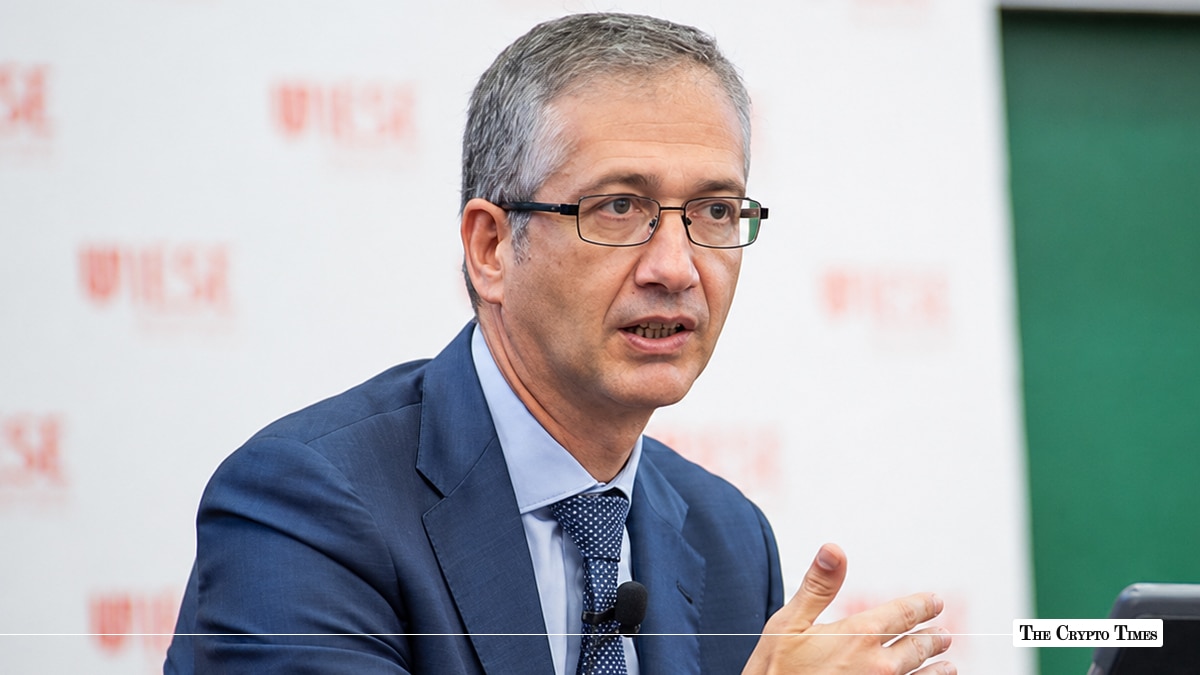
Stablecoins do not provide a credible foundation for large-scale payments and should not replace traditional forms of money in everyday transactions, Bank for International Settlements (BIS) General Manager Pablo Hernandez de Cos said on August 28.
According to a Reuters report, de Cos told the Federal Reserve’s Jackson Hole Economic Policy Symposium in Wyoming that tokenized bank deposits offer a more compelling way to bring the benefits of blockchain technology into the financial system. He said stablecoins and tokenized deposits could coexist, but tokenized deposits should handle most day-to-day payments while stablecoins serve more specialized uses.
Concerns over stablecoin structure
Stablecoins are crypto assets designed to maintain a stable value, usually by being pegged to a fiat currency such as the U.S. dollar. Their use has expanded rapidly, drawing support from parts of the financial industry while also raising concerns among regulators over financial stability, money laundering and monetary sovereignty.
De Cos pointed to several weaknesses that could make stablecoins difficult to use as a universal payment instrument. One of the main concerns he said is the lack of “singleness” of money, meaning users cannot always move between different stablecoins at par without first buying and selling one asset for another.
He also argued that stablecoin platforms are not genuinely interoperable. That could make payments more fragmented, particularly as different issuers operate across separate networks and systems. He stated that money-laundering controls present another challenge.
According to de Cos, applying consistent controls across stablecoin platforms can be difficult, raising questions about how effectively the systems can operate across jurisdictions.
Dollarization risk
The BIS chief also warned about the wider impact of dollar-backed stablecoins outside the United States. He iterated that wider adoption could contribute to digital dollarization in emerging markets, making it harder for governments to manage monetary policy and control cross-border capital flows. If consumers and businesses move money from traditional bank deposits into dollar-based stablecoins, local banks could lose part of their funding base. This could reduce the funds available for lending to households and companies and potentially tighten credit conditions.
The chief also added that greater reliance on dollar-backed stablecoins could also weaken monetary sovereignty by making local financial conditions more closely linked to U.S. monetary policy.
The concerns come as U.S. officials have promoted stablecoins as a potential tool for strengthening the dollar’s global position. Treasury Secretary Scott Bessent has argued that stablecoins could increase demand for U.S. Treasuries and reinforce the dollar’s role as the world’s leading reserve currency.
Impact on banks
The BIS has also warned that a shift from traditional bank deposits to privately issued stablecoins could weaken domestic banks by reducing the funding available for lending to households and businesses.
The BIS chief earlier said that stablecoins are still mainly used for crypto trading and as collateral rather than everyday payments. He warned that wider adoption could move money away from traditional bank deposits and reduce funds available for lending.
De Cos acknowledged that stablecoins could potentially lower government borrowing costs by creating additional demand for dollar-denominated safe assets.
However, he said the shift could increase funding costs for commercial banks if deposits move into stablecoins. Higher funding costs could eventually be passed on to borrowers through higher lending rates.
Tokenized deposits could offer an alternative by allowing financial institutions to use blockchain technology while keeping money within the existing banking framework. “Tokenised deposits offer a more direct path to harness tokenisation while preserving the monetary system’s foundations,” de Cos said.
What comes next
Tokenized deposits are not without challenges. De Cos said the model still needs to address interoperability, governance and legal issues, particularly around settlement.
De Cos’s comments add to the broader debate over how blockchain-based forms of money should fit into the financial system. While stablecoins continue to expand, central banks and regulators are assessing whether tokenized deposits can provide similar technological benefits while preserving the existing banking and monetary framework.
The focus will now turn to whether tokenized deposits can overcome their technical and legal hurdles and how stablecoins ultimately fit into the global payments system.
Also Read: Upbit Operator Dunamu and Visa Explore OUSD, Stablecoin Payments & AI