Key Highlights
- Payward, Kraken’s parent company, has asked a Delaware court to enforce a $22 million arbitration award against former auditor Mazars USA.
- Kraken says Mazars abandoned its nearly completed 2022 audit despite finding no fraud or management concerns.
- Co-CEO Arjun Sethi argues the resignation reflected broader regulatory pressure on crypto companies rather than audit issues.
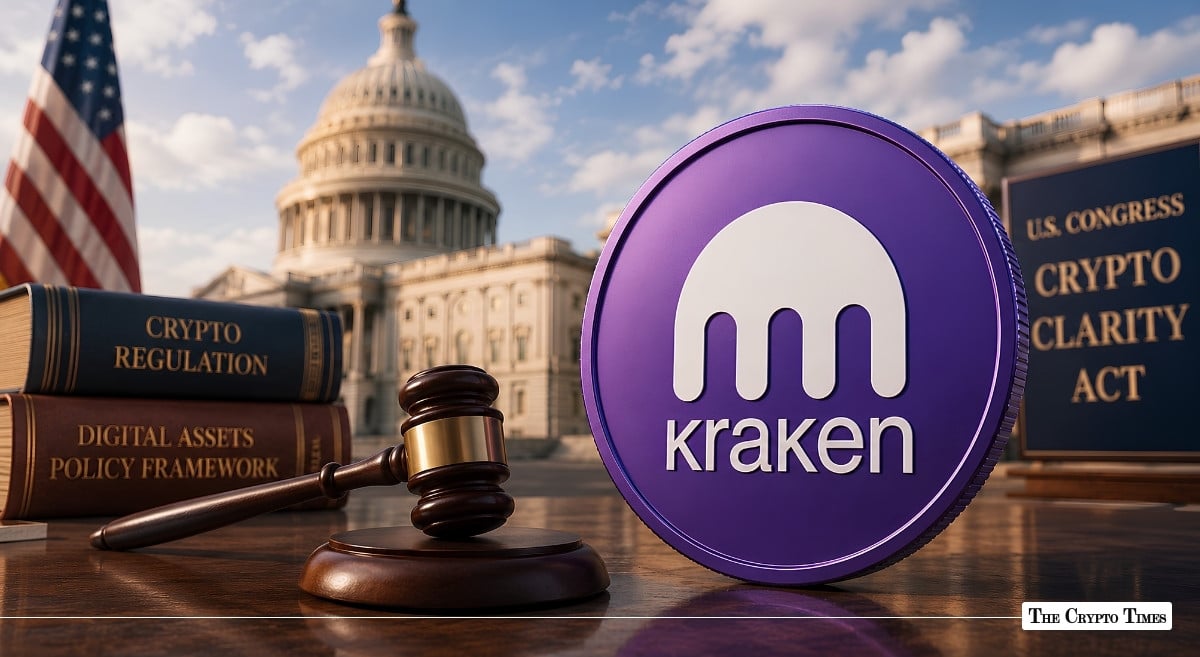
Kraken’s parent company, Payward, is moving to finalize its legal victory against accounting firm Mazars USA, asking the Delaware Court of Chancery to enter judgment after winning a $22 million arbitration award.
In a blog post published on Tuesday, Payward Co-CEO Arjun Sethi said the dispute extends far beyond a contractual disagreement, describing it as part of a broader campaign of regulatory and institutional pressure that affected crypto firms during the previous U.S. regulatory environment. According to Sethi, the company pursued legal action after Mazars withdrew from Kraken’s nearly completed 2022 financial audit.
How the dispute began
Sethi said Mazars had successfully audited Kraken’s financial statements for three consecutive years and was nearing completion of its third review when it unexpectedly resigned in late 2023. He emphasized that Mazars confirmed in writing that it had no disagreements with Kraken’s management, found no fraud, and raised no concerns about the company’s integrity.
Sethi argued that losing an auditor created serious operational consequences, affecting banking relationships, licensing, counterparties, and regulatory processes despite the absence of any adverse audit findings. He added that Kraken has since continued receiving clean audit opinions.
Kraken points to regulatory pressure
Rather than attributing the resignation to company-specific issues, Sethi argued that Mazars’ decision reflected broader political and regulatory pressure on firms serving the digital asset industry. He pointed to Mazars Group’s earlier decision to discontinue proof-of-reserves work across the crypto sector in late 2022, claiming the firm had stepped away from the industry as crypto became “politically expensive to serve.”
Sethi also referenced the SEC lawsuit filed against Kraken shortly before Mazars withdrew from the audit, noting that the case was dismissed with prejudice without penalties, admissions of wrongdoing, or required operational changes.
Revisiting Operation Chokepoint 2.0
The blog also revisits what many in the crypto industry have described as Operation Chokepoint 2.0, a period during which crypto firms alleged they were systematically cut off from banking and financial services. Sethi cited the joint January 2023 statement issued by the Federal Reserve, FDIC, and OCC warning banks about crypto-related risks, along with later-released FDIC correspondence showing regulators instructed banks to pause or limit crypto activities.
He also referenced the SEC’s former SAB 121 accounting guidance, the Federal Reserve’s denial of payment system access to Custodia Bank, and the collapse of crypto-friendly banks Silvergate and Signature Bank. According to Sethi, many of those policies have since been reversed, with SAB 121 rescinded and federal agencies withdrawing earlier guidance.
Why Kraken wants the CLARITY Act
Sethi argued that the industry’s experience demonstrates why Congress should establish permanent regulatory certainty through legislation rather than relying on agency enforcement. He urged lawmakers to pass the CLARITY Act, saying the U.S. remains behind jurisdictions such as the European Union, where the Markets in Crypto-Assets (MiCA) framework already provides a unified regulatory structure.
Sethi added that market structure legislation should clearly define regulatory jurisdiction, establish workable registration pathways, and provide legal protections for open-source software developers.
A push for clearer rules
Sethi concluded that Kraken’s legal victory is about more than recovering damages. He argued the arbitration sends a message that financial institutions cannot abandon lawful crypto companies without consequences, while urging policymakers to complete what he described as unfinished regulatory reform.
“We won this fight. Now our congressional leaders… I need to finish the bigger one. Pass the CLARITY Act,” the blog stated.
As Congress continues debating crypto market structure legislation, Kraken maintains that clear statutory rules, not prolonged legal disputes or shifting enforcement actions, are essential for the industry’s long-term growth.
Also Read:- Coinbase Wins UK License to Offer Stocks and Derivatives Alongside Crypto