
Key Highlights
- Glassnode says Bitcoin is experiencing its biggest wealth transfer ever, with long-term holders selling to institutional and new investors.
- Private banks are seeing new opportunities as wealthy crypto investors seek traditional financial services like investment management.
- Despite Bitcoin’s recent price decline, Glassnode says investors are staying within the crypto market.
Bitcoin (BTC) is going through the biggest wealth transfer in its history as long-term holders sell part of their holdings to a new wave of institutional investors, according to blockchain analytics firm Glassnode.
In a report published on Monday, Glassnode said the shift became more noticeable after Bitcoin reached its cycle peak in late 2025 and has continued into 2026. At that time, Bitcoin rose above $126K, but has since dropped about 50%, according to CoinMarketCap.
Still, as more institutions buy Bitcoin from early investors, private banks are beginning to see new opportunities to serve wealthy crypto investors with a wider range of financial services.
Long-term holders sell Bitcoin to new investors
According to Glassnode, on-chain data shows that many of Bitcoin’s earliest investors are taking profits after holding the asset for several years. At the same time, new buyers, including institutions, companies, and traditional investors, are buying the Bitcoin being sold.
The firm described this as the largest transfer of Bitcoin wealth from one group of investors to another since the cryptocurrency was created. Rather than showing market weakness, Glassnode said the trend suggests Bitcoin is entering a more mature stage, with ownership spreading to a wider group of investors.
The report also explained what happened during the market correction in the first quarter of 2026. While the total value of the crypto market, excluding stablecoins, dropped by around 18%, investors did not rush to leave the market.
Instead, many moved their money into stablecoins such as USDT and USDC while waiting for better market conditions. Glassnode noted that the total supply of stablecoins increased from $308 billion to $318 billion during the same period, suggesting investors chose to stay in the crypto market instead of cashing out completely.
What this means for private investors
Glassnode believes this change is creating an important opportunity for private banks and wealth managers. Many wealthy Bitcoin investors are no longer interested in keeping all of their money in one asset.
After making large profits, they want to spread their wealth across different investments such as stocks, bonds, private businesses, and lending products. They also want services like estate planning, liquidity management, and long-term financial advice. As a result, private banks now have a chance to attract a new group of high-net-worth clients who have built their wealth through digital assets.
A two-way opportunity for banks and investors
Glassnode said the relationship works both ways. While crypto investors gain access to traditional banking and investment services, banks benefit by bringing in new clients and fresh capital.
At the same time, banks that become more comfortable working with crypto investors may encourage more traditional investors to enter the digital asset market. Glassnode said this growing connection between crypto and traditional finance could strengthen institutional demand for Bitcoin in the years ahead.
This follows new developments from 2025, which allow banks to offer crypto services to investors.
The biggest challenge still facing crypto banking
Glassnode said one major challenge still needs to be solved. Many private banks were not designed to work with clients whose wealth comes mainly from cryptocurrencies. Because digital assets exist on public blockchains instead of traditional bank accounts, banks often spend a long time checking where the money came from before accepting new clients.
This can lead to delays, repeated requests for documents, and a difficult onboarding process for legitimate crypto investors.
To address that issue, Glassnode highlighted its spin-off company, Cense, which was launched in 2023 to provide auditable documentation of clients’ on-chain wealth history. According to Cense Chief Commercial Officer Michiel Hoogenboom, making crypto wealth easier to verify allows investors to move between digital assets and traditional banking more smoothly.
“Investors and institutions who invest the time now to build transparent crypto readiness will be best positioned when conditions accelerate again,” he said.
He added that this helps investors diversify their wealth while also giving banks greater confidence when onboarding crypto-native clients.
Glassnode sees long-term growth ahead
Glassnode also pointed to broader market trends supporting its outlook. Although many institutions currently describe the market as being in a bear or late-bear phase, the company said there are signs that confidence is slowly returning.
Looking ahead, Glassnode expects the gap between traditional finance and digital assets to narrow further.
The company believes wealthy investors will increasingly hold a mix of Bitcoin, stocks, bonds, private investments, and cash instead of choosing one over the other. If banks continue improving the way they serve crypto clients, the ongoing transfer of Bitcoin wealth could help bring digital assets further into mainstream wealth management.
Bitcoin holds steady below $60K
Bitcoin continues to trade below $60K. At the time of this writing, it is trading for $59,022, just 1.75% drop within the last 24 hours. However, the assets have lost more, about 9% in a week, as the broader market faces pressure.
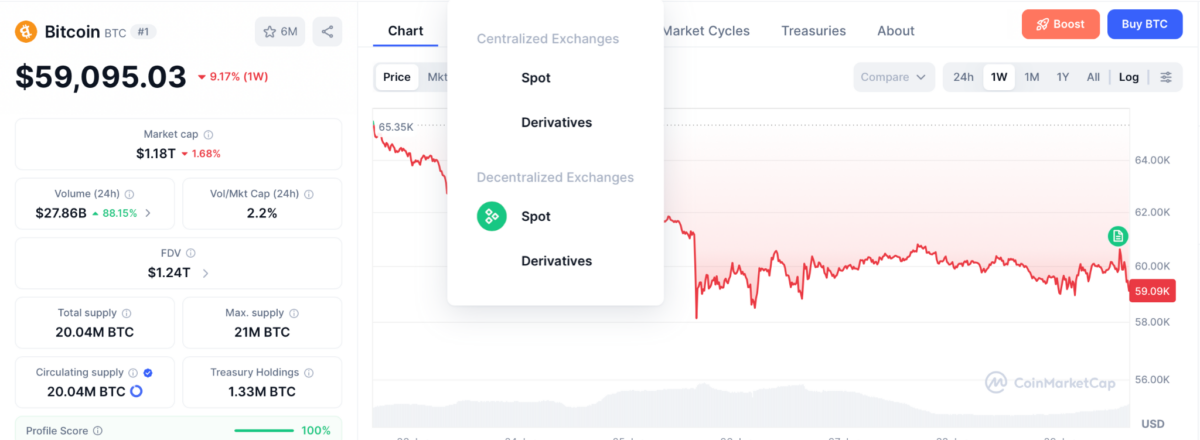
Trading activity has also picked up, with volume rising 86% to around $27.7 billion. However, the price decline suggests much of that activity reflects increased selling pressure.
Still, Glassnode believes this weakness does not change the bigger picture. According to the firm, investors are repositioning rather than leaving the market, while institutions continue to absorb Bitcoin from long-term holders.
Also Read: Michael Saylor’s Strategy Boosts Reserve to $2.55B and Raises $STRC Dividend to 12%