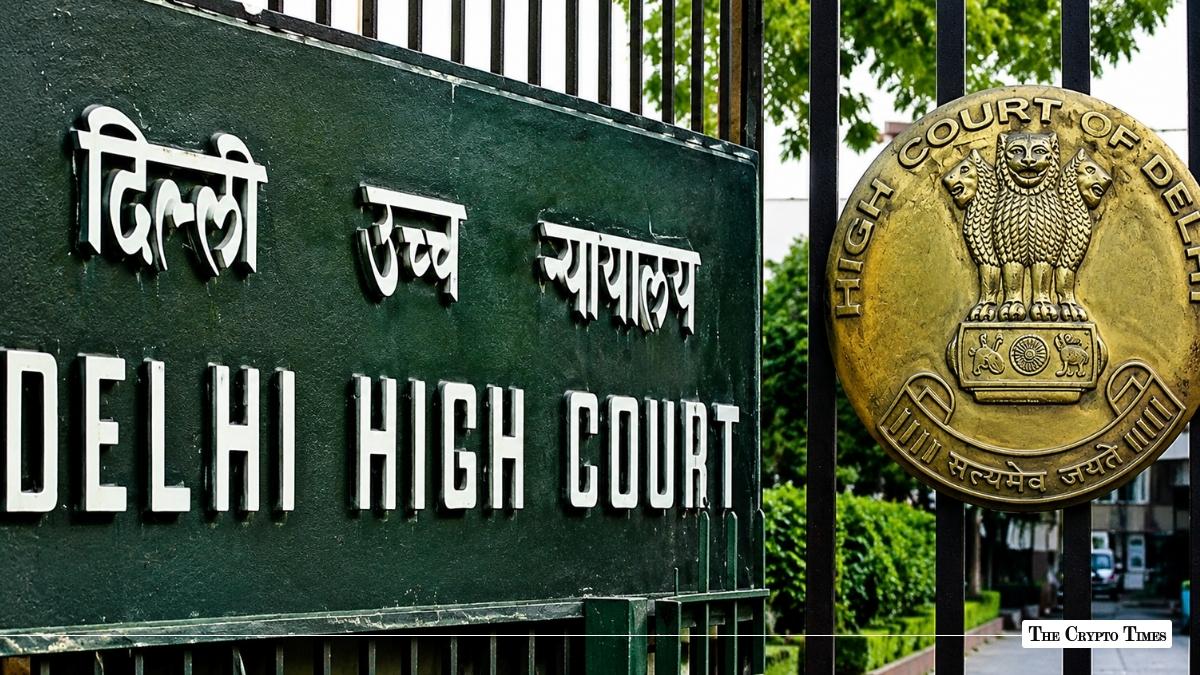
The Delhi High Court denied anticipatory bail to an accused individual in an organized ₹1 crore cryptocurrency fraud case, ruling that further investigation was needed due to indications of organized cybercrime.
As per local reports, Justice Swarana Kanta Sharma observed that the evidence collected by investigators points to a highly synchronized cyber fraud racket designed to exploit peer-to-peer (P2P) stablecoin markets.
According to police filings, the accused, identified as Gaurav, allegedly used a mutual acquaintance to gain the trust of the complainant in early 2024. Gaurav repeatedly induced the victim with promises of high-yield investment returns, eventually convincing him to transfer 111,247 USDT, worth roughly ₹1 crore, directly to a digital wallet under his personal control.
Court flags organized crypto fraud concerns
Data provided by the cyber crime unit showed that immediately after receiving the 111,247 USDT, Gaurav allegedly pocketed a designated commission before layering the remaining 104,526 USDT across multiple downstream untraceable wallets tied to co-conspirators.
Gaurav’s legal counsel argued for pre-arrest bail, asserting that he had cooperated with the initial questioning and acted merely as a low-level financial intermediary for a group of buyers located in Kochi, Kerala.
However, the High Court strongly rejected this line of defense. Justice Swarana Kanta Sharma emphasized that simply appearing for an interview with an investigating officer does not automatically entitle an individual to anticipatory bail when the underlying proceeds of a crime remain unrecovered.
“The investigation conducted so far indicates that the offence in question forms part of a larger organised cyber fraud racket involving multiple accused persons operating in coordination through digital platforms, encrypted communication applications, VPN services, and cryptocurrency wallets,” the Court stated in its ruling.
The bench further pointed out that because the syndicate relied heavily on WhatsApp calls and VPN location-masking to conceal their identities, the technical cooperation and physical custody of the primary receiver are necessary to crack the system.
Alarmingly high trend of crypto crimes
The ruling comes amid a series of cryptocurrency-related crime investigations across India this year.
In April, Delhi Police said it had dismantled a cyber fraud operation accused of laundering more than ₹74 lakh through cryptocurrency transactions. A month earlier, authorities arrested four men accused of posing as police officers and pressuring victims to hand over cash during fraudulent USDT deals.
Separately, Delhi Police recently traced a ₹5-crore cryptocurrency trail linked to online scam networks operating across multiple states. Investigators said parts of the operation were connected to handlers based in Dubai.
The developments in India also reflect a broader global trend in cryptocurrency-related crime. According to TRM Labs’ 2026 Crypto Crime Report, illicit cryptocurrency wallets received an estimated $158 billion in incoming funds during 2025.
The report found that although the amount of cryptocurrency linked to illicit activity increased, illegal transactions made up a smaller share of overall crypto activity as the market continued to grow.
The trend highlights the challenges facing regulators and law enforcement agencies as digital asset use expands. In the Delhi case, investigators are working to trace funds that allegedly passed through multiple wallets and individuals, a task that becomes more complicated when assets move across borders.
Also Read: Humanity Protocol Reveals Employee Laptop Breach Behind $36M Exploit